

This Gorgeous Shrub Attracts Pollinators And Doubles As Backyard Privacy
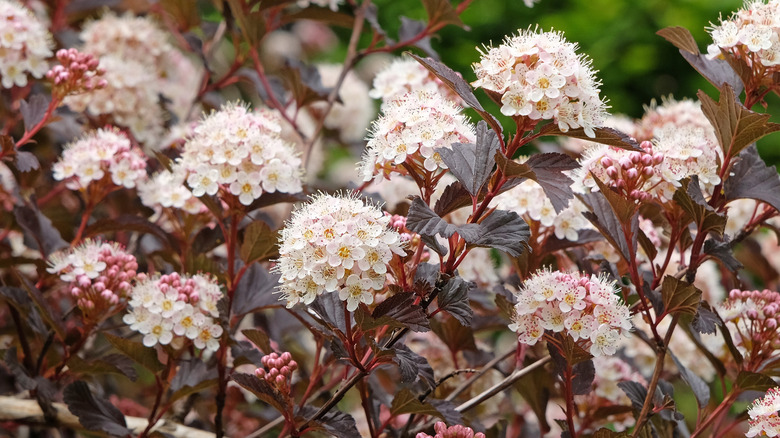
When considering how to choose the best shrubs for your landscape, there are a few factors that make a shrub ideal. A native shrub with gorgeous, pollinator-friendly flowers that grow large enough to act as a living privacy wall might sound absolutely perfect. The good news is that there is a shrub that fits that description perfectly: Common ninebark (Physocarpus opulifolius) is native to the eastern and central regions of the U.S., and it has all the qualities you're looking for!
Also known as Atlantic ninebark, common ninebark can grow up to 10 feet tall and six feet wide, making it an excellent privacy plant to help you create your own private backyard oasis. Whether planted in a hedge along the borders of your property or standing alone as a statement piece, ninebark will make a lovely addition to your yard.
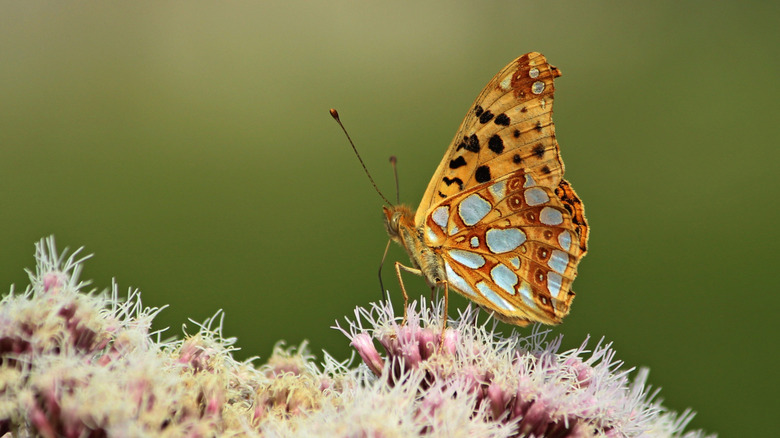
These shrubs provide a haven for all kinds of wildlife, too. During late spring to mid-summer, the plant blooms with large clusters of white or pink flowers that bees and butterflies enjoy. On top of that, ninebark serves as a host shrub for the caterpillars of some moth species, and the flowers are followed by small, red fruits that attract songbirds.
How to grow common ninebark
Common ninebark is hardy and adaptable, making it a good fit for most yards and gardens. In fact, it might be easier to explain where it can't be planted rather than where it can! One important factor to consider is that you should avoid planting ninebark in deep shade. Otherwise, your shrub should do just fine. You can plant it in full sun to partial shade, and it grows well in most soil types. Common ninebark can tolerate both occasional flooding and drought and is winter hardy in USDA zones 2 through 7. If you're looking into how to start a rain garden, ninebark should be on your radar as a good plant to use. It can also be planted along riverbanks or hills to help control erosion. Just make sure you give it several feet of room on all sides so it doesn't become too crowded.
Once planted, common ninebark doesn't need a lot of care. It doesn't typically suffer pest problems and doesn't usually need much fertilizer – although an application of compost in spring can give it a nice boost. When planted in poor soil, a yearly application of balanced slow-release fertilizer each spring may help it thrive. However, ninebark does benefit from regular pruning. In addition to removing dead branches and controlling its size, pruning can help keep your ninebark's branches from becoming too crowded. A pruned shrub looks neater and allows more air to flow through it, which reduces the risk of fungal infections.