

The Flower You Should Plant With Rosemary To Fill Your Garden With Pollinators
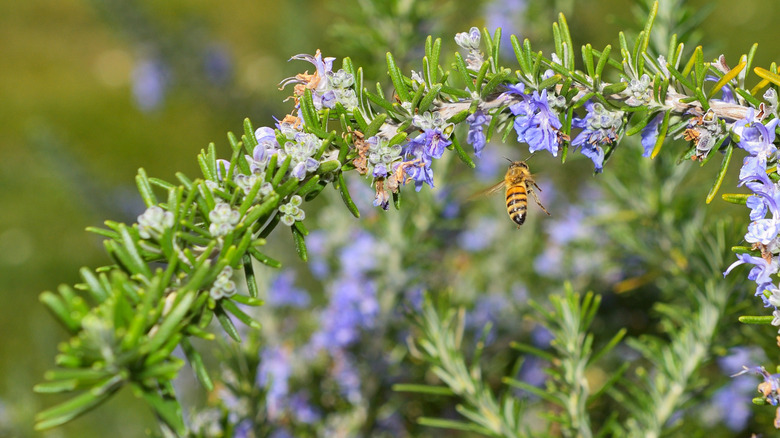
Sure, rosemary (Salvia rosmarinus or, as it was previously known, Rosmarinus officinalis) is a fragrant addition to any garden. But there are plenty of other reasons to plant this shrub, including for its ability to attract bees, butterflies, and other pollinators such as hummingbirds. While growing rosemary alone can bring pollinators to your yard, you can supercharge its impact and entice even more of them to stop by for a visit if you plant your rosemary alongside another pollinator-friendly companion plant.
Companion plants thrive when placed near certain other plants and can offer benefits such as enhanced crop production (for your fruit and veggie additions), deterring potentially harmful pests, improving soil health, and even attracting beneficial garden visitors — like pollinators. Rosemary makes an excellent companion for a number of plants, including fellow herbs such as sage, thyme, and oregano, plus lavender and strawberries. When it comes to pollinators, though, the flower you'll want to pair with your rosemary plants is alyssum.
Alyssum (Lobularia maritima), or sweet alyssum, is exactly the companion plant you need for rosemary. Its white, pink, and purple blossoms might be tiny, but this plant is hardy and long-blooming, with flowers that are tough enough to handle early spring temperatures swings as well as the cooler temperatures of early fall. It thrives in USDA Hardiness Zones 5 to 9, and alyssum is quite an easy plant to grow from seed. But most importantly of all for those who are hoping to draw all the pollinators to their yards, alyssum's fragrant flowers are loved by bees, butterflies, flower flies, and stingless wasps that use their nectar.
Alyssum attracts the right kinds of insects
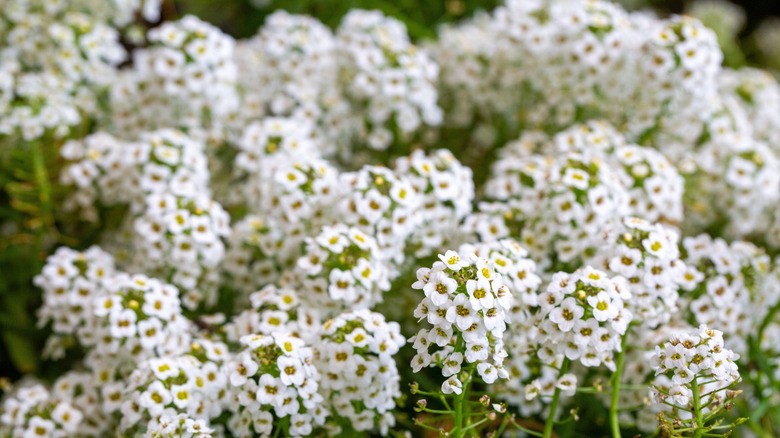
Rosemary and alyssum are something of opposites, both in their appearance and how they work as companion plants. While rosemary plants grow upwards, standing tall with needle-like leaves and looking a bit like miniature spruce trees, alyssum spreads out in mounds and sits closer to your garden's soil with little flowers and long, thin leaves. However, both of these plants attract different pollinators, which should bring a great mix into your garden. Rosemary and alyssum both attract bees; alyssum will also attract butterflies and hummingbirds.
Both rosemary and alyssum are wonderfully fragrant plants, but their scents have different effects on different garden visitors. Alyssum helps draw pollinators in with its sweet fragrance, letting insects know it's a standout source of nectar. Rosemary, on the other hand, has such a sharp, strong fragrance that it can actually repel some insects. However, that's not necessarily a bad thing: Rosemary's scent tends to send problematic pests packing, allowing pollinators to visit without worry.
When planted together as companion plants, rosemary and alyssum will work together to entice the pollinators you're hoping for and reduce visits from not-so-welcome pests. Rosemary's fragrant oils naturally repel common garden pests such as Japanese beetles, slugs, and snails. Alyssum can help with this work, too; the nectar-rich flowering plant has been found to attract not only pollinators, but also hoverflies and ladybugs. Ladybugs in particular are a great asset, as they can stop aphids from munching on other plants.