

The Safe Way To Help A Baby Opossum You Found In Your Yard
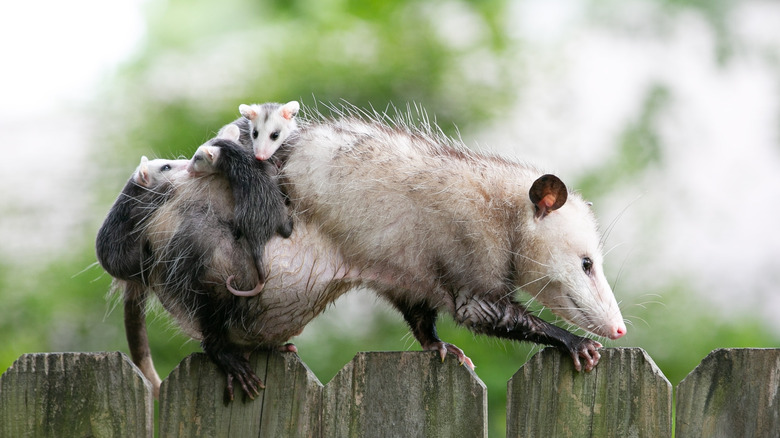
If you start a wildlife garden, you should expect to see some wildlife. During spring, you may even see baby animals out and about with their parents, garden or not. However, you may also see some babies that seem like they're in need of help. Unlike helping a baby bird in your yard, helping a baby mammal can be more complicated than simply placing it back in its nest. If you've spotted a baby opossum that you suspect is in trouble, the first thing to do is take a step back and observe the situation.
It may be tempting to rush in and help right away, but it's important to get all the facts first. To start, look for obvious signs of danger. If the opossum is injured, there may be a predator nearby. If it's safe, take a closer look at the animal without touching it. If the opossum is smaller than seven inches and has thin fur or lots of pink skin showing, it is most likely too young to be out on its own. If you're wondering, seven inches is about the size of an adult human hand or a standard kitchen knife. In this case, call a licensed wildlife rehabilitation center near you for assistance.
Opossums larger than seven inches, not including the tail, are most likely young adults. They may look small and helpless, but they're actually ready to live on their own. Removing it from the wild won't help it learn how to survive, so it's best to leave it alone unless it's injured. You can help it by keeping any pets or people away until it leaves.
Can you care for baby opossums yourself?
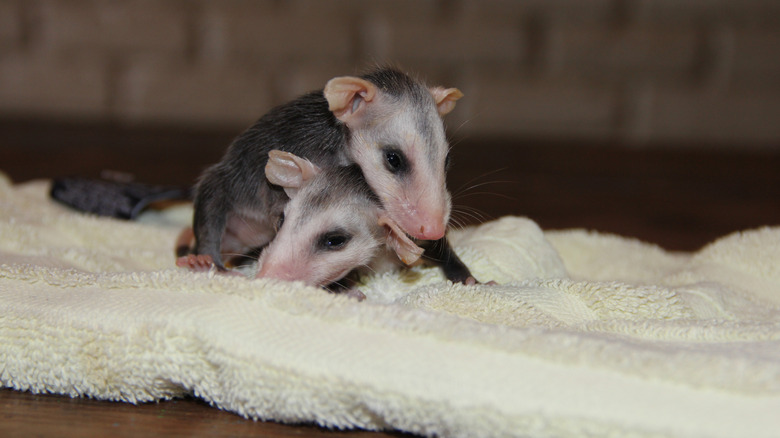
Sometimes there isn't a wildlife rehabilitator near you who can take baby opossums. If you find yourself in that situation, the unfortunate truth is that you shouldn't try to raise it yourself. Firstly, it's illegal. Keeping wild animals requires special permits, and you could get in serious trouble. If this is something you're passionate about, consider researching the licensing process in your state or reaching out to local rehabilitation centers to see if they have volunteer positions.
Going through the proper channels also ensures you know what you're doing. Very young animals often need round the clock care as well as special food. Baby opossums in particular need to follow a strict diet, or else they can develop a serious and painful condition called Metabolic Bone Disease. Without the right training, good intentions may result in the opossum suffering more than necessary.
So, what should you do instead? Start by widening your search. If the rehabilitators closest to you can't help, ask if they know of any other facilities or wildlife vets that can. If you're able to get ahold of one, the rehabilitators will be able to give you more specific instructions, but in general you should put on gloves, place the baby in a dark, warm box, and transport it to them quickly and safely. If there isn't anyone with the ability to care for it properly, there isn't much else you can do. As sad as it is, leave the little guy in peace and keep your pets safe from any diseases it may have by keeping them away from the area.