

Reach For This Kitchen Scrap To Easily Fill The Bottom Of Your Planters
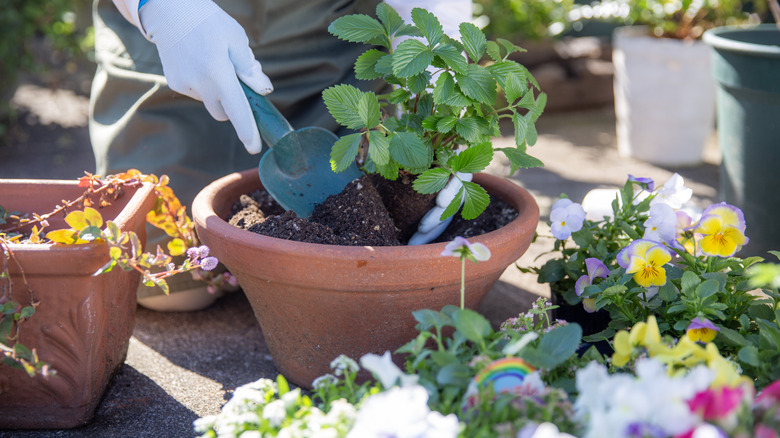
Potted plants, be they indoors, on your balcony, or in your yard, enhance our lives in so many ways. For many of us, planning and planting our pots is nearly as pleasurable as enjoying them as they grow and bloom. But one aspect of the process that none of us find to be fun is paying for potting soil. High-quality potting soil costs more but logically produces healthier plants. For that reason, it is a common technique to fill a portion of our pots with something other than potting soil, to improve drainage and to save money. Peanut shells are underused but surprisingly effective at this task, a clever hack in the same way that things like pinecones are a smart addition to planters. This common kitchen scrap is lightweight, and can create a porous but sturdy layer to support the potting soil while promoting effective drainage yet also retaining moisture. Nearly perfect!
But if you fill the pot with peanut shells, will there be sufficient potting soil to produce a healthy plant? The answer is yes. Many pots and planters can hold much more soil than the plants can possibly take advantage of. The soil only needs to be a bit deeper than the depth of the plant roots. Using soil to fill the rest of the planter has a few disadvantages. It can retain too much water, leading to possible problems such as root rot. It is heavy, a disadvantage for hanging plants, or large planters (making them harder to move). High-quality potting soil can also be expensive. Just note that peanut shells aid as planter filler, not fertilizer or compost.
Peanut shells fill the bill (and the planter)
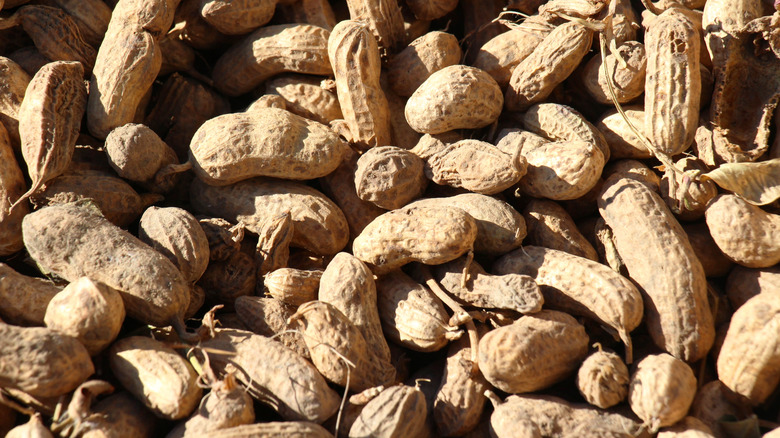
After selecting the best plant pots for the job, it's time to get busy planting. Peanut shells are ridged and irregularly shaped, which allows them to create an interconnected layer of support while remaining extremely porous. Ideal for supporting the potting soil and promoting drainage, they are a good source of carbon and provide some small amounts of other nutrients as they break down. Fill the pot or planter about half full of the peanut shells. Although not required, some folks recommend putting a layer of landscape fabric on top of the peanut shells before adding the potting soil. Next, add the soil and you are ready to plant.
While nearly perfect for the task, there are a couple of warnings to keep in mind. First of all, don't use salted peanut shells. Salt can severely damage plants, and is sometimes used to kill weeds. And second, be aware of peanut allergies. Mark your pots as containing peanuts shells and inform your guests of their presence as well so they can keep away from them. Don't serve food grown in these pots to allergic people. This may seem excessive, but it is better to be overly cautious.