

Container Or Ground: Here's The Best Spot To Plant Lavender So It Thrives
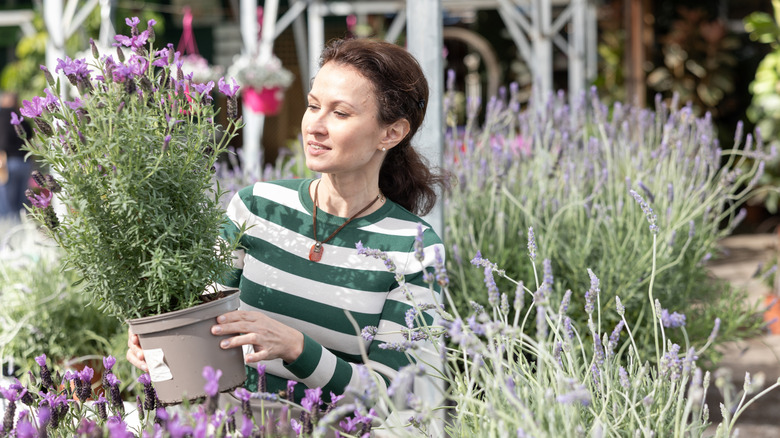
Known for its beautiful flowers, lavender (Lavendula spp.) is a popular garden herb. If you're interested in learning how to grow lavender, you'll be happy to know that the basics are simple. Full sun and well-draining soil are the keys to helping it thrive, but there's a question you might be left with. Should you plant your lavender in the ground or in a container? While lavender can technically be grown in either, in many cases you're better off planting it in a container due to the limitations of the plant's required growing conditions.
Lavender is generally a fairly hardy herb, but it has two main weaknesses. The first is its sensitivity to extreme temperatures, and it's only hardy in zones 5 through 9. In other zones, the excessive heat of summer or cold of winter can weaken or damage it. The second is that lavender doesn't tolerate wet feet and must be planted in well-draining soil. Planting lavender in a container makes these factors significantly easier to control. You can choose a well-draining potting soil and container with plenty of drainage holes, move a potted lavender plant indoors or into the shade when the temperature is too hot or cold, and even move it into a sheltered spot to prevent heavy rains from overwatering it. Growing lavender in a container is also more convenient for gardeners with limited space, since they can be placed on a patio or apartment balcony.
For the best results, choose a smaller lavender variety like Little Lottie (Lavandula angustifolia 'Little Lottie'), Hidcote (Lavandula angustifolia 'Hidcote'), or Nana Alba (Lavandula angustifolia 'Nana Alba'). You can also try growing Spanish lavender (Lavandula stoechas). It tends to be more delicate than the common English lavender (Lavandula angustifolia) and is only hardy in zones 8 and 9.
When should you plant lavender in the ground instead?
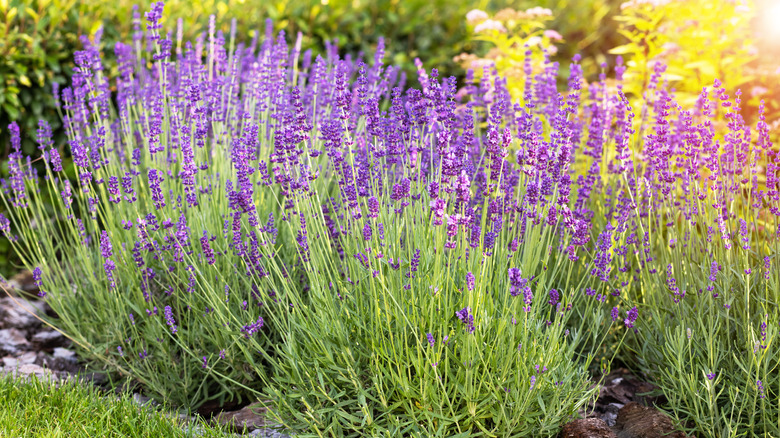
While lavender is easier to grow in containers in many cases, there are a few times when you should consider planting it in the ground instead. If you live in zones 5 through 9, or 8 through 9 for Spanish lavender, then you can grow your lavender plants outdoors all year round. Make sure the soil is well-draining, plant them in full sun, and watch them grow. When growing in the ground, lavender needs to be planted after the last frost of the year. In some zones, lavender is among the flowers you can plant in March for a colorful spring garden, but double-check your estimated last frost date to be sure.
Your lavender may also do better outdoors if you're growing a larger variety. Types such as Grosso (Lavandula × intermedia 'Grosso'), Hidcote Giant (Lavandula × intermedia 'Hidcote Giant'), and Provence (Lavandula × intermedia 'Provence') grow taller and wider than the more compact, container-friendly lavenders. While you can still grow these varieties in containers, you'd need a larger pot. Larger plants are generally more cumbersome to move around and repot, making them less convenient. It can also be harder for larger pots to get enough light indoors if your home doesn't get much natural light, since they won't fit on windowsills.
For those who live in a Southerly region that doesn't experience a lot of rainfall, you can grow lavender in the ground if you're planning on growing it as an annual rather than a perennial. It's usually better to grow lavender as a perennial, since it tends to produce more flowers the longer it lives. However, it does usually bloom in the first year after planting. So if you'd rather plant it in your garden to enjoy for just one season, you can.