

For More Birds And Butterflies, Plant This Flower Next To Your Birdbath
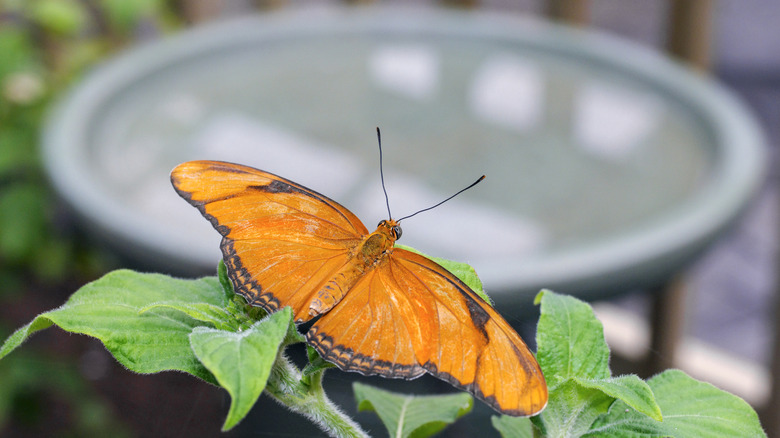
Birds and butterflies bring so much life and color to a garden, but like any wild creature, they won't visit if your garden isn't welcoming. If you're in the process of creating a bird-friendly garden or planting flowers that attract butterflies, then you should absolutely include cosmos (Cosmos spp.) in your flower beds. These colorful blooms are great at drawing in all sorts of birds, butterflies, and other pollinators. Make it even more effective by planting them around your birdbath, which also attracts birds.
Cosmos flowers are full of nectar, which provides sugar, water, and nutrients to butterflies and other pollinators. Hummingbirds will also sometimes drink their nectar, but most birds are drawn to the flowers for a different reason. Many types of small birds, including finches, sparrows, and doves, eat the seeds from cosmos flowers. The flowers are long-lasting, typically opening in spring or early summer and lasting through fall. This means months of attracting visitors to your garden, with seeds forming just in time to provide a snack for birds before winter arrives. When paired with a birdbath, your garden becomes a one stop shop for all your flying friends, letting them grab a snack and a drink of water in one spot.
Cosmos are self-seeding annuals that come back every year, which means you won't need to replant them every 12 months. This makes them great for areas with less space, such as near your birdbath or other structures. Replanting in a tight space isn't always easy, and you don't want to accidentally bump your head on the overhanging birdbath lip. Don't worry about the birds eating all the seeds, either! Cosmos flowers produce quite a lot of seeds, so there's plenty for the birds to enjoy while still leaving enough to grow new flowers next season.
How to use cosmos to attract birds and butterflies
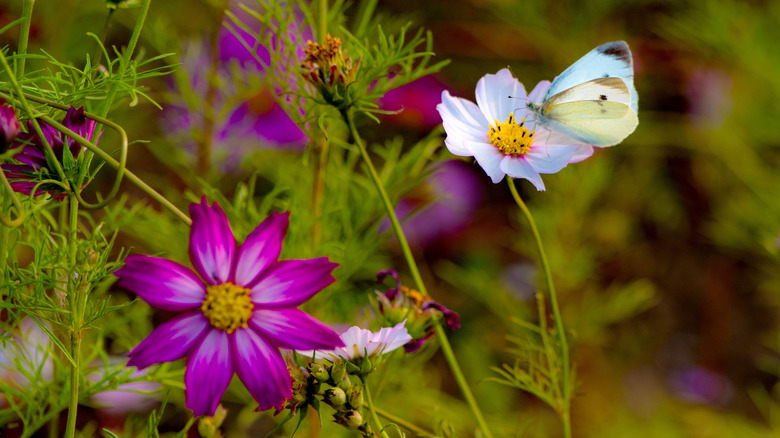
The cosmos flowers on their own will be fairly attractive, and adding a birdbath into the mix is also helpful. However, that's not all you can do to help your cosmos flowers draw in a lively crowd! To begin, make sure you know how to grow cosmos flowers to ensure they're thriving. Plants that aren't given proper care may not bloom, or might die before they can produce seeds. Cosmos specifically should be planted in the sun. Ensure the soil is fertile and moist but properly drained.
Plant a few different types of cosmos flowers, or a mix of cosmos and other flowers that attract birds and butterflies. Different pollinators are attracted to different colors, so planting a variety of blooms will draw in the widest variety of visitors. Butterflies tend to be attracted to bright colors including red, orange, purple, and pink. Bees prefer shades of blue and purple specifically and hummingbirds prefer red and pink. You can rely on a mix of yellow cosmos (Cosmos sulphereus), which create yellow, red, and orange flowers, and tall cosmos (Cosmos bipinnatus), which primarily blooms in pink and purple, to cover most of the colors. To add some blue to the mix, consider planting Virginia bluebells (Mertensia virginica) and great blue lobelia (Lobelia siphilitica).
Finally, don't use any pesticides on your cosmos if you're hoping to attract birds and butterflies. Pesticides will harm the butterflies and bees as well as any pests, which defeats the purpose of planting the cosmos in the first place. They can also make birds sick when they eat bugs or seeds that have come into contact with the pesticides.