

The Stylish Garden Edging Idea That'll Make Your Yard Look Like A Million Bucks
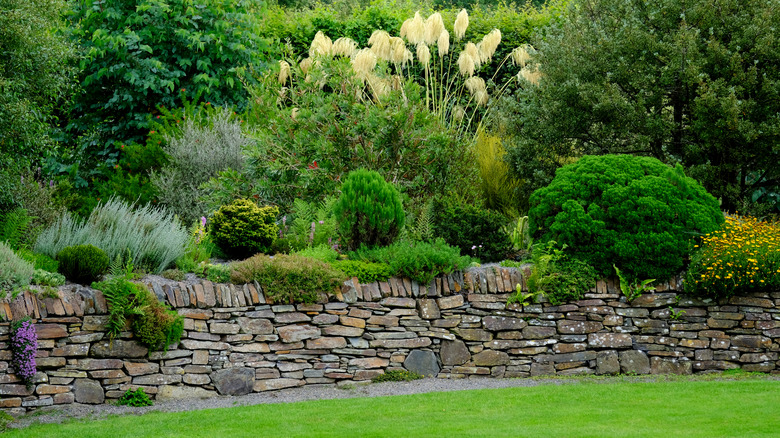
Whether you're starting fresh or ready to give your existing garden an update, an easy way to elevate the environment is to plan for decorative garden edging. The options range from inexpensive plastic edging to pricy stone pavers, but almost all of them have a rigid, tailored look that will create a crisp edge, which is typically the goal with this garden feature. However, what if you wanted to make your yard look as magical, free, and whimsical as a cottage garden straight out of the English countryside?
Well, the answer is easy: freeform garden beds lined with dry stacked flagstone. This sedimentary rock, cut into flat irregularly-shaped paving stones, gives garden beds the appearance that they are one with nature and have been there forever, stacked with history between each stone. The informal, nature-centric approach to edging looks like a million bucks, and though it may not set you back quite that much, you should still be prepared to shell out a decent chunk of change for the beautiful material. The good news is that a single row of dry stack edging, or perhaps a shorter stack of a few rows, can be easily installed by hand to save on labor. This unfussy, natural edging not only looks amazing, full of charm straight out of the European countryside, but it also helps protect garden mulch from being washed away in the rain.
What is the dry stacked stone method?
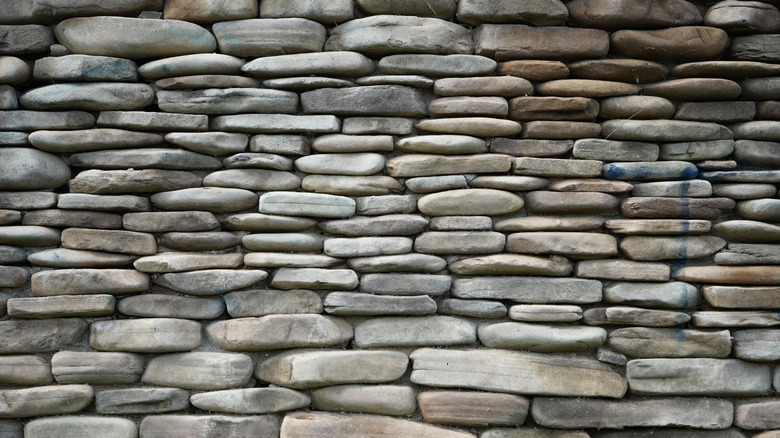
Installing one to three(ish) layers of garden edging can easily be done by hand with the old technique of dry stacking, named as such because it's accomplished by arranging individual stones without the use of a "wet" bonding agent like mortar or grout. Instead, the benefit of this simplistic approach is that you rely only on proper interlocking placement of stones for strength, soil and gravel backfill (as needed for stability), as well as gravity to make the whole thing settle and become more solid over time.
The arrangement and minor soil backfill required for low garden edging with only a couple of rows is straightforward, and it should work easily with all soil compositions since the stacks are primarily just decorative. But for the exceptionally beautiful English cottage aesthetic of long, meandering walls of stacked flagstones that loosely define your garden landscaping on a larger scale, you will want to seriously consider hiring a pro. If you're dreaming of retaining walls higher than a few rows of stones, an experienced mason will ensure proper foundational support for the weight, address drainage considerations, and navigate potential erosion issues that could lead to a collapsed wall over time based on your soil type, weather, and landscape. These seemingly effortless retaining walls are actually meticulously interlocked works of art when done properly, but you can certainly get the look without the commitment, cost, or hassle by stacking a few low rows of garden edging yourself.
Dry stacking flagstone steppers creates a stunning organic garden edging
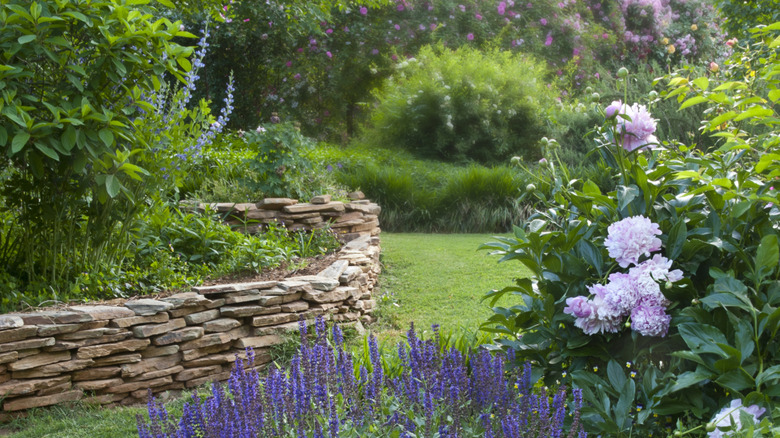
Generally, flagstone material costs about $2 to $6 per square foot, excluding delivery or labor. So, if you have a small-scale garden edging project, a truck, and a strong back, you can pick up smaller quantities of flagstone to save some dough. Some stone yards will have a scrap pile of thinner, smaller, and broken flagstones, often called "steppers," which are ideal for a DIY garden edging project, as they are lightweight and more affordable. However, if you have a larger project in mind, you may need to have a pallet of flagstone delivered to your home.
Once your flagstone has arrived, lay the first row of stone along the garden's border, beginning with the flattest rocks and leveling the ground slightly as needed. Once the first level is in place, stagger the second row's placement so that the upper stones cover the gaps between the lower stones, like you would with bricks. However, unlike bricks, the irregular sizing of flagstone scraps makes for an imperfect stack pattern, which is absolutely part of the rustic country charm. Play with the arrangement of different sizes and shapes to get the most secure fit with the unique neighboring stones. The better they all nestle in together, the more solid the edging stack, so it pays to take your time as you put the puzzle together. Repeat until you have dry stacked to your desired edging height for an organic, natural look. Take the aesthetic to the next level by tapering off the end of the rows in an imperfect way so the edging fades into the landscape or blends into your handmade flagstone patio.