

Avoid Using This Popular Fertilizer If You Want To Keep Your Garden Soil Healthy
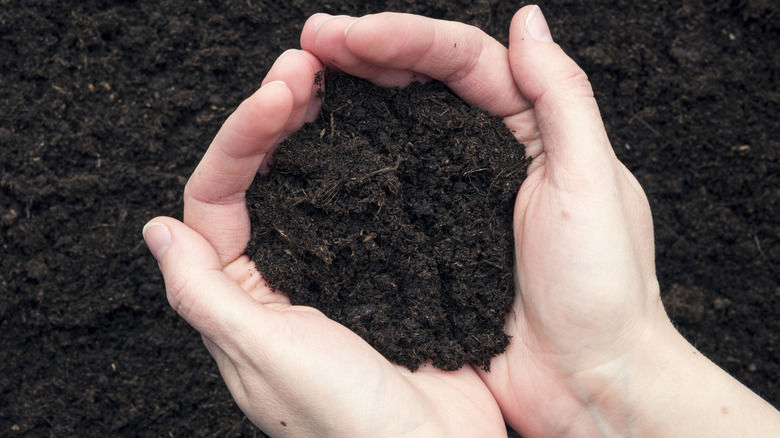
To learn how to garden is to learn how to be in communion with the plant world. We tend to the land and it, in turn, produces food to nourish us, herbs to heal us, and flowers and leaves to delight our eyes and enchant us with a heady fragrance. It is a relationship based on reciprocity, and the greatest gift we can offer our plant buddies in return for their splendor is healthy soil. While soil can be enhanced organically with animal waste and repurposed kitchen scraps, many folks are still using a popular synthetic fertilizer brand that can harm soil health.
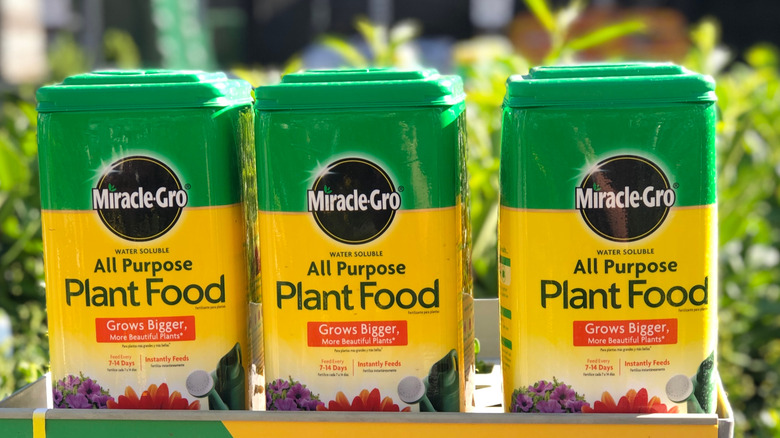
Despite its status as a bona fide household name, Miracle-Gro Water Soluble All-Purpose Plant Food —like all its fellow synthetic fertilizers — can actually wreak havoc on your soil. A cursory glance at the ingredient list may not be too concerning — it's got potassium, nitrogen, and phosphorus (NPK), which are the three main nutrients plants need, albeit in a synthetic form. However, in synthetic fertilizers, these nutrients are present in such concentrated doses that they can harm the plants and the surrounding ecosystem in the soil, according to a 2019 study by Anthony A. Linares, a graduate researcher at California State University.
A major reason soil becomes so uninhabitable for microbes under the influence of synthetic fertilizers is the effect it has on the soil's pH. To create the nitrogen plants need synthetically, these fertilizers use ammonium phosphate, a compound that increases the amount of ammonium in the soil, making it too acidic. Though the effects are temporary, the more it's used, the more it can degrade soil health.
How synthetic fertilizers like Miracle-Gro can harm garden soil
If you haven't been listening closely to your garden's heart, the idea of killing off all the fungi, bacteria, weeds, and bugs in your yard might sound like a win. However, along with decomposed organic matter, this ensemble of ragtag soil dwellers keeps your plants fed, strong, and resistant to environmental stressors. If all these helpers are gradually driven or killed off by the synthetic fertilizer, the plants become reliant on that fertilizer for sustenance. You find yourself in an endless cycle of spending money for a band-aid that is making your problems worse.
Once it's treated with a synthetic fertilizer like Miracle-Gro, soil tends to require more frequent watering, too. These fertilizers are heavy with mineral salts, which causes a dehydrating effect that extends to bacteria and fungi living in the soil. As they are driven out, it creates a densely compacted layer of soil around plant roots, which discourages worms and other burrowing critters from moving through the soil. This, in turn, restricts the flow of water and air and reduces plants' ability to absorb nutrients and hydration. While this can take months, repeated use can add up over time, further compounding the issue.