

What To Do If You Find A Baby Skunk In Your Yard
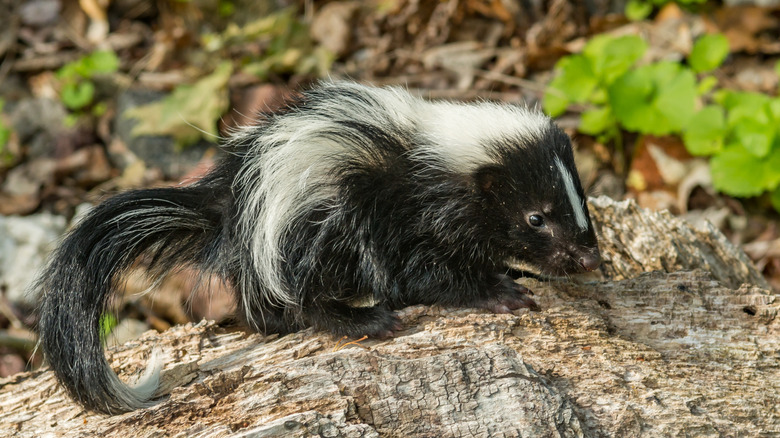
Spring can bring all sorts of amazing new life to your backyard. If you have a wildlife-friendly garden, you can expect the return of hummingbirds and butterflies, and if you're lucky, the chance to spy some adorable new baby critters. Spring is also peak season for calls to rehab centers about abandoned baby wildlife, and baby skunks are a common subject of concern. If you see one of these little black and white creatures wandering all alone in your yard, you may be prompted to try and rescue it, but there are important things to consider before you approach.
Do not call a professional wildlife remover or pest control if you are interested in saving a baby skunk. Your first call should be to a local wildlife rehabilitator or your state fish-and-game department if you suspect a baby skunk is in danger. These professionals will know the proper steps to take and can advise you on what to look for to make sure the baby is actually in need of rescue.
A baby skunk on its own may not be orphaned, and might have its mother nearby. Furthermore, it could be mature enough to be out exploring on its own, which skunks do at about two months of age. Rehabbers usually recommend waiting and observing for 24 hours to be certain if a solo baby skunk is indeed abandoned and in need of help.
When to call in a wildlife rehabilitator
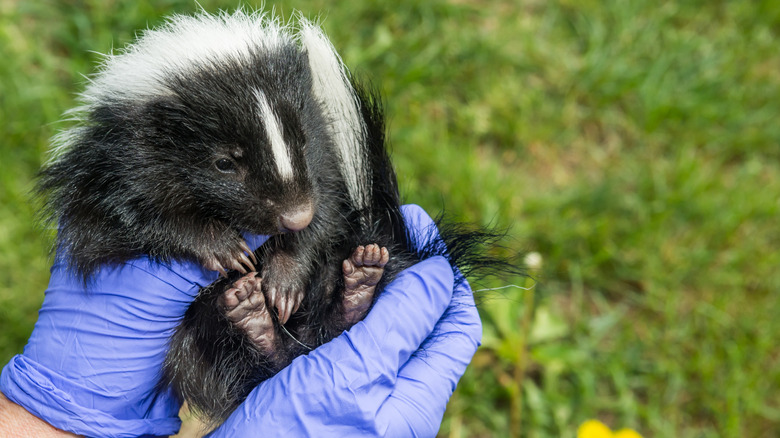
Skunk moms are known for being good caregivers to their litters of four to eight babies, keeping them hidden in burrows, under porches, or beneath wood piles for the first few weeks. It isn't unusual to see baby skunks emerge from their den and explore, but Mom will be nearby supervising, as baby skunks stay close to their mothers for the first several months of their life.
If Mom doesn't show up after a day of observation, or if you know the mother is deceased, you can call a rehabber for advice. If you see a lethargic or obviously injured baby skunk, or one that seems covered in flies or fly eggs, it's time to call for a rescue. It's unwise to try and scoop up a skunk on your own, as it will likely spray you and may also bite. Additionally, capturing any wildlife on your own may be illegal in your state. Local or state rules will dictate how a baby skunk is to be handled. For example, Colorado prohibits rehabbers from taking in striped skunks due to their high rabies risk.
Many homeowners consider these critters pests and want to keep skunks out of the yard, but if you appreciate these adorable omnivores who feast on insects and rodents, you'll want to let the professionals equipped to care for them come to the rescue.