

Attract This Friendly Bird To Your Garden For Natural Pest Removal — Here's How
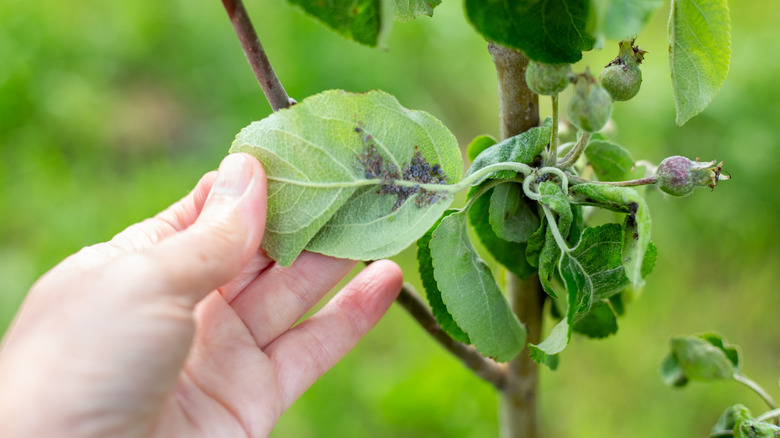
Pests are an unfortunate part of gardening and backyard living. Whether you're dealing with unwanted bugs in your vegetable garden and flowers, or pesky insects thriving in shrubs and trees, these pests can get out of control fast, particularly during spring and summer. This problem doesn't necessarily require chemical pest control, though. In fact, using pesticides can have unintentional side effects for pollinators and other wildlife. With this in mind, it's more beneficial to employ as many natural forms of pest control as you can. One potential pest control assistant may be in avian form: The black-capped chickadee (Poecile atricapillus).
Located year-round in only the northern half of the continental U.S. (sorry, southerners), the black-capped chickadee is a small bird that is named from its black-colored feathers covering the head and neck, similar to the Carolina chickadee. It's also recognized as a rather friendly bird that doesn't cause issues. Black-capped chickadees prefer to live near trees where they can fly back and forth between food sources. If you happen to have trees or large shrubs on or near your property, then you might just increase the chances of attracting these talkative birds into your garden.
Aside from location, it's important to know the diets of black-capped chickadees. While they do visit seed feeders, they are considered insectivores that primarily eat bugs. These protein sources are even more critical during breeding season, as they make up the majority of their diets at this time. During the winter, black-capped chickadee diets are comprised of 50% invertebrates, per the Canadian Wildlife Federation. Some of their favorite bugs include spiders, beetles, and caterpillars, as well as aphids and ants.
How to encourage more black-capped chickadee visits
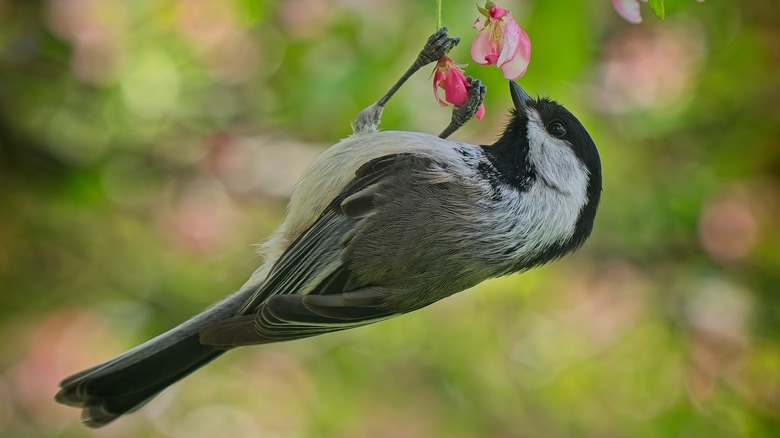
If you live within range of black-capped chickadees, consider creating a bird-friendly garden by adding native plants that attract the bugs these birds like to eat. Overall, any native plant that attracts insects can be appealing to black-capped chickadees, but it's also worth noting some of the most important species. According to Audubon, birch trees (Betula spp.) top the list for chickadees more generally because of the numerous types of caterpillars that live among them. If you happen to have a birch tree on your property, consider this a special spot for your black-capped chickadees. If you want to plant something new specific for these birds, a runner-up to birch is sumac (Rhus spp.). These garden shrubs grow quicker than birch trees and do not take up as much space. Plus, they offer interesting foliage that can change color in the fall. Be aware that sumac can spread easily and take over other plants if they are not given adequate room.
You might also consider offering these birds other sources of food as a way to attract them to your outdoor spaces. Like many other songbirds, black-capped chickadees favor sunflower seeds. These are readily available in seed mixes as well as in standalone products you can add to feeders. Additionally, black-capped chickadees are known to feast on pumpkin seeds, cornmeal, and suet. A source of water via a clean and well-placed bird bath can also help encourage more visits. As they grow used to your garden and feel safe in your outdoor spaces, you might see black-capped chickadees more often thanks to a combination of these items.