

11 Trees That Can Do Major Damage To Your Plumbing
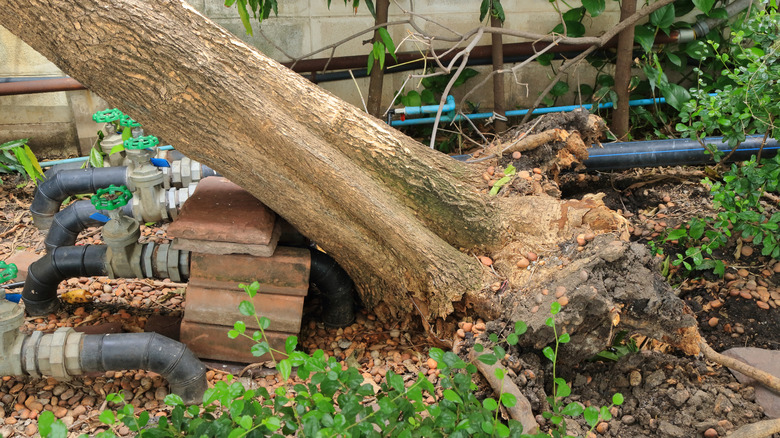
Planning to plant new trees in or around your yard? Whether you're a tree planting beginner or a bit more experienced, you don't want to overlook your home's plumbing in the process. Trees can wreak total havoc on pipes, sewage systems, and all of the other plumbing components sitting underneath your lawn's grassy surface. When trees are placed too close to pipes, their roots can wind up sneaking into cracks or leaky spots as the tree grows over time. But the type of tree matters, too, as certain species can cause even more serious problems, disrupting the flow of water and waste or even causing significant damage to the pipes themselves.
When you're choosing trees for your home's outdoor spaces, you'll want to think about one detail above all else if you're concerned about potential plumbing damage: What is the tree's root system like? Some trees send their roots deep into the ground while others have shallower systems that sit close to your lawn's surface. Many of the trees that pose the biggest threat to plumbing infrastructure are those with root systems that search for their sustenance underground. Technically, all tree roots do this in order to keep the trees themselves growing and thriving. But certain types are more aggressive in their search, with fast-growing root systems that seek out water wherever they can find it, including sewer pipes and your home's plumbing system.
Elm trees
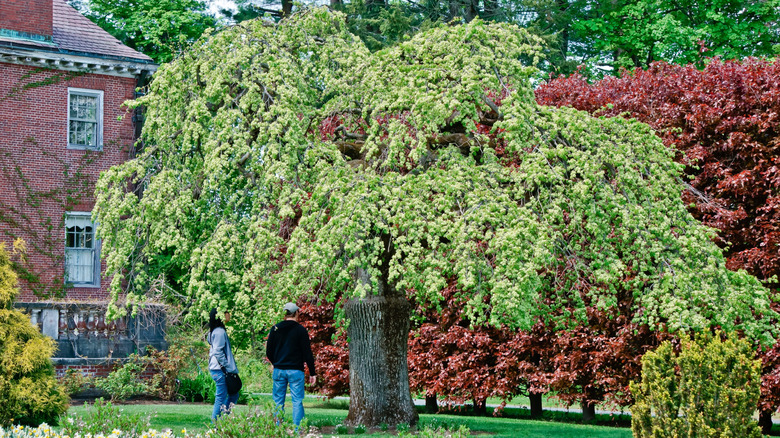
Elm trees (Ulmus) are large, vase-shaped trees that are common across North America. They come in a number of different variations, but they aren't such a great fit for most homes due to their large size and risk of disrupting house foundations – as well as plumbing infrastructure. In a 2025 study reported by ScienceDirect, elm trees (specifically English elm, or Ulmus procera) were found to have a substantial risk of causing significant plumbing damage due to their extensive root networks.
Red maples
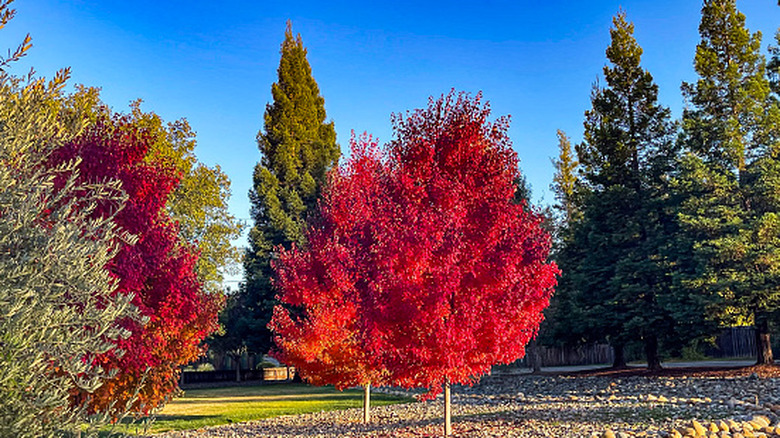
Red maple (Acer rubrum) is another big tree that can cause even bigger plumbing problems. This type of maple tree thrives in USDA hardiness zones 4A to 9B, and when fully grown, it can measure an impressive 60-75 feet tall. But while they can be an excellent choice for large, open spaces, red maple trees have densely-matted root systems. Those roots also happen to be shallow, which makes them prone to damaging items they're planted near, potentially including your home's plumbing.
Silver maples
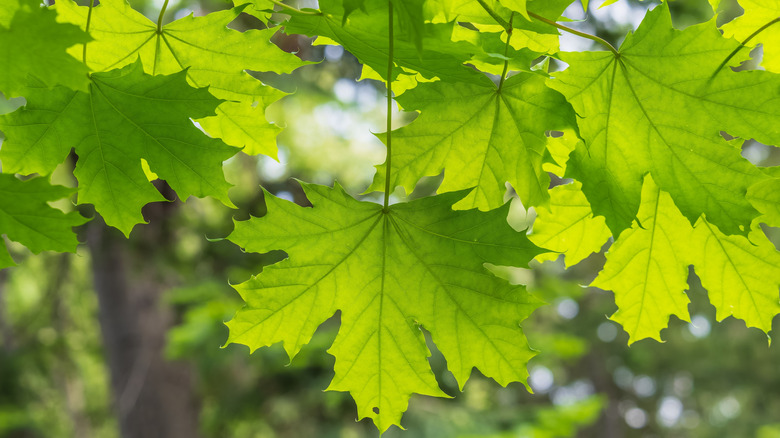
Tall, shady, and covered in leaves that have slight hints of silver, silver maples (Acer saccharinum) are statement-making, fast-growing trees that mature quickly and can reach a height of 80 feet tall. This native North American plant grows in USDA hardiness zones 3 through 9, but its fast-growing roots can wind up in sewer pipes, posing big plumbing problems. In fact, silver maple trees' roots are such a persistent nuisance that the USDA considers them "notorious for invading and clogging underground drainage and water lines that are not tightly constructed."
Willow trees
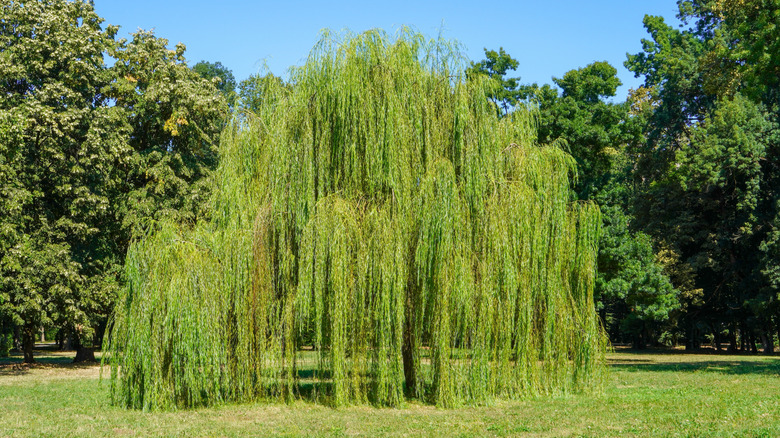
Willow trees (Salix) come in more than 400 different variations, from sprawling Weeping Willows (Salix babylonica) to the soft, fuzzy Goat Willow (Salix caprea) shrub. But for willow trees and even smaller shrubs, the issue isn't necessarily their size. Rather, this is a type of tree that loves water. Most willow species will actually seek out moisture in underground pipes — so if you plant one near any kind of water-carrying pipes on your property, its roots will likely find their way to them, wreaking havoc over time.
Mulberry trees
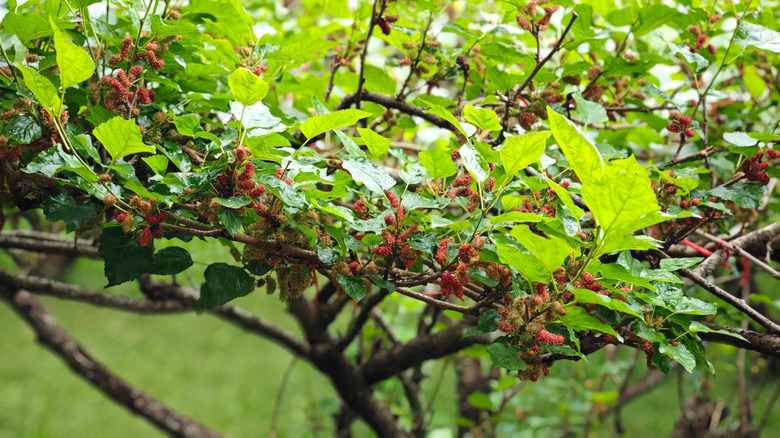
If you're considering a fruit tree, pause before you settle on a mulberry tree (Morus supp.). Red mulberry (Morus rubra) and white mulberry (Morus alba) trees are similar, though red mulberry is native to the Eastern United States while white mulberry originated in China. Both can grow quite tall — red up to 60 feet, white up to 40 feet – and they need to be planted away from structures like homes and any plumbing in your yard. Because of how devastating their root systems can be, they could potentially even cause foundation damage.
Aspen trees
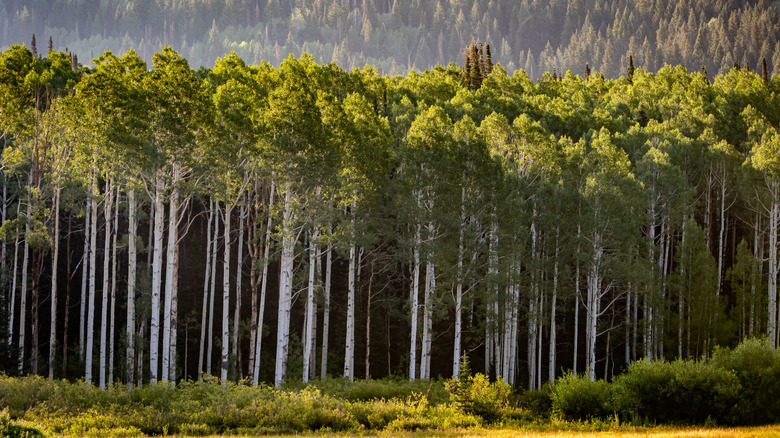
Aspen trees, or quaking aspen (Populus tremuloides), are easily identifiable thanks to their stick-straight shape and bare lower trunks. They're also the most widespread tree in North America, found all the way from Alaska to into the midwestern United States. Such trees are also difficult to eliminate once they start growing, and the USDA considers them to be "an aggressive pioneer species." Aspens aren't technically invasive, but their growth can be overwhelming — which is why you don't want their roots around your home's plumbing infrastructure.
Oak trees
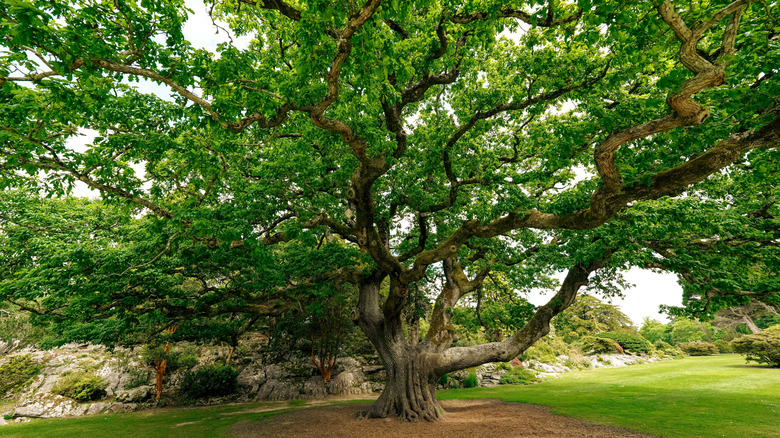
More than 500 different kinds of oak trees (Quercus) exist, offering a wealth of options if you love this member of the beech family. While there's plenty of variety, these large trees can offer a wealth of shade and many leafy branches — but they need an awful lot of space. Like most very large trees, you'll need to take care when planting big oak trees to avoid damage and costly repairs to underground systems. Opt for a too-big oak right next to your home, and you'll probably disrupt your existing plumbing setup.
Magnolia trees
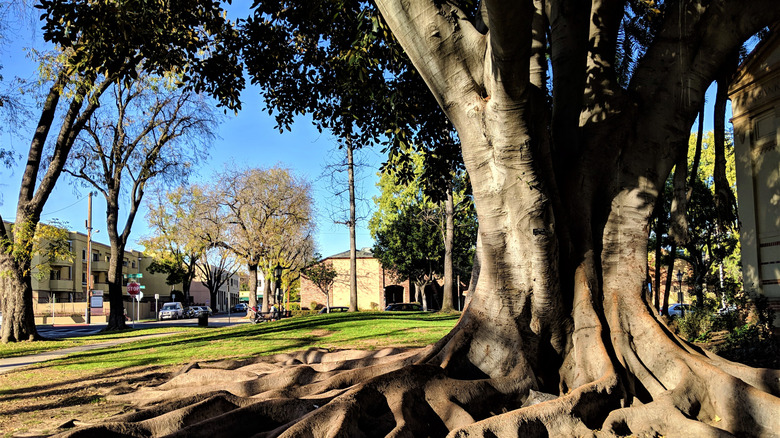
Magnolias (Magnolia) might seem like an excellent choice due to their pretty blossoms and sweet fragrance. But with more than 200 different magnolia trees to choose from, you'd be surprised at just how massive these plants can get –and their roots, too. These trees can have far-ranging root systems that reach as far as 40 feet from their trunks, and those roots sit shallow in soil. If they reach your plumbing, you could wind up with the plumbing damage you've come to expect from trees like these.
London plane trees
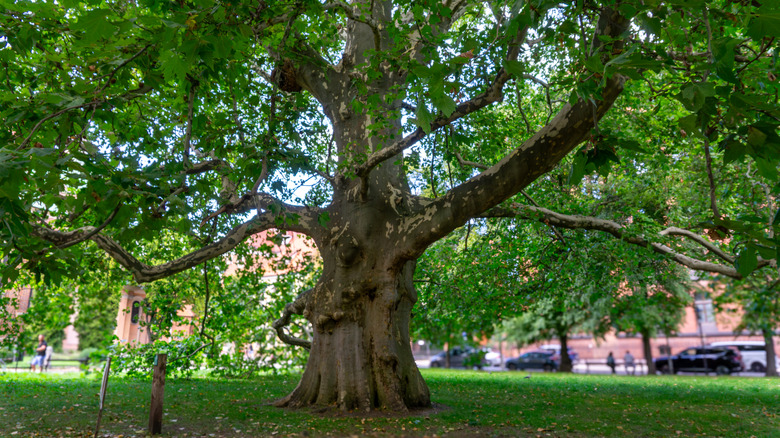
A cross between an American sycamore tree and an Oriental plane tree, London plane trees (Platanus x acerifolia) offer a lot of shade thanks to their widespread branches. These trees, which grow in USDA hardiness zones 4 to 8, can reach up to 100 feet tall and 75 feet wide. While you might've seen it lining city streets to provide shade, don't assume it's a good choice for your own yard. This huge tree has roots that can do serious damage, including slipping into your plumbing and even messing up nearby sidewalks.
River birch trees
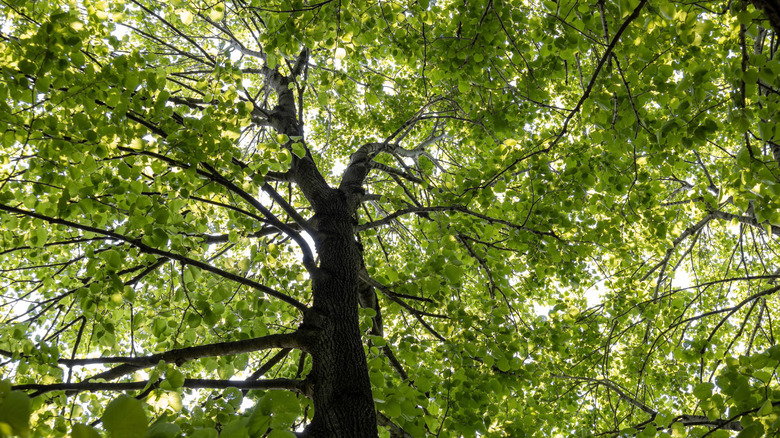
The river birch (Betula nigra) is a sun-loving, fast-growing tree that's particularly fond of water. This tree thrives in USDA hardiness zones 4 to 9 and is found in humid southern states as well as northeastern locations. Some consider river birch roots to be invasive because they grow quickly and are shallow in soil, and they can easily interfere with everything from sidewalks to plumbing lines. As they seek out more water, they can wind up leaving you with some messy (and expensive) plumbing problems.
Norway maple trees
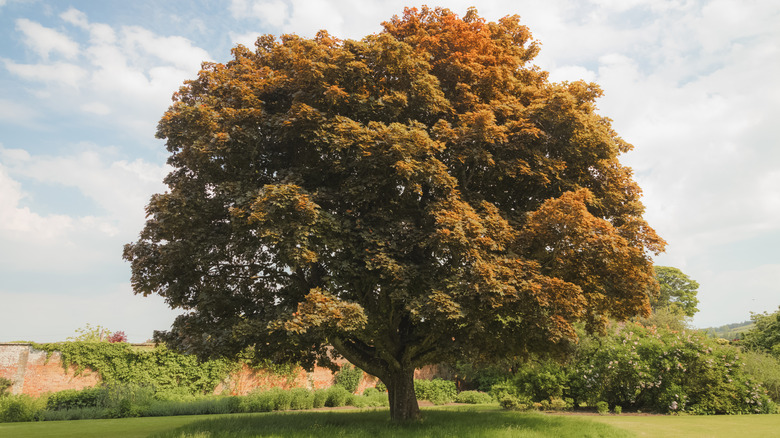
There are two reasons you'll want to keep Norway maple (Acer platanoides) and its flowering branches out of your yard. First, this maple varietal is considered to be an invasive species, so it can have a negative impact on both your yard and your local ecosystem. Secondly, the tree has shallow roots that can prevent other plants from thriving — and that can potentially become a problem for sewer systems. When it's been planted on city streets, Norway maple has been able to damage infrastructure, so you don't want to take that risk at home.