

How To Naturally Repel Ticks From Your Yard With One Simple Liquid
We may receive a commission on purchases made from links.
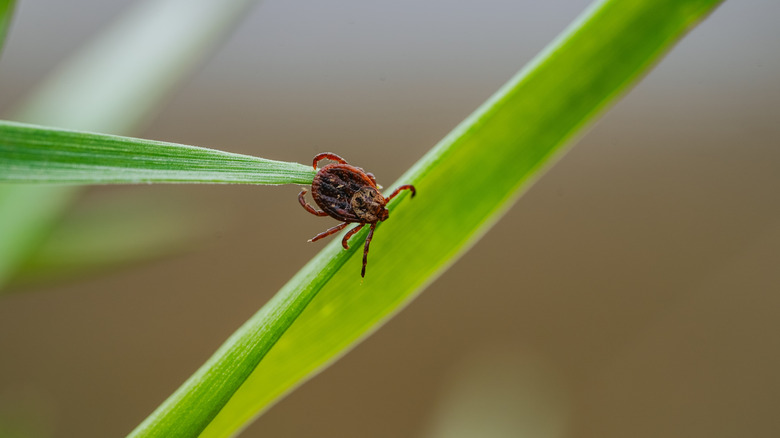
When considering pests and the health of your family, ticks are arguably some of the worst offenders. They may spread dangerous parasites and viruses, as well as bacteria that can lead to the development of Lyme disease. Pets are vulnerable to Lyme disease and other pathogens transmitted by ticks that might hang out in your yard, too. While ticks may linger year-round in some regions, spring and summer are considered peak tick season for most areas. To get ahead of tick season, you might wonder if it's possible to treat your yard with more natural methods instead of chemical-based pesticides. While no homeopathic remedy is 100% guaranteed to work against ticks, there is currently some research suggesting neem oil as a possible repellent.
Neem oil is derived from seeds of neem trees (Azadirachta indica), which are native to parts of South Asia. It's used by both commercial farmers and home gardeners as a way to keep plants healthy and free of certain pests that might harm them. To the latter point, it's thought that neem oil's key ingredient, azadirachtin, may disrupt the life cycles of common garden pests. For these reasons, you may have even heard of neem oil being touted as a natural tick killer for home lawns. While this non-toxic product has traditionally been used as an insecticide for centuries, modern scientists are just beginning to explore the product's effects on specific pests. This includes arachnids like ticks. Neem oil might kill mature ticks directly, but it's also possible that the parasites might avoid areas with the product, too.
How to treat your yard with neem oil
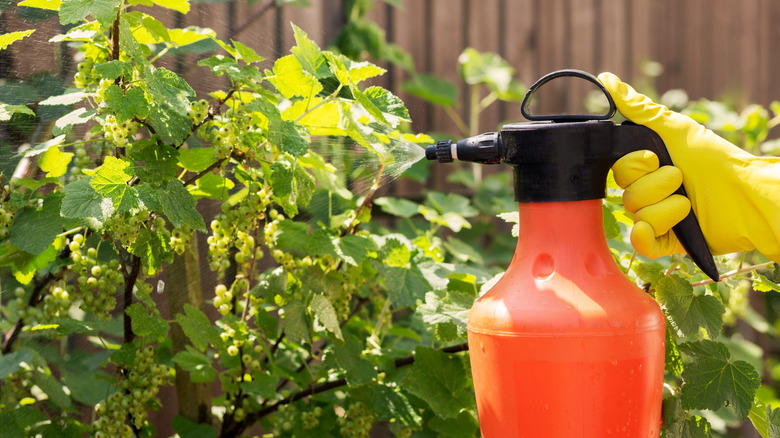
There are two main categories of neem oil you can use for your yard. The first option is to make a homemade neem oil spray that you can apply directly around your outdoor spaces. The University of Florida recommends combining 1 to 2 teaspoons of neem oil with a small amount of dish soap in a quart of water. It also suggests spraying the oil once a week or bi-weekly as a preventive measure or once every four to seven days in the case of infestations. (However, it's worth noting that it does not specifically list ticks here.) It's also best to apply neem oil either early in the morning or in the evening and to avoid spraying it during extremely hot or dry conditions to prevent possible plant damage. You might also consider testing the diluted oil on small areas to ensure no plant burning occurs. Avoid spraying on pollinating plants when possible to prevent overexposure to bees, butterflies, and other backyard pollinators.
Alternatively, there are commercial neem oil spray products available if you want something a little more convenient and ready-to-use. Just be aware that not all commercial neem oil sprays are intended for use as pesticides. Many of these are primarily marketed for preventing common plant diseases and pests, so there may be other ingredients aside from neem oil, too. One example is Bonide Captain Jack's Neem Max spray. If you do want to try a commercial neem oil product, be sure to follow all package instructions before applying it around your yard.
Limitations of neem oil as a tick repellent

There is some interesting science backing up neem oil's effects on ticks, but it's also worth noting the limitations of this method of tick control before solely relying on this product. Overall, more research is needed on neem oil's effects as a tick repellent for yards, and it may not be practical if you need to get rid of an active infestation pronto or if you have a large yard you're attempting to treat. Research published in 2023 in the Journal of Bioresource Management noted that while neem oil was effective in killing the majority of brown dog ticks during studies, the authors conceded that more studies are required to determine the efficacy of the product during other tick life stages, such as eggs.
With that said, this doesn't mean there aren't options for preventing ticks in your yard without the use of chemicals. One of the best ways is to keep your grass mowed on the shorter end during peak tick season. This will make your lawn less inviting for ticks to hide out in when you and your family are trying to enjoy your yard. Trimming overgrown hedges, removing debris, and even planting certain plants with possible tick-deterring capabilities can also go a long way in your overall tick management plan.
If ticks are extremely problematic in your yard this season, though, it may be worth talking with a pest control expert about proceeding with pesticides to kill ticks. Getting the problem under control first can make preventive measures like lawn care and neem oil possibly more effective as repellents in the future.