

What You Must Know Before Making The Switch From A Gas To An Induction Stove
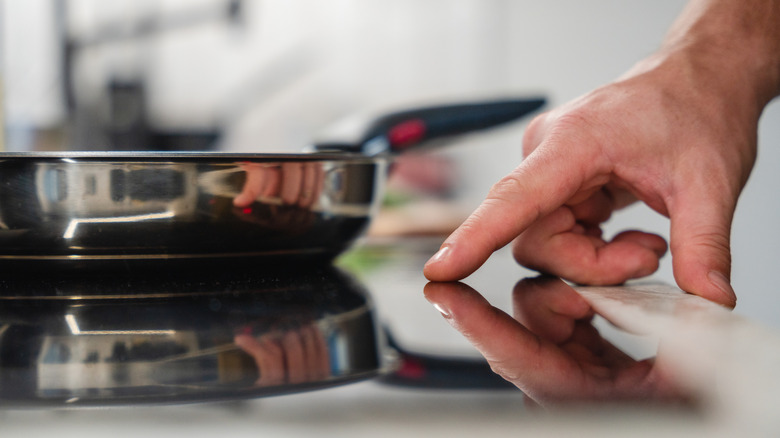
An estimated 40 million households in the United States use gas stoves for their everyday cooking needs and it's easy to see why. Some of the major advantages of using a gas stove include steadier cooking temperatures through flame control, affordable cost, and the ability to keep cooking during power outages. However, some of the major disadvantages of a gas stove include potential health and environmental concerns over things like carbon monoxide and greenhouse gas emission. For these reasons, many homeowners are swapping their gas stoves for electrically-powered induction ranges. If you're one of those homeowners, there are a few important things you should know before making the switch.
The difference between induction and infrared cookers is that the latter uses electricity to heat up halogen lamps and radiant coils, while induction stoves utilize electromagnetic energy to provide instantaneous heat to a pan. However, the pans need to be made of magnetic metal like cast iron, enamel cast iron, or stainless steel, otherwise the process won't work. If you don't have any of this kind of cookware, you will need to get some, and these materials aren't exactly cheap. This amazing technology does come with a hefty price as well. Whereas you can find small gas stoves for under $1,000, an induction unit can easily cost $1,000 to $8,000 or more depending on make and model. Even if you have that price margin in your budget, you also need to make sure that your house is properly equipped to power an induction cooker.
Induction stoves cost more than the sticker price
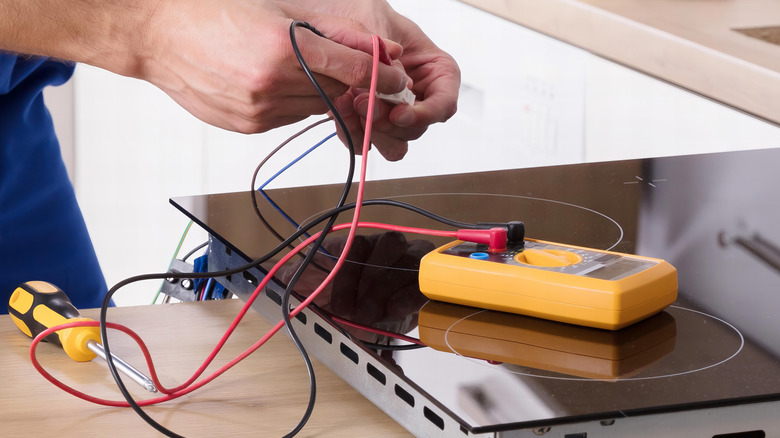
While the efficiency and technology are advanced enough to make splurging on an induction stove worth the higher price tag, you need to consider your home's electrical capabilities before purchasing one. Induction stoves require a homeowner to have a 40- to 50-amp circuit breaker that can connect to a specialty 240-volt outlet for power. Most standard home outlets are 120 volts, so you will need to pay an electrician to connect a 240-volt outlet with heavy-duty wiring to the circuit in order to power your induction cooker. This could end up costing you another $175 to $300.
Then there is the gas line to consider. You will need to ensure that your line is shut off before you install your induction stove. To get this done, first you're going to need to call your gas company and have them shut off the gas to your home. If you're using liquid propane tanks, the company you're buying propane from will also come and take their tank back.To get the gas line capped, you will need to call in a professional plumber. Line capping can cost anywhere between $75 to $150, but it guarantees safety in the kitchen. So, unless you're prepared for the cost and work involved, you may want to think twice before making the switch from gas to induction.