

Say Goodbye To Landscape Fabric & Meet The Eco-Friendly Alternative That Prevents Weeds
Whether you're refreshing your landscape beds or planting a new garden, weed control is critical from the get-go. Commercial products can be enticing for their promises of weed suppression, but don't put that landscape fabric in your shopping cart just yet. While these materials might allow for some amount of air and water to filtrate through them for plants, they also have a tendency to suppress plant growth due to soil health disruption. Luckily, there are several alternatives to landscape fabric to consider using around your outdoor spaces, and one such viable option includes pine needles. While you do need to regularly refresh the needles to maintain both their appearance and their weed-suppressing capabilities, pine needles are considered more eco-friendly than any commercial weed mats you can buy.
Also known as pine straw, pine needles are just as they sound: they're the old needles from pine trees that have fallen and dried up. You've likely seen bales of them for sale at local garden supply shops, but you can also buy them in bulk from a landscape supply store. And if you happen to already have some pine trees on your property, you may have the advantage of using some of the needles as free mulch. Pine straw is particularly useful to use around shrubs in landscape beds, trees, and individual plants in home veggie gardens. It's an eco-friendly way to provide mulch to plants, and the needles also have weed prevention capabilities and can prevent soil erosion. As another bonus, there are even specific plants that benefit from pine needles, including a variety of vegetables and flowering plants.
How to use pine needles for organic weed prevention
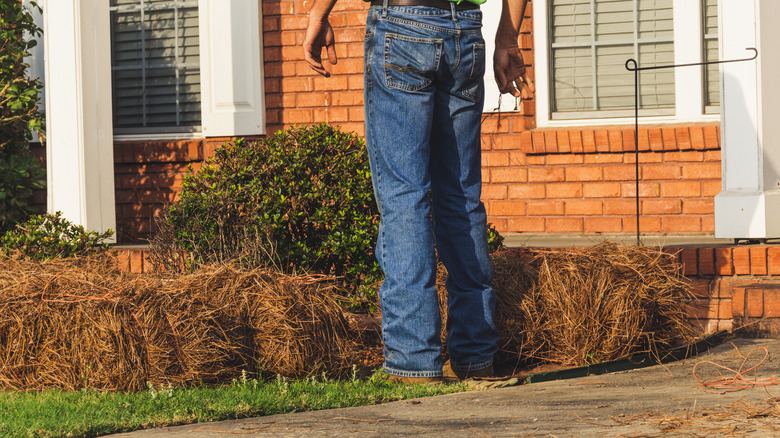
Applying pine straw is relatively simple. Be sure to wear gloves so the pointy needles don't poke your hands, and then apply some of the material directly around the desired plants or landscape beds. When working with bales of pine straw, be aware you might need to shake handfuls of the needles during the application process to help break the material apart. You might also need to repeat the process over certain areas to help achieve a more uniform look when using the needles in larger areas.
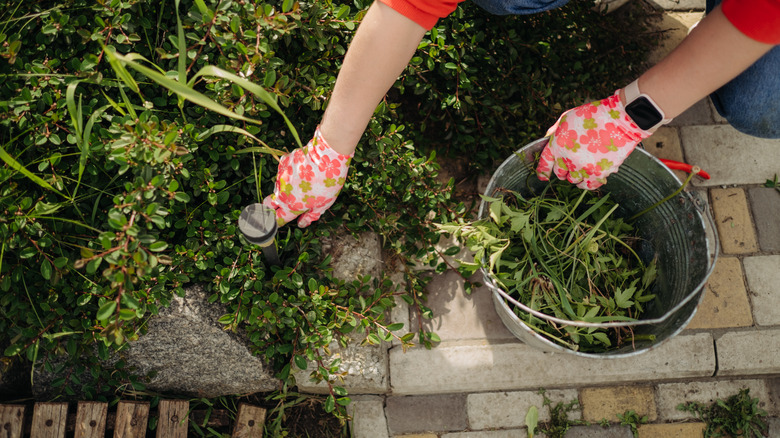
For the best results, be sure get rid of weeds from any area of your yard or garden before applying pine straw. Simply spreading this type of mulch on top of existing weeds doesn't guarantee that it will stop further growth or germination. While pine needles tend to break down gradually over several months, you will still need to inspect your plants and landscape beds for signs of weed growth.
The one major drawback to pine needles over landscape fabric is that these must be replaced a bit more often. Depending on how much the needles naturally break down throughout the year, this might require refreshing twice each year, usually in spring and fall. North Carolina State Cooperative Extension recommends adding three to six inches of new pine needles each time you refresh this type of mulch. On top of helping to maintain the appearance of your garden and landscape beds, this will optimize weed suppression, too.