

7 Types Of Wasp Nests You Do Not Want To See In Your Yard
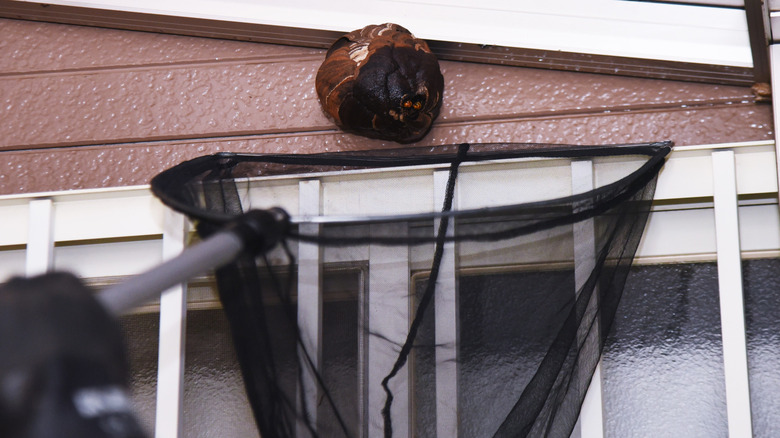
Have wasps started making appearances around your roof's eaves, outside your windows, and across your garden at large? While a wasp or two shouldn't worry you, a noticeable uptick in the number you're seeing might be cause for concern, as these winged insects could be building nests on exterior surfaces of your house, in trees across your yard, or even in the soil of your lawn. Wasps can take up residence and build nests that host either a few wasps or hundreds — particularly large nests can house as many as 20,000 insects. Nests can be unassuming, but they can also pose a threat when the insects are disturbed or threatened, which is why there are certain types of wasp nests that you don't want to see pop up anywhere in your yard.
You don't have to get rid of wasps as soon as one appears in your yard. In fact, not every wasp nest requires removal. While you might be worried about them interrupting your outdoor activities, wasps do play a role in your garden's ecosystem. They can work as a kind of pest control service, eating grubs, caterpillars, and weevils. And like bees, they help pollinate flowers. However, because many wasp species are social, one pesky wasp can quickly turn into a larger swarm defending its nest and stinging any bystanders. So, if you encounter these wasp nests in your yard, odds are you'll want to remove them to keep yourself, guests, and even your home's exterior wasp-free.
Bald-faced hornet nests
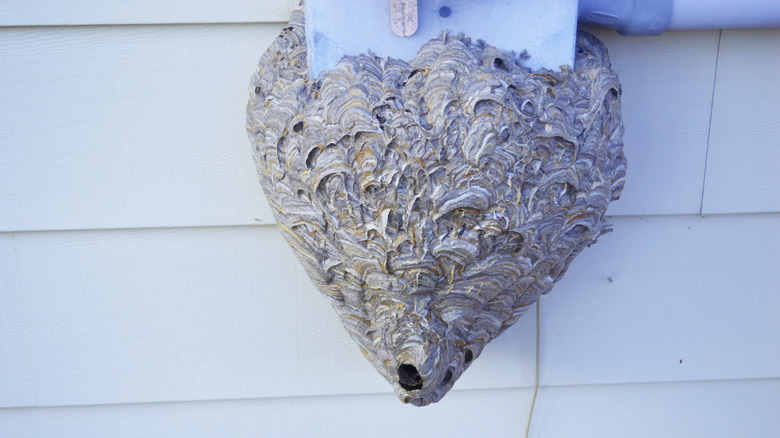
Bald-faced hornets might have "hornet" attached to their name, but since all hornets are wasps, these large black-and-white bugs are part of the wasp family. (Not all wasps are hornets, though). They typically build large, grey nests in trees and large shrubs at least 3 feet off the ground, so you might find them buzzing around these types of plants in your own yard. Most concerning of all? Bald-faced hornets can get extremely aggressive if you mess with their nests. While they can (and will) sting like other types of wasps, these particular hornets also spray venom from their stingers for maximum impact.
Cicada killer wasp nests
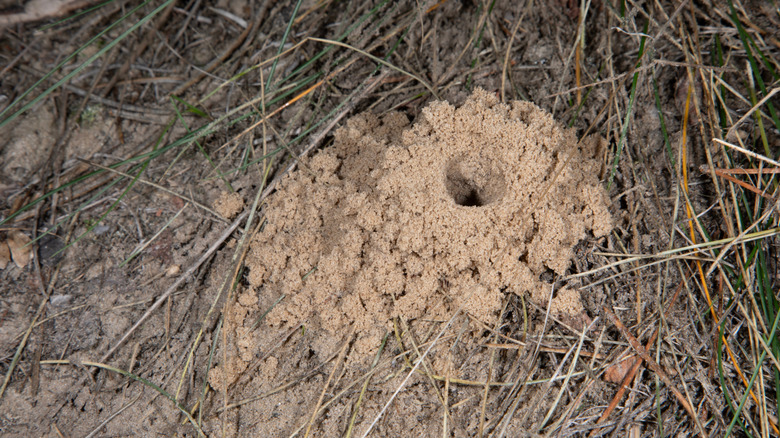
If you've spotted mounds of loose dirt with entry holes in your yard, the culprit just might be cicada killer wasps. Cicada killer wasps are quite large — in fact, they look like giant yellow jackets — and tend to be aggressive. These wasps won't typically sting you as they fly around your yard; however, you still don't want to find their sandy debris and small holes dotting your grassy spaces. Female cicada killer wasps stay in the nests, and they'll start stinging if you trample or walk over their homes, which aren't always easy to see from a distance.
Mud dauber nests
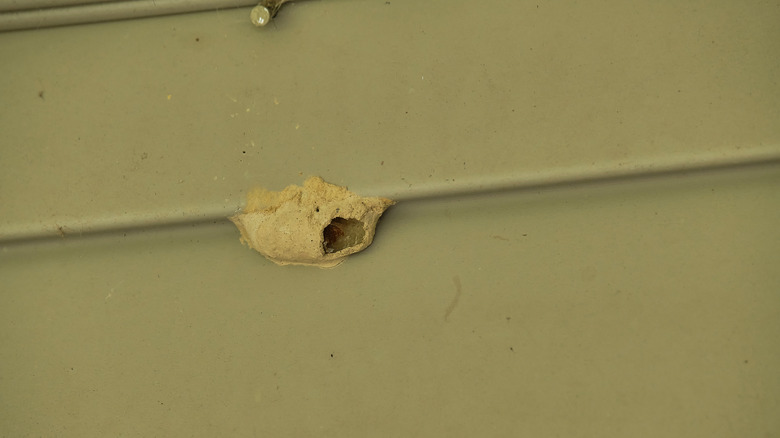
Mud daubers are a type of solitary wasp that tends to nest independently — they earned their name from their practice of crafting those nests out of mud. They form hollow mud nests in tucked-away areas outdoors, like along the siding of houses and garages or underneath roof eaves. One of the notable differences between mud daubers and other wasps is mud daubers won't usually sting humans. Rather, the reason you don't want to see these wasp nests in your yard is because they can damage the surfaces they cling to with stains, paint damage, or even mold and mildew growth.
Paper wasp nests
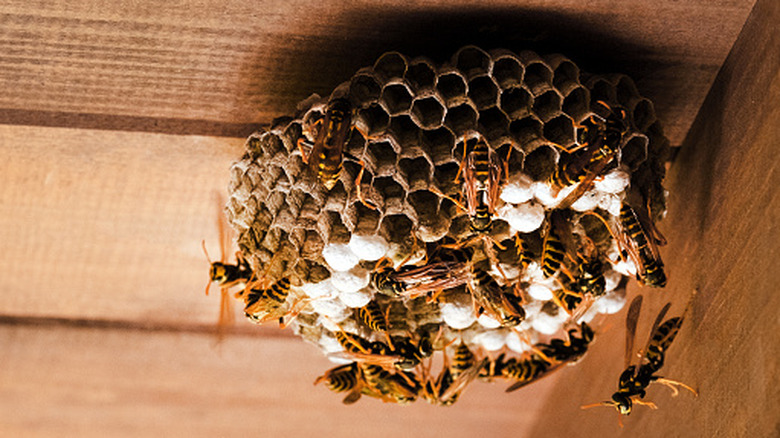
They might look similar to yellow jackets, but paper wasps are a bit different. These wasps are one of the most common kinds you'll encounter. They tend to take up residence outdoors in protected areas, like under eaves and tree branches or within plant vines. Paper wasps build their nests out of paper litter (hence their name) as well as chewed wood, which results in a fibrous nest that resembles the hexagonal cells of a honeycomb. And you don't want to accidentally disturb these nests while you're in your yard or working in your outdoor space, as these wasps will sting repeatedly — not just once.
Yellow jacket nests
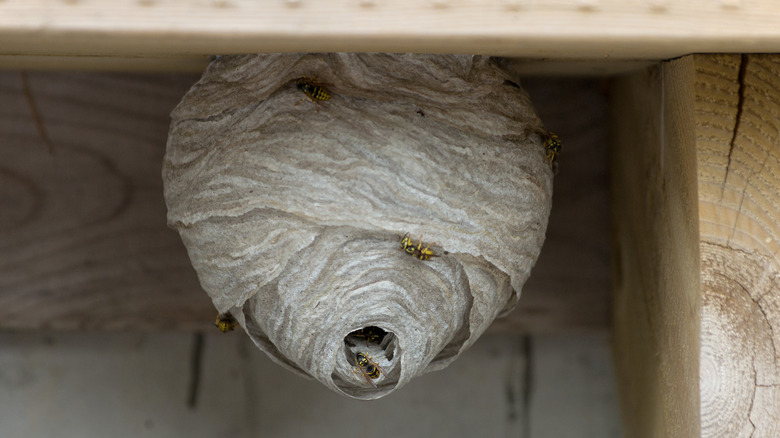
Wondering if it's yellow jackets or wasps in your yard? Well, yellow jackets are found all throughout North America, and they're typically hanging around sugary food and drinks. Yellow jackets build nests wrapped in thin, paper-like layers out of wood fibers and their saliva. If you've ever been stung by a yellow jacket, you know exactly why you don't want their nests in your yard. These wasps will sting, and should you crush them, they'll give off pheromones that bring the rest of their colony your way to defend their space. They can sting repeatedly, too, just like other types of wasps.
European hornet nests
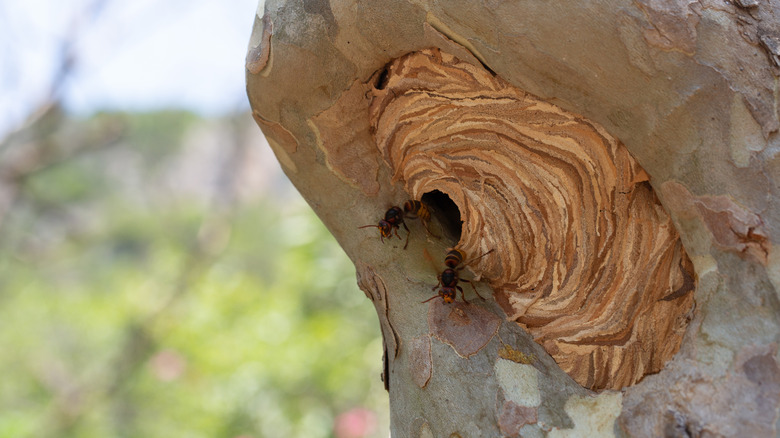
The European hornet was once true to its name, but this large wasp made its way to the U.S. — and it's now found pretty widely across the country. The European hornet tends to build nests in trees, but you don't want to find one in your yard; should these wasps spread and build more nests, it could spell bad news for your home. Beyond trees, European hornets like to nest in and along sheds, walls, and even attics, and they can even do so in cavities, and small openings, leading to a pest problem that might go from outside to inside your home.
Mason wasp nests
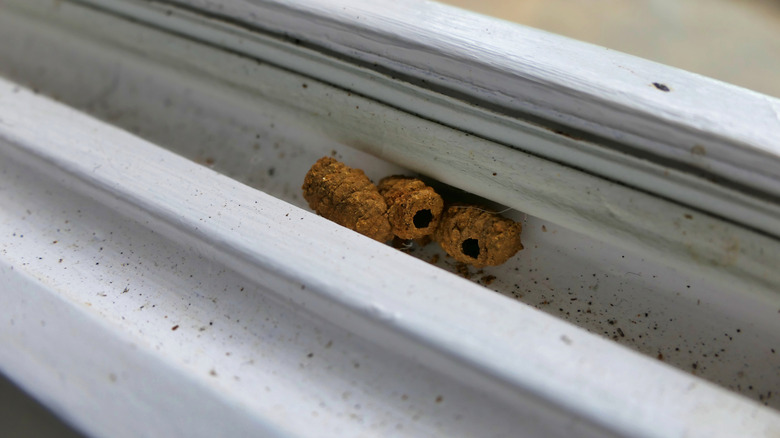
Mason wasps are as creative as their name suggests, as they forge nests that look like pottery made out of mud, twigs, and leaves with a single opening. Nests can appear in the garden on plant foliage, on fences, or even around your home's exterior. However, because mason wasps like to make their homes in crevices of materials like wood, their presence in your yard could pose a risk for structures like fences and decks. Their nests can potentially cause damage to wood and even brick structures, depending on how extensive they get, leaving you with the need for repairs.