

4 Best Laundry Detergent Substitutes You Can Use In A Pinch
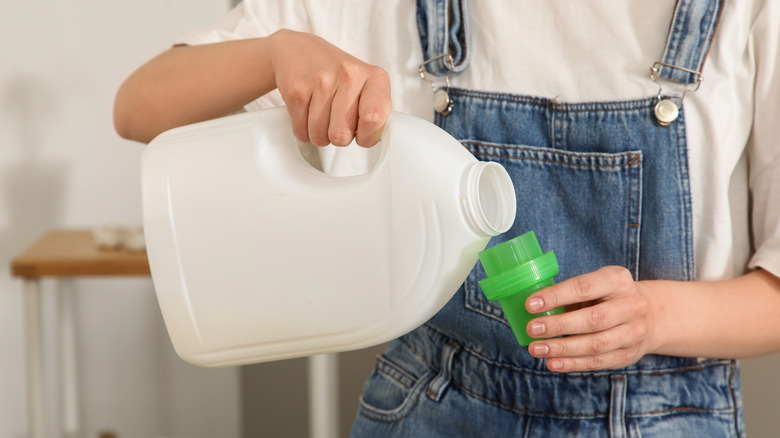
Laundry is a seemingly non-stop chore, and when you're working with large, opaque bottles of detergent, it can be difficult to tell when you're running low. Thankfully, whether you need to tackle a stubborn laundry stain right away, don't have time to run to the store, or want to stretch your dollar before your next your next major restock, there are solutions you can try in a pinch that will allow you to get your clothes clean without having to use detergent.
At its core, laundry detergent is just soap. It's comprised of a mix of surfactants, enzymes, fragrances, colors, lightening agents, and filler ingredients that are there for the sole purpose of lifting dirt, grease, and stains from your clothing so it feels fresh the next time you wear it. Of course, detergent that's specifically formulated to get clothes clean will be better at this job than just about any other product, but this relatively simple goal can also be accomplished using other products you likely already have in your home. Baking soda, white vinegar, borax, and dishwashing liquid all make the cut, though with each of these items, it's important to follow instructions and make sure you're using the proper amount for your load. Otherwise, you could end up with damage to your clothing, erosion within your machine, or even a cascade of bubbles filling your laundry room!
Baking soda
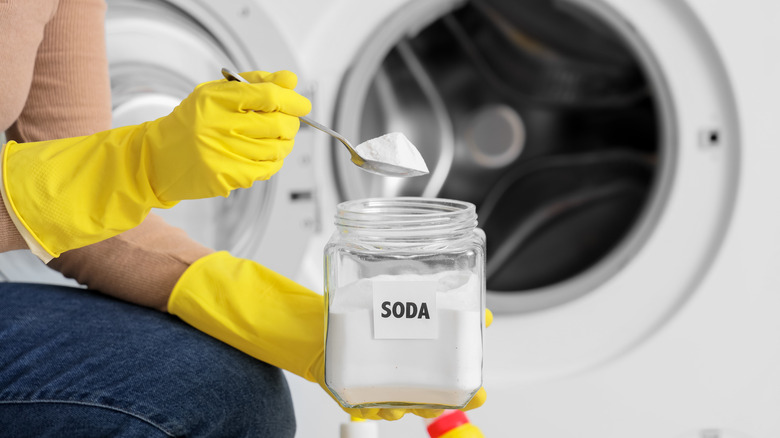
There are tons of different ways to use baking soda outside of the kitchen, and if you enjoy trying out natural cleaning solutions, you likely already have a box at the ready in your laundry room. While it's more frequently used as a laundry additive or a stain fighter in addition to regular laundry detergent, it can also act as a substitute in a pinch. All you'll need is ½ to 1 cup of baking soda depending on the size of the load you're cleaning and it's soil level. Toss it in with your laundry as you would with normal detergent, and it should come out fresher — albeit not quite as fragranced.
Baking soda works for this task because it's great at lifting oil, neutralizing unpleasant odors, and balancing pH levels — a major benefit if you live somewhere with hard water. It can also help to lighten whites and remove tough stains, so if your clothes have been looking a bit dingy, they should come out looking brighter after a baking soda wash.
However, there are a few things to consider before you try this out yourself. Baking soda is safe to use in washing machines, so no risk there, but the high pH level could cause damage or fading with some fabrics and dyes. Generally speaking, it's a fairly gentle cleaning agent, but it's a good idea to stick to dry cleaning or fabric-specific detergents if you plan to wash delicate fabrics such as wool, silk, or cashmere.
White vinegar
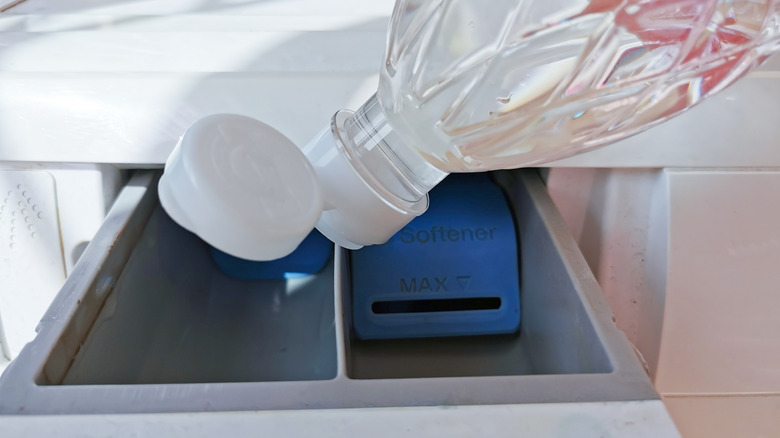
Vinegar cleaning hacks are everywhere now, and that includes in the laundry room. Similarly to baking soda, vinegar is most often used as a pre-soak or add-in rather than a substitute for laundry detergent, but if you're in a sticky situation, it can still help to get your clothes clean. Vinegar is able to lift stains, neutralize odors, and fight mildew, so it's especially great to get the sour smell out of towels. If you've been using too much laundry detergent for each load, vinegar can also help to cut through the buildup to reveal softer clothes and linens. Don't worry though — as long as your washing machine is properly rinsing your clothing, you won't be able to pick up any lingering vinegar scent after the cycle.
To use vinegar as a laundry detergent substitute, all you need to do is add about ½ cup into your washing machine's cycle. Just don't use this as a long-term replacement for regular detergent. The acidity of vinegar can cause damage to the rubber components of your washing machine, including the seal on the door and hoses, which can shorten the appliance's lifespan. This acidity also means that vinegar shouldn't be used on certain fabrics, especially those that include elastic. Vinegar's ability to wear down rubber translates over to stretchy fabrics, so you could notice damage if you attempt to wash your favorite workout set. Additionally, vinegar should never be used with bleach. Not only is combining these two ingredients somewhat unnecessary, but it creates chlorine gas, a toxic substance that could injure your eyes and respiratory system.
Borax
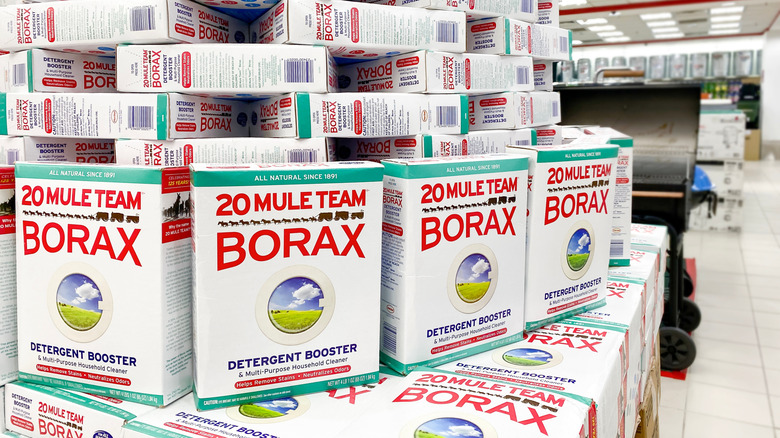
If you're already out of laundry detergent, it might be a long shot to assume you still have borax on hand, but this cleaning agent is still worth a mention. Borax is often used as a way to strip laundry or boost your detergent's cleaning power, but, as we've learned, items like this can also help to get your laundry clean without detergent in a pinch. Borax (more formally known as sodium tetraborate) is an alkaline substance, and just like baking soda, it can soften your laundry by reducing hard water buildup. It's also effective at lightening stains, removing detergent buildup, and brightening whites. Overall, it might not be as functional as an all-in-one detergent that's actually designed for the task, but it will leave your clothes feeling clean and soft when your supply is low.
Compared to baking soda, however, borax is a bit more powerful, so it should be used with caution. All you need to do is add ½ cup to your washer during your laundry cycle. It's also smart to do some extra rinsing to ensure that there's no leftover borax on your clothing or linens that could irritate skin. If it lingers, you might experience dryness, itching, redness, burning, or peeling. If you notice sudden irritation or random rashes, a bad rinse after using borax in your laundry might be culprit.
Dishwashing liquid
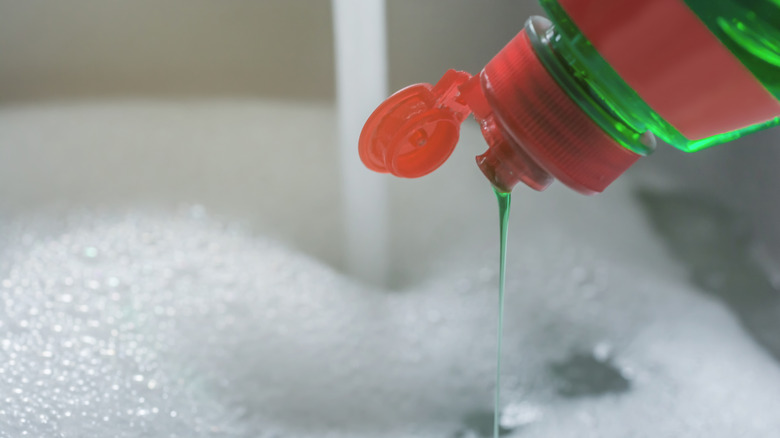
If there's one thing you should take away from this suggestion, it's that dishwashing liquid should only be used to clean laundry with an extreme amount of caution. While this soap might have been the first thing you thought to use once you realized you're out of laundry detergent — soap is soap, right? — you should not use it as a 1:1 substitute. If you use too much, you will end up with a washing machine that's leaking a seemingly endless supply of foam and bubbles. While this all sounds kind of fun, all that moisture and soap residue could cause permanent damage to your machine.
Still, dish soap is a bit better than washing without adding any kind of detergent. It will likely leave your clothes feeling fairly clean and smelling fresh, but it shouldn't be used long-term. Dishwashing liquid is great for cutting through grease and leftover food, but it's not designed to target more common laundry issues such as dirt, so the final result will probably be a bit lackluster.
If you still intend to use dishwashing liquid, it's safest to hand wash your clothing. The agitation of a washing machine is what can cause that worrying overflow of suds, so washing and rinsing your items in a bucket or tub full of soapy water helps to significantly cut down the likelihood of a mess. There will, however, always be risk takers out there. If you fall into this camp, only use 1 to 3 teaspoons of dish soap to do a full load in your machine, and for an added layer of security, dispense the soap directly onto a rag before tossing it into the laundry.