

Planting This Herb Near Your Rosemary Will Make Your Garden A Pollinator Paradise
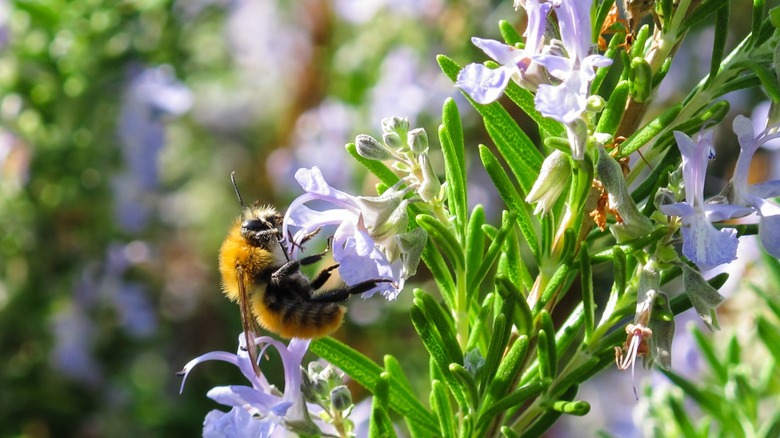
There are a number of reasons to grow rosemary (Salvia rosmarinus) in your garden. It can be used in a variety of food and drink recipes and is thought to offer a variety of health benefits. Rosemary is also very effective at attracting pollinators, which is a very eco-friendly thing to do for your garden. However, if you want to take things to the next level, you should plant thyme (Thymus vulgaris) near your rosemary. This companion plant will help the rosemary thrive, and make your garden a pollinator paradise.
It is fairly well known that these two herbs complement each other well in the kitchen. They are equally complementary of each other in the garden, making for great planting companions. One of the reasons they are perfect companion plants is that, as Mediterranean herbs, they both require the same growing conditions. Those conditions include full sun and dry soil that lacks the nutrients many other plants require. They also share some of the same traits, such as repelling pests and attracting pollinators.
Given that rosemary attracts pollinators on its own, it may seem as though planting it next to thyme will simply double the number of nectar producing flowers for pollinators to peruse. While that does have a bit to do with it, despite their similarities, it's actually the differences between rosemary and thyme that truly help to enhance the overall appeal of your garden to pollinators like birds, bees, and butterflies.
Rosemary and thyme work together to attract pollinators
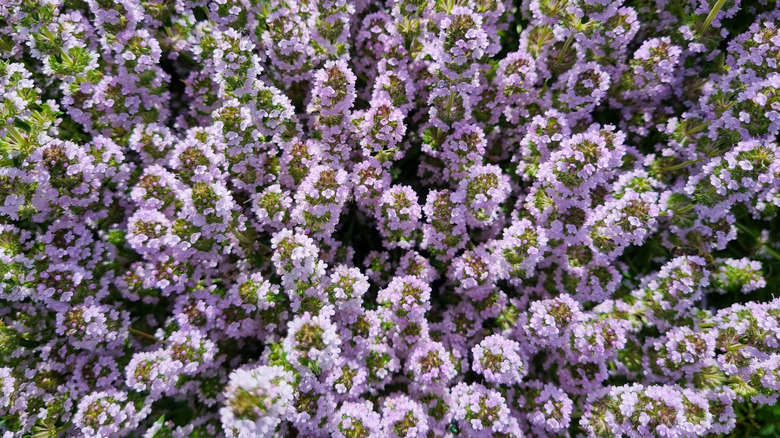
The most impactful difference between rosemary and thyme has to do with the blooms themselves. For one, they can be different colors. Rosemary has flowers that range from blue to purple and occasionally white, while thyme features pink, white, or lavender blooms. Having a variation of colors will not only attract a greater variety of pollinators, but also create more aesthetic appeal — especially if you incorporate the herbs into a gorgeous flower bed design.
Even more important than the color of the flowers is when they bloom. Both of these flowering herbs have long blooming seasons, and given that these blooming periods occur at slightly different times of the year, planting them together elongates the time pollinators can find active flowers in your garden. Generally speaking, both rosemary and thyme bloom in spring and summer. However, rosemary can begin blooming as early as fall and start forming flowers in winter. Given that thyme will consistently have blooms through July, your garden will be filled with flowers most of the year. This can be extended even more by planting varieties such as creeping thyme (Thymus praecox), which blooms from late spring through September; you can even grow an entire lawn full of creeping thyme.