

Martha Stewart Urges You To Do This Before Spring Planting In Pots

If the changing seasons have you itching to get out and try new garden ideas this spring, there are a few things you need to take care of first. Picking your plants and prepping your beds likely come to mind, but there's actually another step to pay attention to. If you're planning on reusing some of your older pots, Martha Stewart recommends sanitizing them before planting your new spring flowers as a simple way to keep your plants healthy and safe.
When you first bring your pots out of storage, take a moment to look over them for any obvious pest eggs or fungi. Empty out any old soil or leftover roots to make the process easier. This is a good time to check for any cracks or flaws that might make them unusable, too. If they're particularly dirty, wash them with soap and water before moving on to sanitize them. Once they're empty and you're sure they're in good condition, prepare your cleaning solution. Martha Stewart uses Clorox bleach and water, but you can also use vinegar in a pinch. Soak the pots for at least 10 minutes and up to an hour. Bleach is safe to use on pots made with terracotta, clay, ceramic, and plastic.
During either the pre-wash with soap and water or the sanitizing soak, scrub your pots thoroughly with a stiff brush. Porous pots such as clay and terracotta may have mineral deposits embedded in them that can take more effort to scrub off, but scraping with a blade can help. This will help knock loose any stuck on grit and grime, as well as loosen any mineral deposits. Afterwards, let non-absorbent pots dry completely. Porous pots should be left to soak in plain water before you add your plants. Since these pots absorb water when they're dry, adding soil to them when they're dry could lead to a dehydrated plant.
Why is it important to sanitize your flower pots?
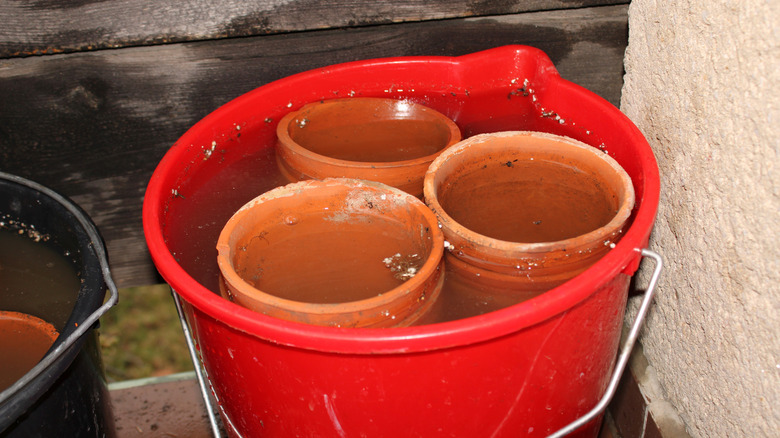
Reusing pots can save you time and money, but there may be bacteria, fungal spores, or pest eggs hiding in them. Sometimes, the pests or grime are easy to spot, but even a seemingly clean pot could be hiding something nasty. Planting a new plant in those conditions is risky, as the harmful pathogens and pests could weaken or kill a young plant. Sanitizing kills most bacteria, pests, and fungi, making the pot much safer for your new plants. This is also true if you're using upcycled containers for gardening, depending on what materials you're using. Using boots or old watering cans as flower pots is quite cute, but you never know what kind of bacteria or fungi might be lurking in them, and it's better to be safe than sorry.
The other reason washing and sanitizing your containers is helpful is to get rid of salt or mineral buildups. Over time, fertilizers and hard water deposit minerals in the soil. Some of them are washed out through regular watering, but others cling to the sides of the container. The salts and minerals can flake off back into the soil, clogging your drainage holes and potentially overloading your plant. Too much salt in the soil can harm your plant, causing yellowing leaves on houseplants and weak growth.