

This Tiny Tweak Is Making Subway Tile The Star Of 2026 Kitchens
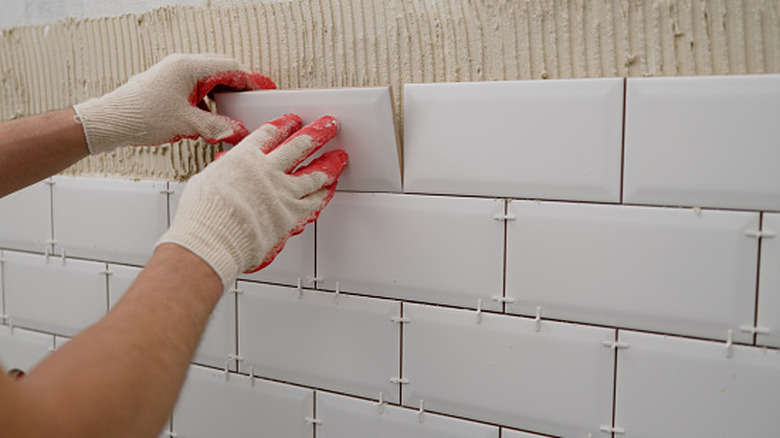
In recent years, subway tile has seemingly found its way into just about every home. A historical design that is inspired by the tiles that covered New York's subway stations in the early 1900s, these rectangular pieces of ceramic felt like they would play nice with just about every kitchen style that dominated trends in the 2010s, from farmhouse to mid-century modern. As such, their popularity exploded. Unless a designer was doing something truly out of the box, subway tiles were the gold standard pick for a trendy, sleek, and affordable backsplash. Until we started getting tired of them, that is.
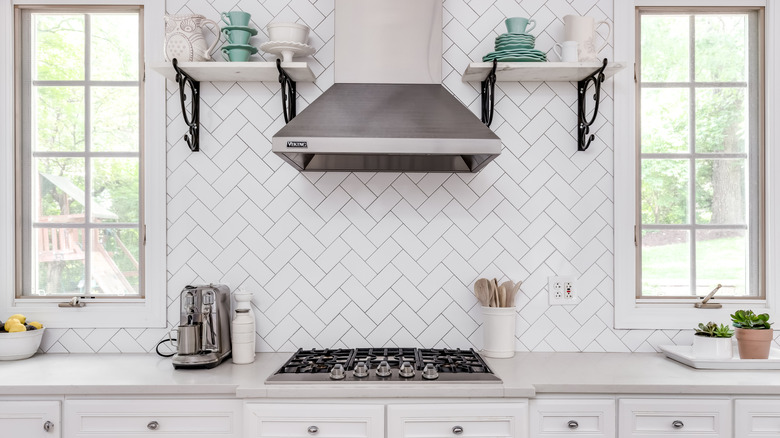
Nothing gold can stay, and over-saturation is one of the easiest ways to kill a home design fad. After subway tiles started popping up everywhere, they started feeling less trendy and more builder grade. Pair this with the push towards personality in design and away from outdated white kitchens, and it was only natural for this backsplash that was once seen as timeless to start falling out of favor. Designers aren't ready to give it all up quite yet, however. By embracing a new herringbone arrangement rather than the classic end-to-end look, some are predicting that subway tiles might see a revival in 2026.
"This style of tiling is becoming increasingly popular and works well with both half tiles and brick style tiles," Hannah Guilbert, Product Marketing Manager at Original Style, shared with Livingetc. "While this layout may look complex, it can be easily achieved when prepared and planned correctly." By simply angling your tiles 45 degrees and nestling them together, you can revive this trend and give it the extra dose of personality it needs to feel fresh.
How to pull off the herringbone subway tile trend in your own kitchen
If you've decided to try out this look in your space, good news! Subway tile is one of the most affordable materials you can use for a backsplash — certainly more so than the sleek backsplash slab trend that's dominating kitchens right now. While you should expect to pay a bit more for this somewhat complex layout if you decide to go with professional installation, it's possible to pull off on your own if you're willing to take on the challenge.
Most herringbone patterns are fairly standard — tiles are laid at 45 degrees, alternating direction, to create an almost woven look. For more modern spaces, you can also consider straight herringbone or stepladder patterns. This takes the same layout as a traditional herringbone and rotates it another 45 degrees, resulting in a pattern that appears to zig-zag upwards rather than evenly across the space. Whichever layout you pick, the fact that subway tiles are traditionally a consistent 3 by 6 inches makes them perfect for the task.
After you've laid out your tiles and adhered them to the wall, all that's left to consider is grout. "Using contrasting grout will emphasize the pattern, making the wall very dynamic and prominent," Anna Popov, Principal and Founder at Interiors by Popov, told Livingetc. "While using a matching grout would achieve a very soft, subtle result." The choice is up to you and how much you want your tiling work to stand out, but regardless of level of contrast you create, this layout is sure to put a more interesting twist on a trend that was seemingly on its way out.