

Plant This Flower By Your Birdbath For A Backyard Full Of Birds And Butterflies
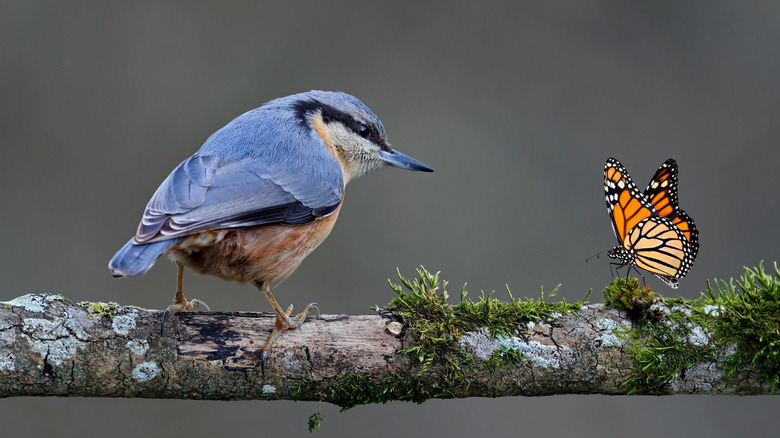
If you want to turn your backyard into a bird-friendly space, odds are you have already or will be putting a birdbath in place. While water features such as birdbaths can draw birds to your yard, they are infinitely better at doing so when surrounded by other elements birds find enticing. That's why planting coneflowers (Echinacea purpurea) by your birdbath will result in a backyard full of birds, as well as butterflies. Both are attracted to this broad-petaled bloom with a cone-shaped center, albeit for slightly different reasons.
The main reason both birds and butterflies are attracted to coneflowers is that they each utilize them as a food source. However, they do so in slightly different ways. Butterflies of all types swarm to coneflowers to drink the nectar. Because its flower is so broad, virtually any size butterfly can land on it to comfortably drink to their content. Because coneflowers bloom throughout summer and fall, they are also a long-term, consistent source of food for butterflies.
Birds, on the other hand, relish eating the seeds from the flowers once they are spent. The seeds of coneflower, which are members of the sunflower family, are packed with nutrients and are a favorite of a variety of small birds, such as goldfinches, as well as songbirds like blue jays. So, just as the blooms begin to fade and dry up, literally, as a food source for butterflies, they begin to provide much-needed nutrients for birds during the fall and winter seasons. With that in mind, it is important that you do not deadhead coneflowers as they die, or else you will remove the food source from your backyard birds.
Planting coneflowers by your birdbath
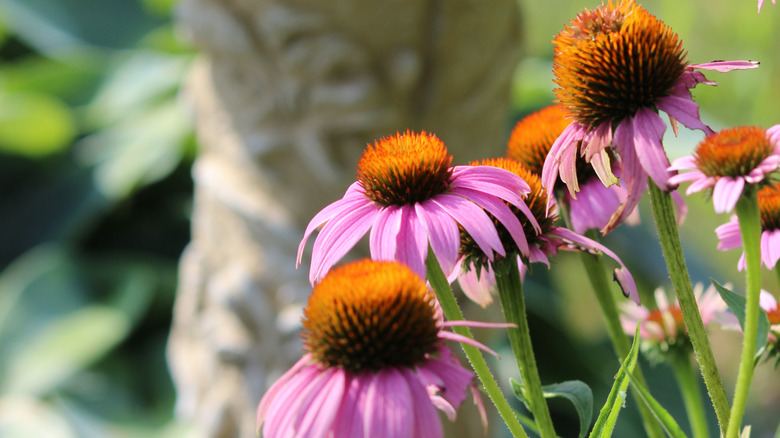
The idea behind planting coneflowers near your birdbath is to help birds and butterflies get both food and water in one convenient location. Additionally, coneflowers will add a splash of color to the area around your birdbath and provide habitat diversity and shelter for birds and butterflies. These native plants are also incredibly easy to grow, and since they are self-seeding, you only need to plant them once, and they'll come back every year. They can be grown throughout most of the US (zones 3 – 9) and do best in well-draining soil and full sunlight, so be sure to consider that when choosing the placement for your birdbath.
If you are planning to plant coneflower plants, do so in the spring or early summer at the latest. Once you have your supply of coneflowers, dig a hole about double the size of the pot it's in and deep enough so the root ball is level with the surface. Then, place the plant in the center of the hole and backfill it. Additional plants should be placed every 1 to 3 feet. Coneflowers can also be planted from seed, but be advised that it will take a few years for them to bloom. If you do choose to plant from seed, start the seeds inside two months before the final frost. The seedlings can be planted outside once the ground temperature is above 65 degrees.
Caring for coneflowers is just as simple as planting them. They rarely, if ever, need fertilizer and are drought-tolerant once they are established. However, immediately after planting, they should be watered regularly. While they can be deadheaded after the blooms die, it will prevent reseeding and, as mentioned earlier, remove a valuable food source from the birds.