

Don't Toss Company Mugs — Remove The Branding And Turn Them Into Decor!
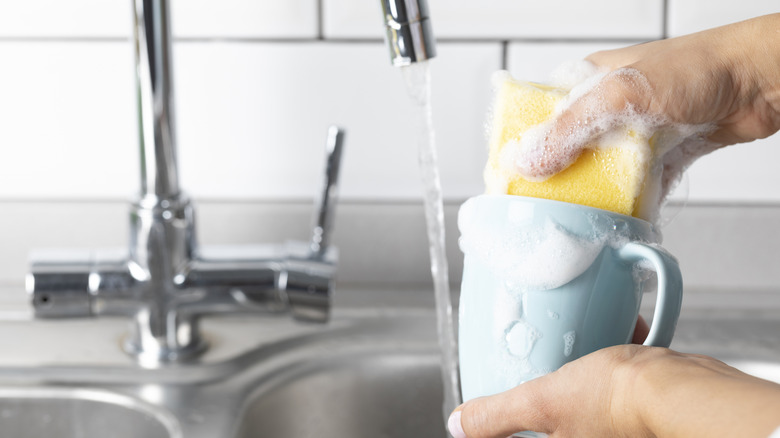
While company-branded merchandise can be fun to receive in the moment, it very quickly loses its sparkle once you bring it home. If you've ever browsed the drinkware aisle of your local thrift store looking for a rare vintage mug, you've seen this in action. Secondhand stores are absolutely littered with mugs that companies or brands gave out for free, and these are now destined to sit on shelves collecting dust for the rest of their lives. Unless you are your company's biggest fan, you've likely seen the same process start to happen in your own home.
Luckily, this isn't the way things have to go. While your chances of success will depend on the mug and how the logo is adhered, you may be able to remove it to reveal a plain, unbranded mug in perfect condition — one that's ready to be repurposed as decor. All you'll need for this task is a paper towel or cotton balls and some acetone. This should work to dissolve away the pigments in the logo on your mug. However, despite the simplicity of this removal method, it should still be used with caution.
Acetone might not sound all that powerful if you're used to seeing it gently slough away a chipped manicure, but this removal agent is particularly reactive when it comes to certain materials. Styrofoam, for example, will completely dissolve when exposed to acetone, and while you can clean plastic with acetone if you do so gently, submerging it in the liquid could cause severe damage. Because of this, it's always advisable to do a small patch test on your mug before committing to the acetone method, even if you're fairly certain that there won't be any negative reactions.
How to remove logos from your mugs

If you have determined that you mug can be safely cleaned with acetone, it's time to get to work. This is a fairly simple process, though it might take a little bit of persistence to fully fade out the old company logo. Make sure you pick up a product that's specifically labeled "acetone" rather than just nail polish remover — while many polish remover formulas do include acetone, some labeled "gentle" might rely on other stripping agents. Simply soak your cotton ball or paper towel with the chemical, then use it to scrub at your logo for a few minutes. You should notice it starting to fade, and eventually, it will disappear entirely.
If you don't have acetone on hand, or it didn't work on your mug, there are a few alternative removal methods you can try. The first is sanding with a rotary tool. This is a delicate process that requires ventilation, especially if you're working indoors, but if you start off with a stone wheel and finish with a sanding wheel, you should be able to get through the printed-on logo without harming the mug. Following the same line of thinking, you can also heat the exterior of your mug over the stove, then scrub away the logo with a scouring pad. Both of these methods are time-consuming and somewhat risky, so, if possible, it's best to stick with the acetone solvent approach. Once your mug is officially free from it's branding, all that's left for you to do is to figure out a use for it.
How to repurpose your mug as decor
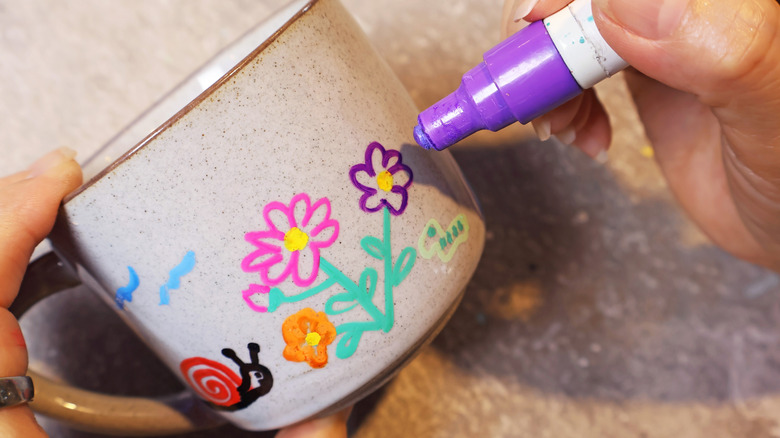
If you don't intend on using your mug to enjoy your morning coffee, don't fret — there are tons of genius ways to reuse old coffee mugs in your home. Now that your mug is logo-less, consider giving it your own flair with a personalized decoration. A Cricut machine is great for this, but you could also add on designs with acrylic paints, paint pens, oil-based permanent markers, or alcohol ink. If you want a painted design to last, bake the freshly decorated mug for about half an hour at 350 degrees to fully seal in the ink. You can also finish it off with a layer of Mod Podge if you'd like your mug to be dishwasher safe.
From there, the world is your oyster. Mugs make great organizers, whether you're storing pens on a desk, keeping your toothbrushes in one place, or wrangling up art supplies in a studio. They're also repurposed into planters fairly often, though it's a good idea to drill a hole for drainage in the bottom if you're not working with a plant that can tolerate having wet feet. Other ideas include candle vessels, tea light candle holders, pin cushions, and even suet bird feeders. Whichever idea you choose, rest assured that your transformation will save an old company mug from being condemned to the dusty fate of sitting in the back corner of a kitchen cabinet.