

HGTV's Mike Holmes Warns: Avoid This Flooring Upgrade Mistake
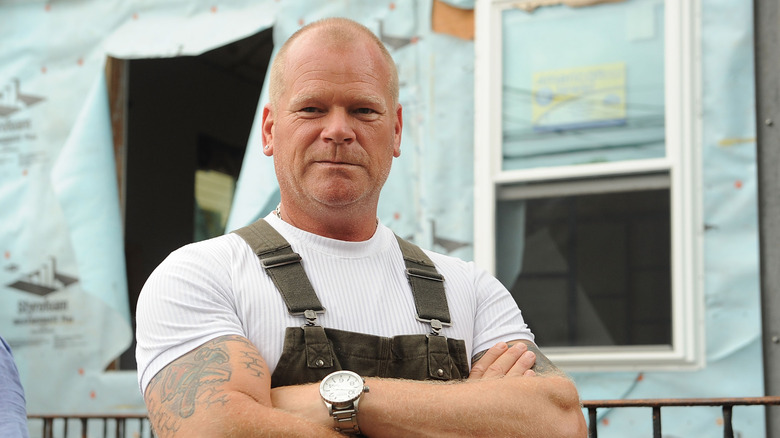
Flooring is a major part of your home's design, both for function and aesthetics. Tile is a popular choice and can be the best flooring option for a home due to its durability, easy maintenance, cost-effectiveness, and variety of styles. Many homeowners try to DIY flooring projects, hoping to save on labor costs. However, when it comes to upgrading floor tiles, professional contractor Mike Holmes says trying to do the job yourself is a mistake.
"When tiled floors are installed properly using the right materials you will enjoy them for years to come," Holmes wrote in a Make it Right blog post. "However, when you don't follow industry and manufacturer guidelines and attempt to do it yourself, you can run into trouble." There is a lot you need to know about tile flooring in order to lay it correctly. Any flaws in installation can lead to an uneven surface, split tiles, or cracked grout. In the end, it'll cost more money and time to fix the mistakes.
The problem with DIYing a tile floor
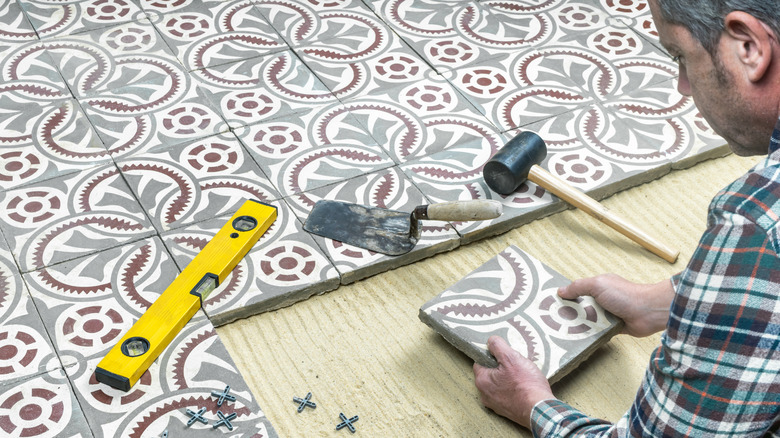
The process of this renovation involves removing the existing floor, prepping the subfloor, and laying the tile — each part having its own tedious list of steps. The time-consuming job gets even trickier when the subfloor is not leveled (now you need a self-leveling compound), the tiles have to be cut to fit evenly (add a wet saw to your list of equipment), or the tiles are large (their size and weight are troublesome). This project takes the entire room out of commission for days and could take even longer for novices. Then there is the high risk of uneven tiles, cracked slats, and crumbling grout if any of the steps are not executed well. "Installing tile requires experience and skill, not to mention the materials, supplies, and tools it takes to complete the job," Mike Holmes wrote.
As a handy homeowner, you may already have a hammer and drill in your toolbox, but installing tile floors also requires equipment such as a floor scraper, carpenter's square, notched trowel, mixing arm, and several other supplies. Buying all these tools adds to the project cost, and you'll have to train yourself to use them properly. Plus, this is separate from the needed materials like waterproof membrane strips, thinset mortar, and grout sealer — all of which a professional will know the best options for, while a DIYer will have to do tons of research to make their best guess. If you're feeling crafty, perhaps stick to tiling an outdoor table and follow Holmes' advice: leave the floors to the professionals.