

Gravel Grid Systems: The Pros, Cons, And What To Watch Out For Before Installing
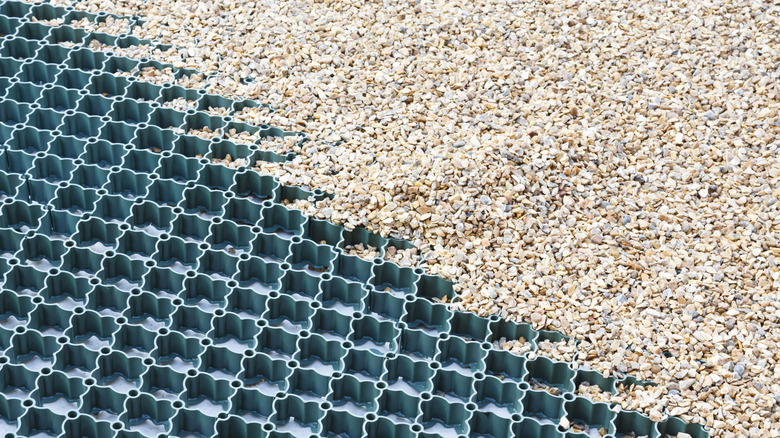
If you're learning about landscaping with gravel, one con you may have heard about is the tendency for stones to move out of place over time. Whether you're using gravel for your driveway, garden, or simple decorative elements in your yard, you don't want to buy more gravel to replace those that roll away. There are so many types of gravel for landscaping, so finding the right type to replace what was washed away takes more effort than it should. One common solution to prevent gravel loss is a gravel grid system. But prior to installation it's important to know the pros and cons.
Gravel grids are made of plastic that has been shaped into a grid or lattice pattern. Depending on the manufacturer and design, gravel grids vary in size and shape. The grids may have a solid backing or be fully open, and the cells themselves can be practically any shape and thickness. The basic function of a gravel grid is to sit between the bottom and top layers of gravel. The cells act almost like cups, holding the gravel in place. Installation can vary depending on the design of the grid.
One pro is that, not only do these cells prevent the gravel from shifting too far, but they also create space inside the gravel pile. This keeps the gravel from becoming compacted, which helps it maintain proper drainage. Some can simply be laid over the ground, while others need to be attached to each other. They're also usually affordable. As for cons, they're not immune to shifting and they may not work on steep slopes. It's important to read through the installation guide before you choose your grid, so that you know what materials you'll need and how long you can expect installation to take.
Pros and cons of using gravel grids
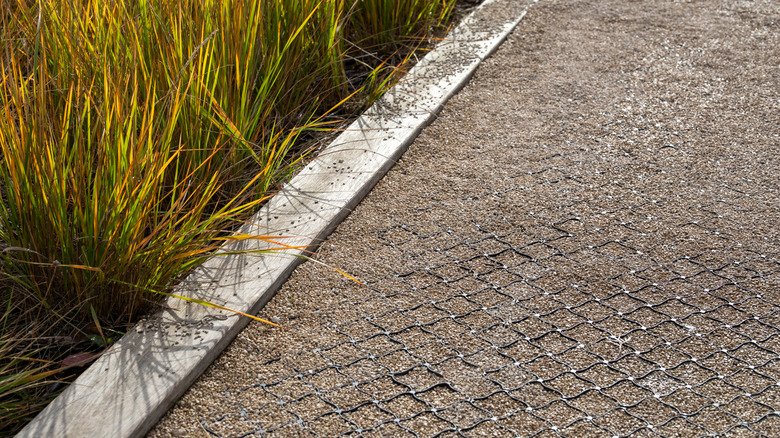
The pros for gravel grids are fairly straightforward. They're effective at keeping most of your gravel from moving in most situations, and the way they benefit drainage means they're helpful for preventing water building up in your driveway or garden. Gravel grids are also relatively inexpensive, with prices ranging from less than $1 per square foot to roughly $5 per square foot. Prices vary based on the material and brand, but the average sits at around $2 per square foot, with the gravel itself costing less than $2 per square foot. Other driveway options, such as bricks or concrete, can cost between $4 and $70 per square foot, depending on the specific type of driveway and the quality of the materials.
However, gravel grids aren't flawless. While they do a good job at keeping most of the gravel in place, some rocks will still move and shift over time. If you want a completely stationary or contained driveway, you might be better off with a different material. Additionally, they're less effective on steep slopes. Since the cells function like cups, imagine trying to use gravel grids on a steep hill like tipping your cup over and trying not to spill what's in it. The further you tilt it, the more likely you are to spill. Finally, while they're an effective and budget-friendly option for driveways and patios, they may not be the best option if you're trying to keep gravel in your garden. Installing it around your plants may be difficult, and there are other ways to keep gravel in place that are easier to use in your garden. One popular option, landscape edging, is only slightly more expensive at an average of roughly $3 to $9 per linear foot.
What to look out for before installing a gravel grid
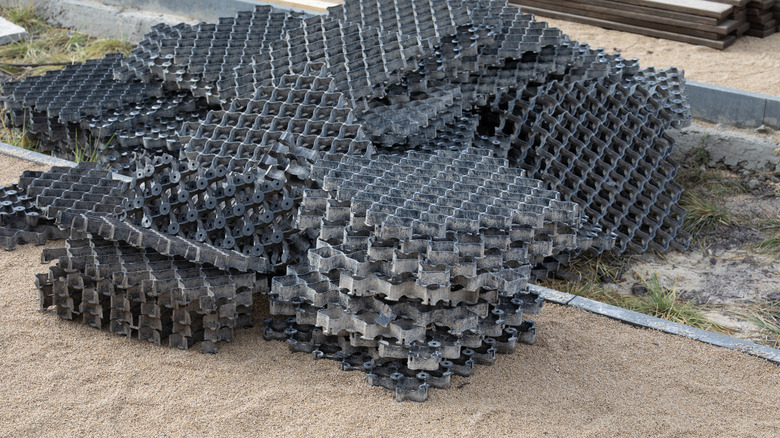
Before you install or even purchase a gravel grid, you should make sure the area you want to use it in is suitable. As previously mentioned, you should avoid using gravel grids on steep slopes, particularly anything with a slope of over 25%. Even on flatter surfaces, you should pay attention to the quality of the ground. For example, if the area has a lot of tree roots, they may disrupt the installation process or disturb the grid over time as they grow.
When deciding what gravel grid to go with, there are a few specific things to look for. Some grids come with additional features, such as pegs that make installation easier or built-in weed barrier fabric to prevent weeds from growing through it. You should also take into account both the height of the grid and the weight capacity. Taller or thicker grids tend to be able to handle and distribute more weight, making them better suited for driveways or parking areas.
It's also important to read through the installation guide of the product before you buy it. While many of the steps of installation are the same from grid to grid, there are points that can vary. Different manufacturers may recommend different substrates for their grids to sit on or different depths to install them at. Reading through the instructions first will ensure you're properly prepared and can choose the grid that best suits your needs.