

This Easy-To-Grow Purple Flower Attracts Butterflies & Practically Takes Care Of Itself
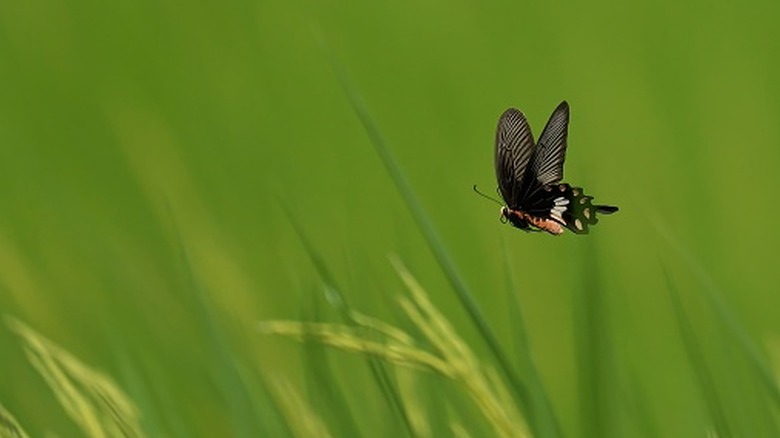
A home garden often includes a variety of beautiful plants, with many gardeners getting creative with a range of flower colors to really make these outdoor spaces stand out. The importance of flowering plants goes beyond aesthetics, though. Many of us are also keeping pollinators in mind when choosing the right plants, particularly the declining butterfly population. If you're looking for an easy-to-grow plant that can help attract butterflies while adding some interest to your garden, consider the benefits of Liatris (Liatris spp.), commonly known as "blazing star."
Liatris is a native perennial plant known for its tall and spiky stems that produce pretty pink to purple flowers that look like bottle brushes. In some rare cases, Liatris can produce white blooms instead of purple. When its flowers bloom in the late summer to fall, they do so in a top-down pattern. More importantly, Liatris provides nectar to a variety of butterflies, including endangered monarch species. You may also see hummingbirds and bees frequent the flowers. At the end of their blooming season, it's common to spot songbirds eating the seed heads.
What makes Liatris plants a bit different from others in your garden is that they grow from corms. These underground stems easily reproduce, which is why you will likely see Liatris continuously producing new numbers. As a bonus, when well-cared for, Liatris is a flower you can enjoy for years as it can possibly live up to 20 years, according to Pennsylvania State Extension.
How to grow and maintain Liatris in a butterfly garden
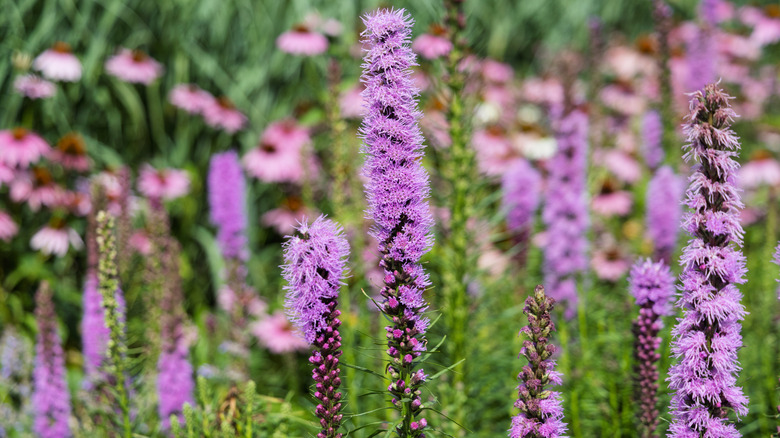
Liatris is considered hardy in USDA zones 3 to 9. The plant does best in full-sun and moist, well-draining soil, but it may still grow well in gardens with some shade, as well as during occasional drought conditions. Water whenever the soil is dry to the touch until Liatris is established in your garden. Proper spacing can also induce air circulation to prevent problems such as powdery mildew. You can expect Liatris to grow between 2 and 5 feet tall, with its upright spiky stems an attractor for butterflies and other pollinating species. Due to their height, though, you'll want to plant several Liatris plants together, but spaced at least 6 and up to 15 inches apart from one another.
Growing Liatris directly from seeds or potted plants from a nursery are both options you can consider when adding this plant to your garden. However, timing is important here. When sowing seeds, wait to do so until mid to late spring or after your area's last frost. Also know that liatris grown from seed may take a few years to produce flowers. Potted Liatris plants are best transplanted into your garden from summer to fall.
While Liatris is perhaps most notable as a beautiful butterfly garden addition, this isn't your only option. Butterflies will still be attracted to plants grown in landscape gardens as borders, as well as those in rock gardens. While relatively easy to grow and not prone to many pest issues, be aware that Liatris can possibly attract rabbits, groundhogs, and deer who might try to eat the leaves.