

The Hidden Dangers Of Letting Standing Water Sit In Your Yard
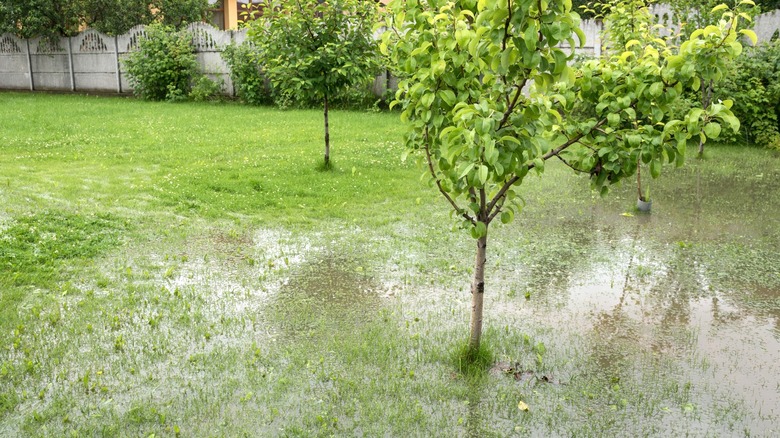
"Ponding" sounds like it might be fun: a place to wade, raise koi, and watch dragonflies skim along at breakneck speed. It's all great, unless the place where you're wading is your patio and the deepest part of your "pond" is the middle of your lawn. The worst part of having standing water in your yard is the potential water has to nudge your house in the direction of collapse by way of foundation damage, but there are plenty of other issues you might not have thought much about, from mosquito-borne diseases to septic system issues.
Standing water that builds up into these ponds can happen for two related reasons: landscaping mistakes or the natural lay of the land that may prevent rainwater from running off, and slow soil percolation — the process by which water soaks into the ground. Your yard may absorb water slowly because of compacted soil, shallow bedrock, or certain soil types, like fine sand and clay soils. This can be exacerbated by having too much water around before the rain even starts, usually from a high water table or an over-irrigated lawn.
But what's the big deal about an inch of water that will be gone in a few days? While wetness won't usually directly harm a home's foundation, hydrostatic pressure and expanding soil might lead to severe damage over time ... probably everyone's biggest fear about standing water. Expansive clay soils can tilt or move your whole house, while soil erosion (worsened by saturation) undercuts the support your foundation needs, causing it to settle unpredictably and potentially creating damage that could cost thousands of dollars to repair.
The hidden nuisances and health hazards of standing water
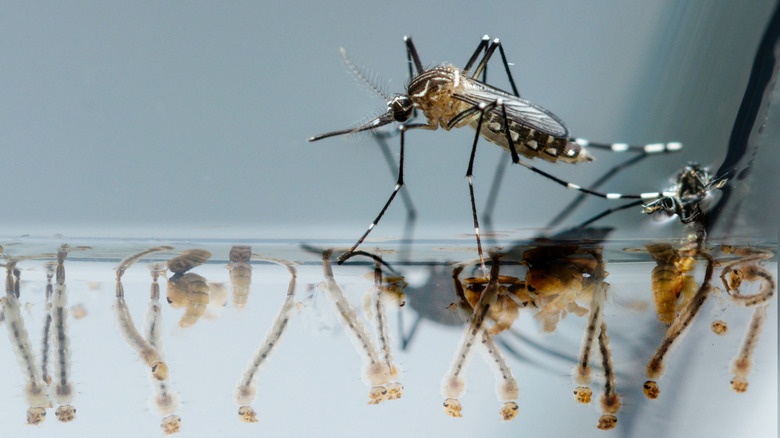
The simple loss of the uses you intend to put your lawn to — whether it's soccer or just a glass of tea and a good book — are bad enough. But there are other creatures lurking in the swamp that was once your garden path. You might have already considered all the hassles of combating a mosquito problem that can result from any standing water. While few are common, diseases like dengue fever, West Nile virus, and Zika virus have been spread by mosquitoes in the U.S. The water also encourages other pests, like gnats and beetles.
Meanwhile, unwanted and potentially hazardous moss, algae, and bacterial growth have a habit of prospering in wet areas, of course, and moss and fungi are especially noticeable on the ground where standing water is coupled with shade. While these all love the wetness, the things you were trying to grow typically don't. Many types of turfgrass, as well as other garden and landscaping plants, can be damaged or killed by standing water, as their waterlogged roots are deprived of oxygen and suffer from limited nutrient uptake.
If ponding happens over a septic drain field, this may lead to the failure of the septic system — a potentially dangerous and expensive issue. Flooded patches can cause sewage to back up into the house or fill the yard. Soil percolation tests done before the septic system was installed will normally predict whether this is a likely problem, but changes to land use, surrounding landscaping, and what's grown above the drain field can lead to water pooling there and preventing the field from properly distributing waste products.
Dealing with a waterlogged yard
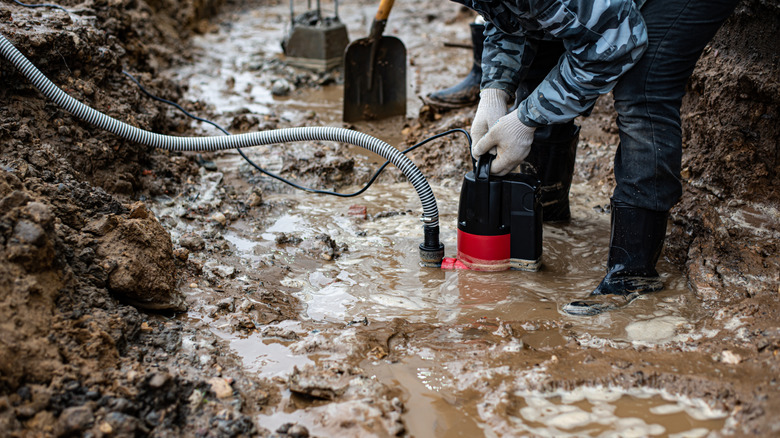
In an emergency, you might break out a gas-powered 2-inch water pump and a coil of what looks like a miniature flat fire hose and pump a foot or two of standing water off of your property. But when we consider everyday yard drainage problems and solutions, fixing a standing water issue and preventing one look basically the same. It's mostly a matter of figuring out why excess water is stubbornly hanging around and then dealing with it. If the source of the water is anything other than direct rainfall, those sources can be relatively easy to address. Don't overwater your lawn, keep gutters and downspouts clear, and reposition downspout extensions to direct the water more intentionally. And, if necessary, you could guide the water toward a place you actually want it to come to rest — a catch basin, dry well, gutter-fed rain garden, or a rainscaping layout, the backyard upgrade everyone loves.
In some situations, you might be able to improve the rate at which water is soaked up by your soil. This is usually done by amending the soil and aerating your lawn. Bigger drainage problems require bigger solutions, like installing French drains to direct water flow away from areas it tends to collect. It might also be necessary to adjust the grade of your yard so that standing water becomes running water. Such solutions are often more complicated than they seem. Without experience and a laser level, for example, it can be difficult to even know exactly how water will flow, so consider finding a landscaping or drainage company to work with.