

People Are Using Sand To Transform Their Lawns — Here's How
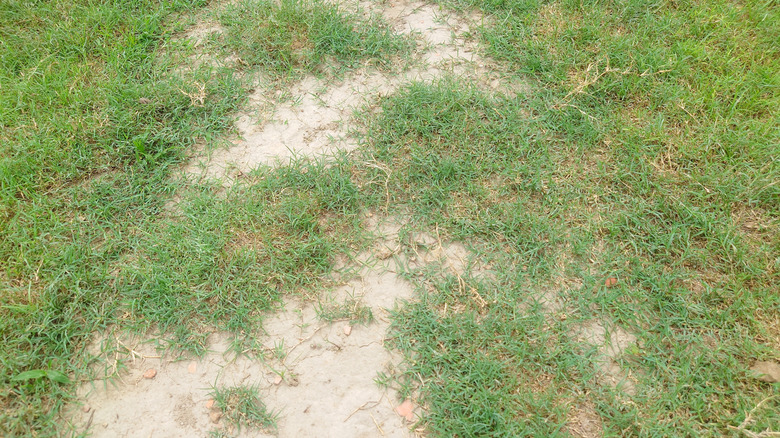
Growing a lush, thriving lawn doesn't have to be difficult, but it does require planning, patience, and plenty of work throughout the year. You might run into maintenance issues and find yourself combatting patchy grass with aeration tricks or trying to figure out how to control common lawn weeds, so growing a green lawn can be a tiresome task. That's why some homeowners are turning to a surprising tool to transform their grass from lumpy and bumpy to smoothly even. Sand could be just what you need to level your lawn.
Sand isn't typically a go-to lawn care product for most homeowners. However, sand can prove to be a great ally in maintaining your grass, as it can help you level a bumpy, uneven lawn that has dips, divots, and foot-catching patches hiding under the surface. You can either use sand as a sort of spot treatment, pouring it onto any low spots and then smoothing and evening it out with the help of a lawn leveling rake. If your lawn is in a pretty rough and bumpy state and has developed a lot of indented problem areas, you can apply sand over the entire area. However, you might want to enlist a professional's help to ensure such a big swath of grass is evenly covered and you have it leveled perfectly from edge to edge. It's best to level your lawn by adding sand in early spring, when the growing season gets underway.
How to use sand to smooth out an uneven lawn
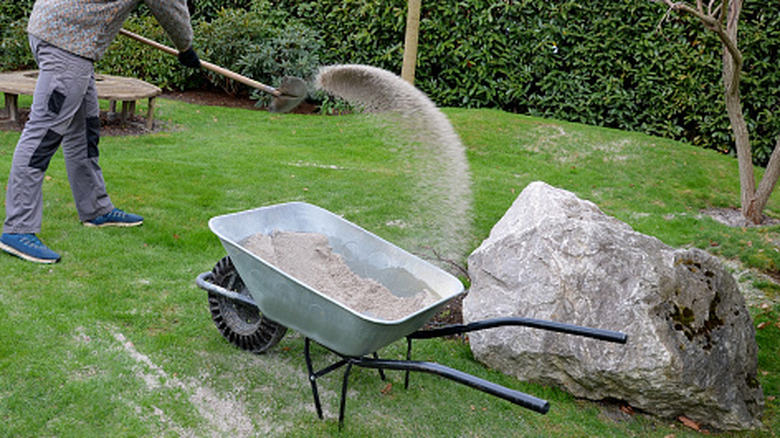
Leveling your grass with sand is a process that's somewhat similar to top dressing your lawn. When you top dress a lawn, you add nutrient-rich ingredients like compost onto it. If you're using sand to level out your lawn, you'll want to use not only sand, but also topsoil and compost to create a mixture that's 40% topsoil, 40% sand, and 20% compost. While you can technically use just sand or just topsoil to fill in those indentations and form a level surface, mixing the two (and adding in some compost) offers more benefits, like providing your grass additional nutrients.
The practice of using sand to level dips, divots, and indentations in your lawn is most effective when used on dips and depressions less than 1 inch deep or when minor adjustments are needed around areas like tree roots. If you're dealing with more significant indentations or holes, you will likely need a different solution. It's also important to ensure you're not adding the wrong kind of sand — like beach or clay-based sand, for example — as you could introduce entirely different problems to your grass. For leveling lawns, masonry or river sand can be a great choice. Wondering about playground sand, which is often sold at hardware stores? For many lawns, it's a good choice. However, you'll likely want to avoid it if the soil in your area is clay soil, as adding significant amounts of fine sand into this type of soil may pose problems.