

The Best Way To Stop Purslane Before It Starts In Your Yard
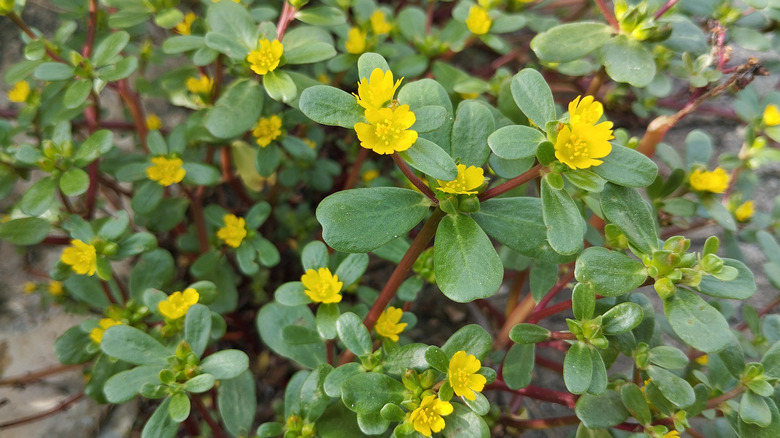
If you've been fighting common lawn weeds, you might have noticed a small, aggressively spreading plant with deceptively cheery yellow flowers and reddish stems. Common purslane (Portulaca oleracea) is a succulent that was originally native to North Africa, India, and the Middle East, but it has since spread across Europe and North America. Although it is edible and has cute flowers, its quick-spreading nature has made it the bane of many homeowners. The best way to keep purslane from taking over your yard is to ensure that your soil is healthy.
One crucial detail to focus on is your soil's texture. Purslane grows well in compacted soil, but many grass varieties do not. If your soil is compacted, it may leave your lawn weak, opening up gaps where purslane will thrive. Your lawn is more likely to be compacted if it sees a lot of foot traffic or other activity, but it can also happen naturally over time. Some signs to look out for are poor drainage and weak grass.
Luckily, you can loosen your soil by aerating it. You can use a professional aeration tool or try this hand drill hack to aerate your lawn. If your lawn isn't currently compacted, avoid walking or driving on it as much as possible, especially when the soil is wet. Wet soil is easier to compress than dry soil, so if you need to walk on your lawn or do work that requires heavy machinery, wait until it dries out if possible.
How to help your lawn repel purslane
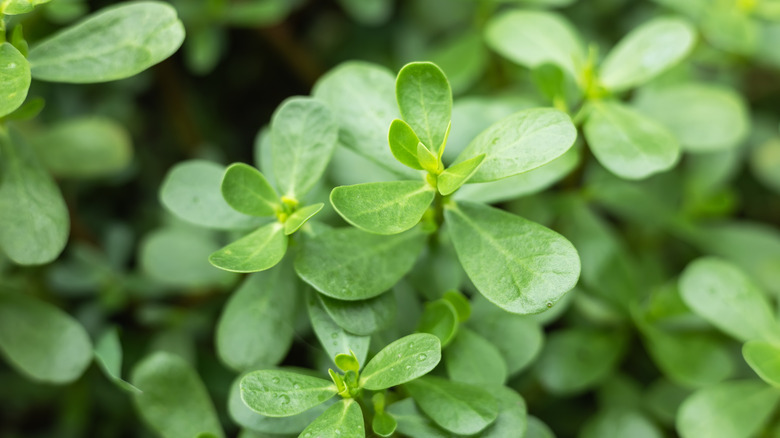
If your soil is loose and healthy, the next step is to keep the seeds out of your lawn. Avoid introducing purslane into your yard by planting native alternatives in your garden and purchasing your lawn and garden seeds from reputable sources. The seeds of common weeds can sometimes contaminate seed mixes, so look for seeds that are guaranteed weed-free. Make sure any equipment or tools you use in the yard are cleaned before and after as well, especially if they've been used in areas where purslane grows.
Purslane is opportunistic and will gladly sprout in any bare patches or thin spots in your lawn, but a thick, healthy lawn won't leave much room or nutrients for purslane to grow. Make sure your lawn is getting enough water, and avoid mowing it too short. If you have any empty patches where grass won't grow due to the amount of shade it gets or poor drainage, try filling them with other plants that thrive in those conditions. If the empty areas are near trees or in your garden, use mulch to fill the space instead.
If you can see purslane spreading toward your yard, then there may already be seeds waiting to sprout among your grass, as it is a prolific seeder. While there are herbicides you can use to kill the seeds and young sprouts, they aren't usually necessary. You can monitor your yard for signs of purslane and remove any enterprising sprouts you find, but, in general, it shouldn't cause much of an issue as long as your lawn is thick and healthy. If the weed does make its way into your lawn, you can try these tips for controlling purslane in your yard.