

Fast-Growing Fruit Trees To Plant In Early Spring For A Tasty Harvest
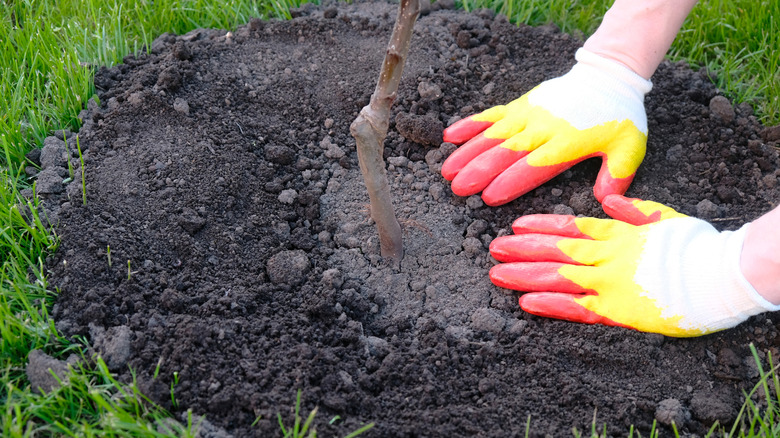
There is an undeniable satisfaction that comes from plucking healthy fruit from your own trees. Should you be looking to get into growing your own, there are plenty of fruit bearing trees you can choose from. If you are anxious to get your yard filled out with fruit trees, you'll likely want to select the fast growing varieties. You will probably also want to select trees that can be planted as early as possible. To that end, there are some fast-growing fruit trees which can be planted as soon as the final frost date passes in early spring.
The majority of the trees that are best suited for early spring planting, like apples and peaches, are considered cold climate trees. However, these types of trees can typically be grown in USDA hardiness zones 1 to 8, which actually covers most of the Lower 48. There are some warm weather varieties, such as fig and most citrus, which also thrive when planted during early spring. Keep in mind, the early spring timeline refers to planting bare-root versions of these trees. Planting from seed follows an entirely different time frame and process.
While these particular varieties of trees grow extremely fast, don't expect to be harvesting fruit this fall. Even the fastest-growing fruit trees still take at least a full year after planting before yielding fruit, with most requiring at least 2 years. Others may take as long as 4 or 5 years. However, getting these trees in the ground during early spring gives them plenty of time to become established before winter dormancy. It also takes advantage of the often ample spring rainfall to help trees kickstart the growth.
Peach
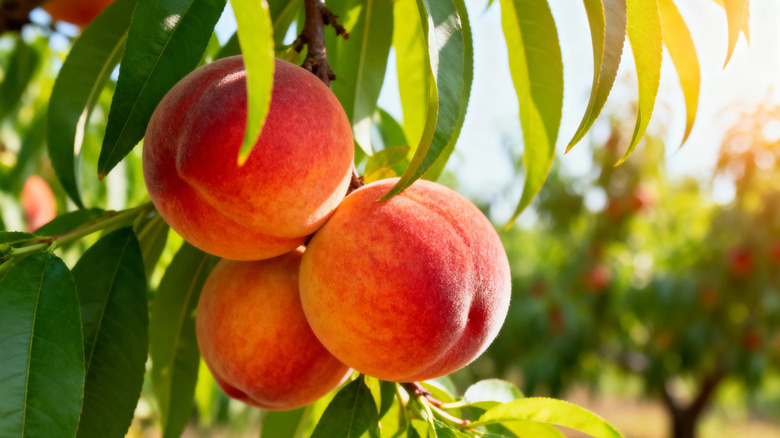
Peach trees (Prunus persica) are most commonly associated with Georgia, which is known as the Peach State. However, they can be grown throughout hardiness zones 5 to 9, which is the entire Lower 48 except the uppermost reaches of the mid-section and northeast of the U.S..
When growing peach trees, bare root trees are best put in the ground during early spring. Planting later than that can stress and/or kill the tree. They should be planted in an area that gets at least 6 hours of sunlight. The tree should bear fruit in 2 to 4 years.
Plum
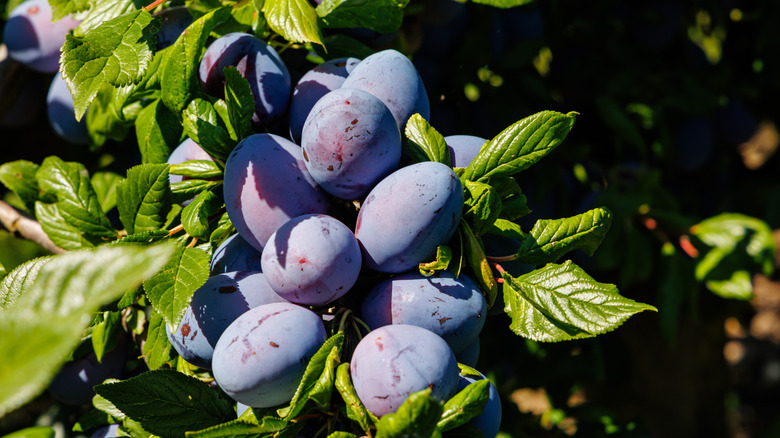
Plum trees (Prunus domestica) also are capable of being grown through USDA hardiness zones 5 to 9. Growing plums is a relatively easy task, as these trees require minimal care and can tolerate a wide range of soil conditions. However, to ensure they get off to a good start, it is important to plant bare root trees in early spring. Plums tend to do best in areas of full sun, but can tolerate partial shade. These trees should yield fruit by year 3. To enhance fruit production, some experts suggest planting two or more varieties of plum trees.
Pear
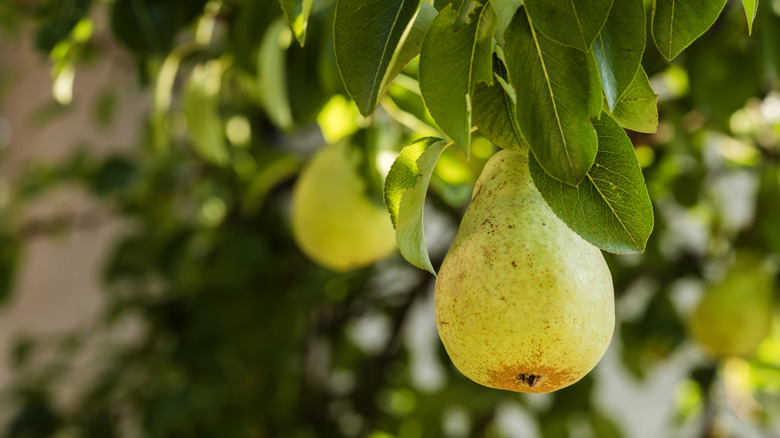
There are a number of varieties of pear trees (Pyrus spp.). The common pear tree (Pyrus communis) is, as the name suggests, the most commonly grown variety. These massive trees are capable of growing to 40 feet in height and do well in hardiness zones 4 to 8. On the downside, it can take 4 years or longer for common pear trees to bear fruit. As a result, some cultivars such as the Kieffer pear (Pyrus communis 'Kieffer'), which can yield a harvest in as little as a year, have become a popular choice for those who wish to grow pear trees.
Apple
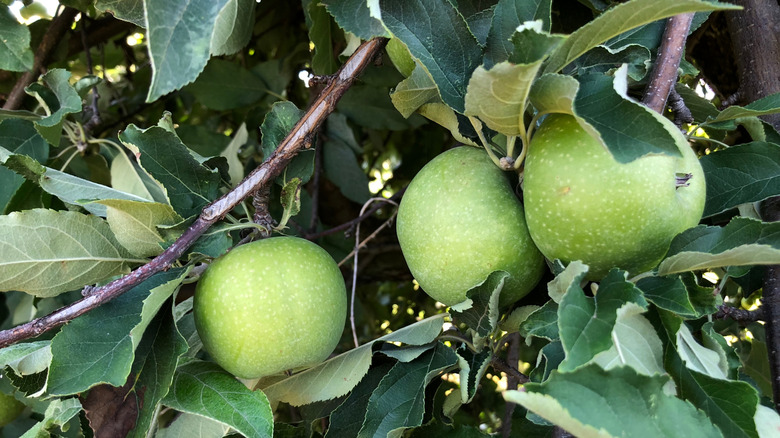
Apples (Malus domestica) are another fast-growing fruit tree that is best planted in early spring. There are a variety of different types of apple trees, none of which are very difficult to grow. Depending on the particular type of apple tree, they can be grown throughout hardiness zones 3 to 8. While all varieties of apples are considered fast growing, dwarf varieties grow and produce fruit much quicker than standard size apples. Dwarf apple varieties can yield fruit within just 2 to 3 years while larger varieties could take twice as long. They are also a better fit in small yards.
Lemon
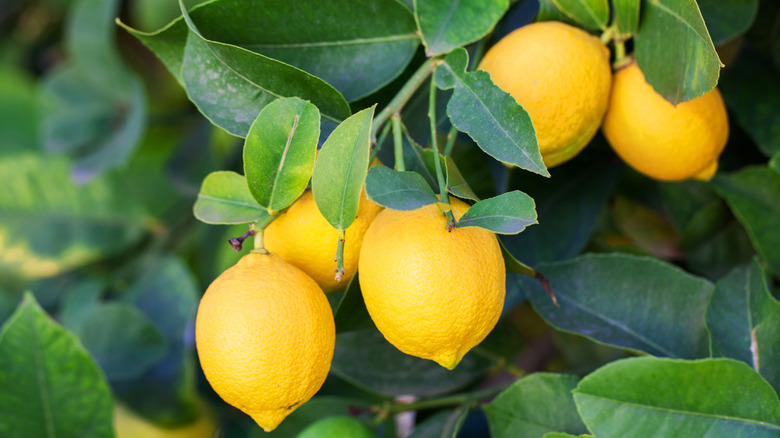
Lemon trees (Citrus x limon) are popular fruit-bearing trees which can be grown indoors or outdoors. When planted outdoors, lemon trees can be grown in hardiness zones 9 to 11. Bare root trees should be placed in the ground during early spring so that their roots can take hold before the sweltering summer heat hits. While they are relatively easy to care for, lemon trees should be grown in full sun within fertile soil that is well-draining. Like most citrus, lemon trees give a relatively quick return, often producing fruit within a year or two of planting.
Tangerine
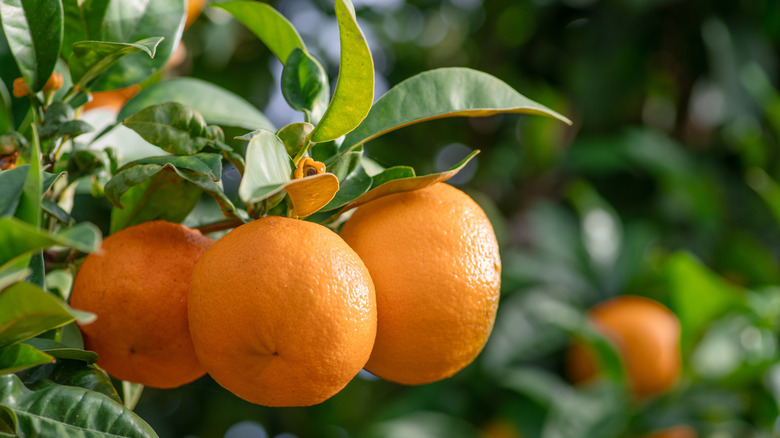
Another fast-growing citrus tree that produces fruit relatively quickly is the tangerine tree (Citrus reticulata). Like lemons, tangerines are best suited for hardiness zones 9 to 11 and can be grown in the ground or in containers. When planting them in the ground, it should be done during early spring, after the last frost, in a spot that gets full sun at least 6 hours per day. These evergreen fruit trees are ideal for growing in smaller yards or spaces, as they only grow 10 to 15 feet tall and 8 to 10 feet wide.
Fig
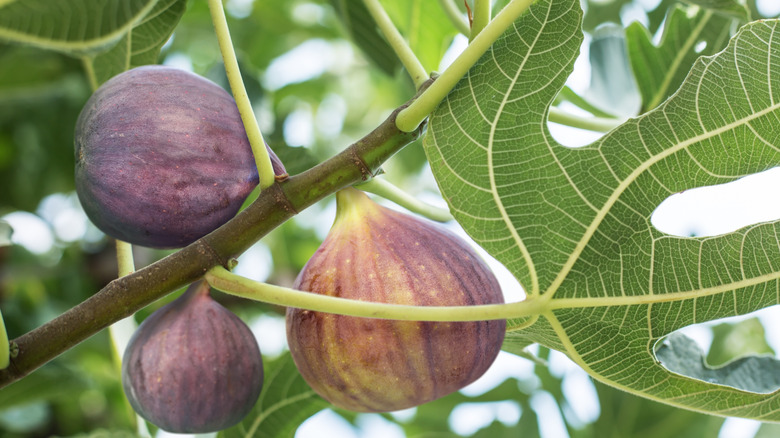
If you enjoy eating figs, the most reliable way to ensure a fresh supply is to grow your own fig tree (Ficus carica), as they have a limited shelf life since they fully ripen on the tree. Fig trees can be grown throughout hardiness zones 7 to 9, as well as portions of zone 6. The best time to plant figs is in early spring. Although it may take some time for fig trees to grow to their maximum size, they reach maturity and begin producing fruit quickly. The first fruit is often harvested around the first year.
Pomegranate
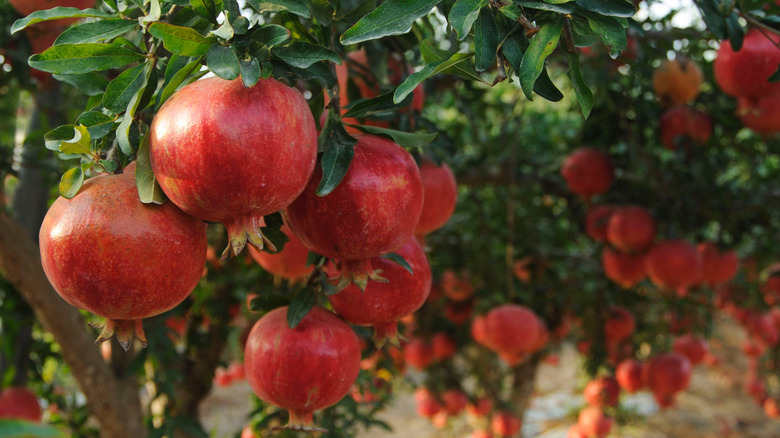
While people often refer to pomegranate (Punica granatum) as trees, they are actually deciduous shrubs. Nonetheless, they are capable of tree-like dimensions, reaching heights up to 20 feet. You can grow pomegranate in hardiness zones 8 to 11, although some cold hardy varieties can do well in zones 6 to 7. Pomegranate trees should be planted early in spring, as soon as the threat of frost is over. Plant in an area with well-draining, loamy soil that receives full sunlight most of the day. Typically, fruits start showing up on pomegranate plants within 2 to 3 years.