

Transform Your Kitchen Windowsill Into A Lush, Thriving Herb Garden
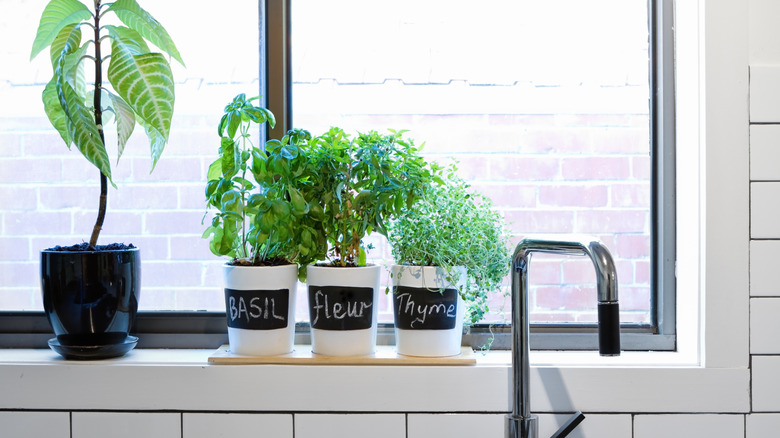
A kitchen windowsill can offer a great opportunity for growing culinary herbs at home. The placement can allow your herbs to get much-needed natural light and offer a prime location from both aesthetic and convenience standpoints. The herbs can enhance the earthy luxury decor many people seek in their homes while also allowing you to quickly grab a few leaves to enhance your cooking. As a bonus, herbs are relatively easy to grow for both novice and experienced plant enthusiasts alike. If you're ready to transform your own kitchen windowsill into an herb garden, you'll need to take stock of the space while also keeping a few key growth tips in mind to really help your plants thrive.
First, there's a critical decision you have to make: Which herbs do you want to grow? While basil is often top-of-mind, there's also rosemary, mint, parsley, sage, oregano, thyme, sweet marjoram, and even chives to consider. Certain herbs are also easier to grow in your kitchen than others. While you can buy new plants from a garden center, you can easily grow most herbs from seed, too. The latter option is certainly less expensive than buying new established herbs, and you also don't have to worry about accidentally bringing in pest-infested plants from outside. Once you've decided which herbs to start growing, you're ready to start preparing your kitchen windowsill to accommodate them.
Preparing your windowsill for kitchen herbs
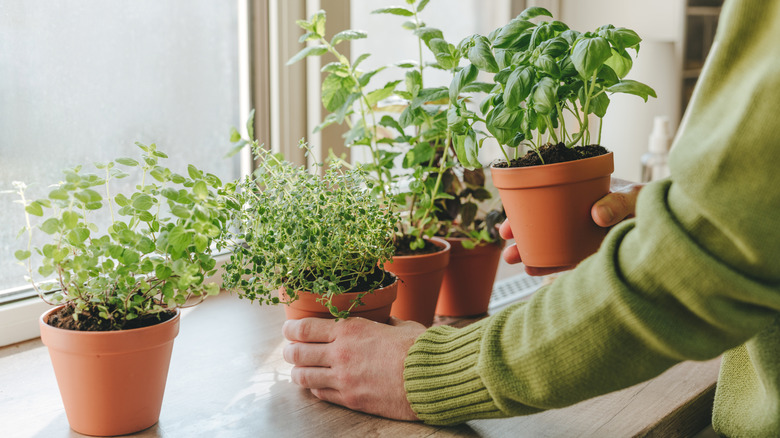
Herbs need a lot of sunlight — at least 6 hours per day is ideal for their growth. To that end, it's important to determine if the desired windowsill in your kitchen gets this much sunlight per day. The best spot would be a south-facing window that can get up to 8 hours of sunlight every day. You can tell your herbs are not getting enough sunlight if they have stunted growth, and if their leaves have lost their natural aroma.
Also, while it might seem like a good idea to combine multiple herbs in a couple of containers to save space, doing so may not be conducive to overall plant growth. This mostly has to do with varying water needs for herbs. Even when grown indoors in your kitchen, some herbs like basil thrive in moist soil, while others like oregano prefer drier conditions. Keep each type of herb in its own separate container for best results — this might require that you cut down on the total number of herbs to grow if you don't have enough windowsill space.
Another important factor involves any pets you might have. Is the windowsill accessible to curious cats and dogs? If the answer is yes, you may need to find another location for your plants. Not only could you find your plants destroyed by your furry family members, but some herbs are also toxic to them. Examples include chives, lavender, mint, tarragon, and oregano.
Tips for growing and maintaining kitchen herbs
Aside from ensuring your herbs get atleast 6 hours of daily sunlight, there are some other key factors that can help create a thriving windowsill herb garden. Use a well-draining soil for your herbs, adding soil amendments for either drainage or moisture retention as necessary according to each herb's needs. Adequate water is another important element. Water needs can vary between plants, so it's important to follow instructions on seed packets or on plant tags from your garden center. In general, it's best to water your herbs whenever 1 inch below the soil's surface feels dry. Herbs might need a bit more water during the winter months when indoor humidity is often lower, but avoid overwatering them. The recommended ideal indoor temperature range for herbs is between 65 to 80 degrees Fahrenheit,with herbs thriving better when there's a nighttime temperature decrease of between 5 to 10 degrees Fahrenheit.
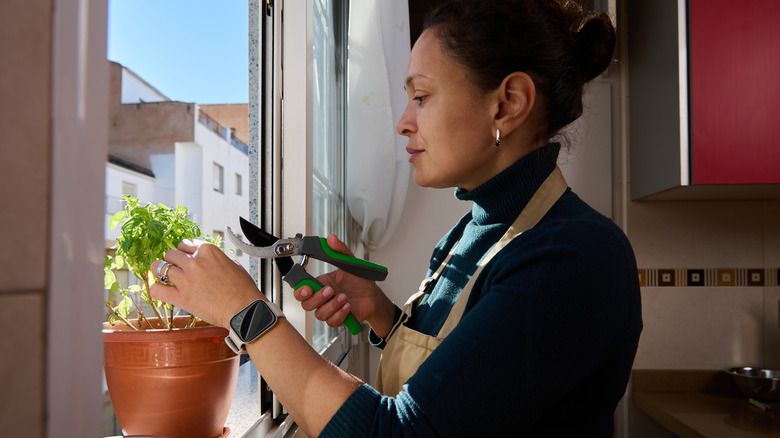
Pruning is yet another key method of care with indoor herbs. Doing so helps to support new growth, but as a general rule, avoid cuttingmore than a third of each plant at a time. However, the amount you can safely cut varies based on whether the herb is an annual or perennial plant. Annuals, such as basilcan be pruned back more than perennials, such as pruning rosemary or mint.