

Why Builders Ditched A-Frame Homes After The Late 1970s
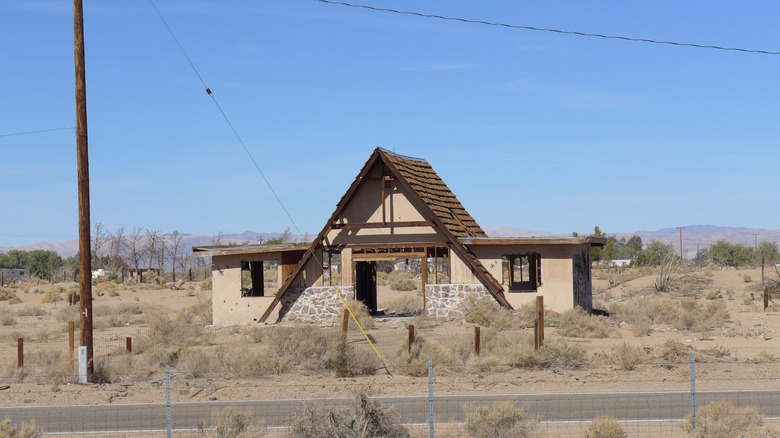
Anyone who has ever been skiing in the Rocky Mountains or checked out this eclectic New Hampshire cabin knows what A-frame looks like. Famous for their steep pitched roofs and open floor plans perfect for incorporating minimalist design characteristics, A-frames have been built for centuries all over the world, notably in Japan, New Zealand, and Switzerland. They were exceedingly popular in the United States as well — until the late 1970s, that is. By that point, instead of being a unique architectural statement, the A-frame was seen as a tacky and mass-produced product, with buyers seeking out more sophisticated designs. Due to this, by the 1980s builders had all but ditched constructing new A-frames.
The A-frame saw its heyday in the United States during the post-World War II economic boom in the 1950s and 1960s. People had money to spare and, in many cases, they spent this extra cash constructing secondary vacation homes in the mountains, woods, or by the ocean. The A-Frame became a popular construction choice owing to its affordable, compact design and unique look. The A-frame became especially popular as a getaway home choice after architect John Campbell revealed his "Leisure House" in a 1950 issue of "Interiors Magazine." The A-frame craze lasted well into the 1970s, with prefabricated kits becoming available to purchase from companies like Sears. However, as with anything that reaches the height of its popularity, the A-frame was soon seen as outdated.
Are A-frames making a comeback?
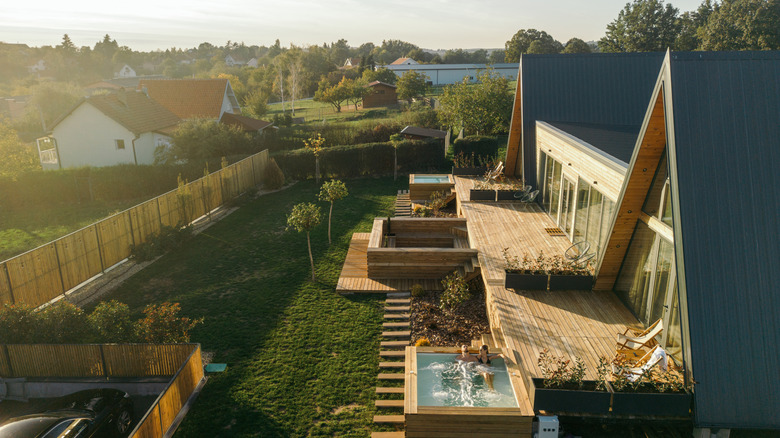
It wasn't just that the A-frame had become tacky that made it practically disappear in the 1980s and 1990s. It was also because people's taste in architecture and home styles had changed. Though A-frame houses have many advantages and disadvantages, one of the biggest cons is that the steep roof creates pitched interior walls and cuts down on overall square footage. By the '80s, people wanted larger homes and luxury condos, leaving no room for the humble A-frame.
However, though it became less common, the A-frame never totally vanished from the architectural sphere. In fact, after the economic crash of 2007 to 2009 when younger buyers were being priced out of those larger homes, A-frames became a unique and affordable alternative. Fast-forward to the 2020s, with record inflation and housing uncertainty, and you'll see that compact A-frames are making a comeback.
There are numerous different companies leading this charge, but the main emphasis for renewed interest in A-frames is on sustainable materials and low building costs. Even though you're likely to see a ton of adorable A-frames all across social media, as an architectural trend the A-frame is nowhere near the height that it was.