

Chip Gaines Warns Against This DIY Countertop Mistake

The kitchen is the heart of the home and a major selling point when buying a property. It can also be an incredibly expensive room to remodel. Sure, many handy homeowners DIY certain renovations to cut costs and personalize the space. As daunting as it sounds to the less builder-inclined among us, you can even DIY a kitchen countertop installation. However, as far as reality star and contractor Chip Gaines is concerned, it's probably a better idea to leave installing concrete counters to the professionals.
"Concrete countertops are definitely in the category of do not try this at home if you're not an expert," he said in a Season 1 episode of "Fixer Upper" (via YouTube). While you don't need a license for say this industrial DIY concrete kitchen utensil holder, it's best to have one to create the concrete counter it'll sit on. Making these tabletops is a finicky process that requires precision framing, mixing, pouring, curing, and sealing. They are not the most forgiving before, during, or after installation — especially for novice DIYers.
Concrete countertops are not DIY-friendly
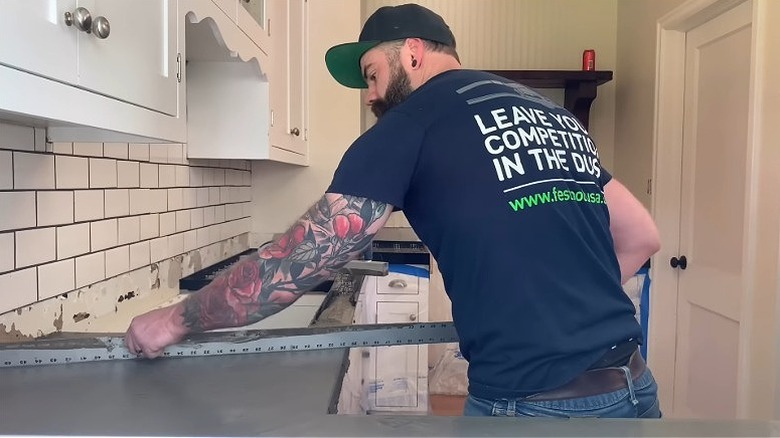
There are many reasons to consider concrete kitchen countertops. They are a budget-friendly option compared to stone, last for decades, and can fit various aesthetics, from rustic farmhouse to modern Art Deco. However, don't fall for those DIY videos that make the installing process look like a cinch. "These things crack if you don't do rebar just right," Chip Gaines explained. "The science is mixing the concrete right — that's the hard part. There's two keys to this: you got to get all the air out of this concrete so it'll solidify perfect, and then you got to get this thing down into every little nook and crannies." Professionals will have the skill and specialized equipment to get this job done.
The risk of wonky countertops and damage to surrounding cabinets or the flooring is high. The wrong ratio of water to concrete mix or an improper pour can lead to counters that are not leveled, have weak spots, and are prone to cracking. Even just getting the sealing process wrong will lead to a porous tabletop that stains and scratches easily. Furthermore, after the concrete sets, it might still need additional support to avoid extra pressure on the cabinets and floor. Whether in the kitchen, bathroom, or laundry room, countertops are not the place to experiment with pouring concrete. It may be wise to heed Gaines' advice and dodge a major DIY disaster entirely.