

This Common Household Staple Doubles As A Bed Bug Killer (But There's A Catch)
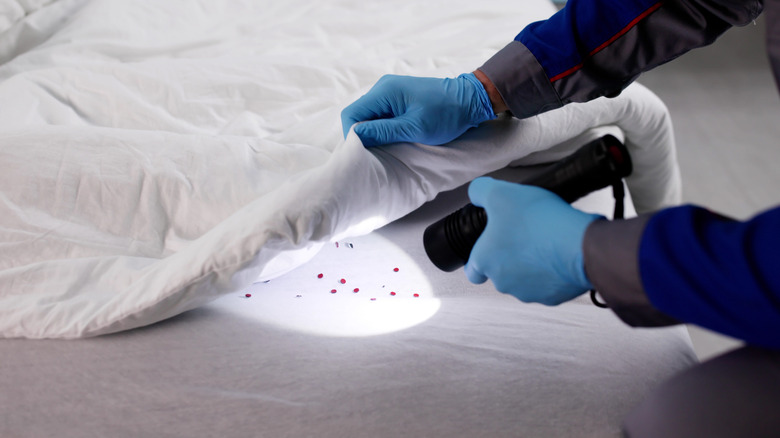
If the mere thought of bed bugs makes your skin itch, you're certainly not alone. These tiny insects don't spread diseases, but they can cause irritation to your skin when they bite. According to the Centers for Disease Control and Prevention (CDC), it's even possible for some people to develop allergic reactions to bed bug bites.
Bed bugs are notoriously sneaky and difficult to get rid of, with overall cases on the rise in the U.S. Insecticides are traditionally used for active bed bug infestations, but you might wonder if there's anything you can do at home if you see one of these pesky insects without resorting to professional-grade chemicals. One such talked-about method is rubbing alcohol. It turns out that this common medicine cabinet staple may technically kill bed bugs, but this method is ineffective against widespread infestations and also becomes dangerous.
Rubbing alcohol contains the active ingredient isopropyl alcohol, which is used as an antiseptic in first aid. Outside of these uses, this common household product is often touted for certain cleaning projects, such as ink stains, removing spots on stainless steel, cleaning glass, and more. Rubbing alcohol is also sometimes used as an emergency pest control agent — including bed bugs. Rubbing alcohol with between 70% and 91% isopropyl alcohol content may kill bed bugs by targeting their exoskeletons. That said, this is not an expert-backed method of bed bug control, as the risks could outweigh any potential benefits. In fact, the U.S. Environmental Protection Agency (EPA) strongly advises against using rubbing alcohol as a form of bed bug treatment.
Why you should avoid rubbing alcohol for bed bug control
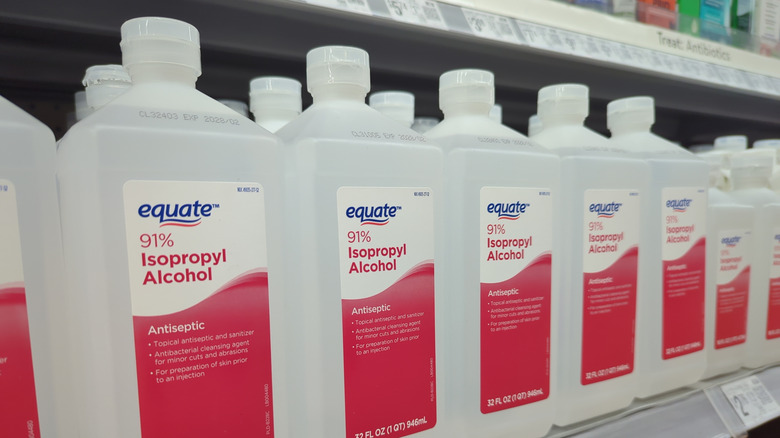
Rubbing alcohol's multifunctionality in the household doesn't mean it's safe for all purposes. It's not registered as a pesticide. Rubbing alcohol is extremely flammable and can cause serious problems when used in large quantities. According to the EPA, rubbing alcohol use for bed bugs has even been responsible for house fires.
A lack of established efficacy is also a problem. When you've reached a certain level of infestation, chances are that these insects are already hiding out in hard-to-reach areas, such as inside furniture and mattresses. This makes it so any surviving bed bugs that are not easily visible will continue to reproduce. Rutgers University lab studies found that rubbing alcohol only killed up to 50% of bed bugs when directly sprayed. Once rubbing alcohol dries on surfaces, it's no longer effective against other bed bugs that come into contact with the area, and it also doesn't kill bed bug eggs.
If you've identified bed bugs around your home, resist the urge to douse them with rubbing alcohol. It's best to utilize tried-and-true methods to get rid of bed bugs that are also safer, such as vacuuming and freezing dry items in your household that cannot be washed, such as books and toys. On the other hand, if you've found that bed bugs have snuck into your home, and see signs of a larger infestation, contact a pest control expert right away. They can thoroughly treat the issue with insecticides that are specifically designed for bed bug eradication.