

The Self-Seeding Flower That Effortlessly Turns Bare Garden Spots Into Colorful Blooms
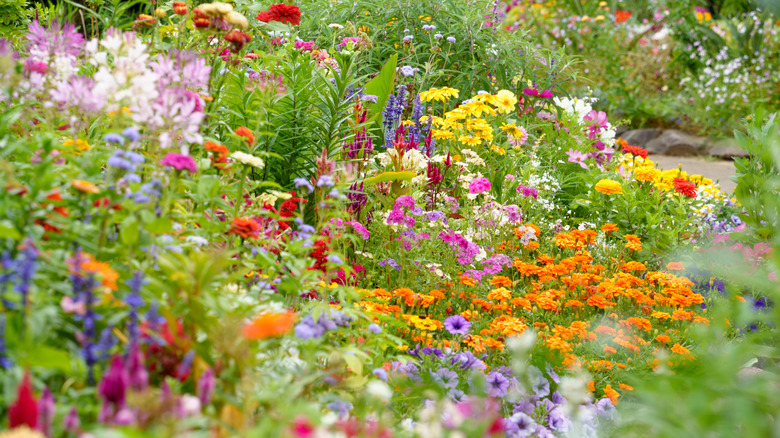
With spring quickly approaching, gardeners across the country are hurrying to plant new flowers in their gardens. If you're tired of replanting each year, self-seeding plants are the way to go. They're often among the easiest flowers to grow from seed, since the seeds will germinate on their own with minimal help. Among the many self-seeding options, hollyhocks (Alcea rosea) are a favorite for many gardeners. Their vibrant flowers make for a gorgeous addition to most gardens, and their habit of self-seeding means they'll spread to cover any bare patches in your garden!
Hollyhock flowers bloom in a wide range of colors, from pastel pinks and yellows to bright reds and deep purples. These flowers tend to last a long time as well, appearing in June and typically lasting through August, so you can enjoy their colors all summer long. In addition to their lovely blossoms, hollyhocks are great tall plants that add height to a garden. Whether you want to grow them as a border along a tall fence or use them to fill space at the back of your flower beds, they're sure to attract attention. Their stems can grow up to 8 feet tall, with several flowers on a single plant. People aren't the only ones who love these plants, either! Butterflies, bees, and even hummingbirds are drawn to them.
Planting and caring for hollyhocks
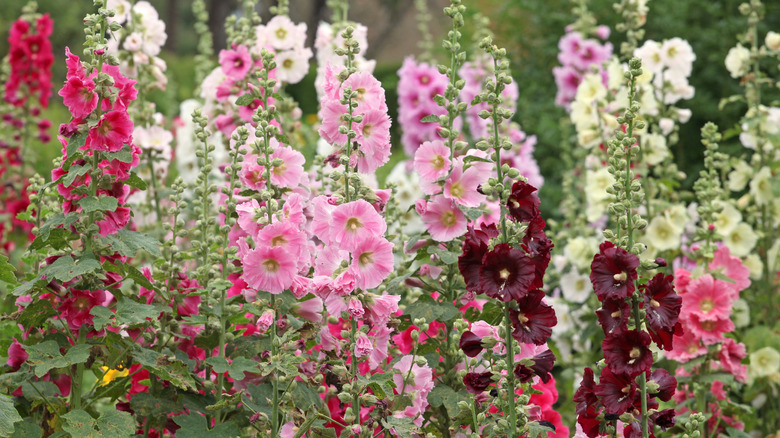
Hollyhocks aren't difficult to plant or care for, so don't worry if you're a beginner. They're hardy in Zones 5 through 9. Unfortunately for more northern gardeners, hollyhocks don't typically grow well in containers. Instead, find a sunny spot in your garden where your hollyhocks will have a few feet of space to grow and fill. Hollyhocks grow best in rich, well-draining soil, but if your soil isn't naturally rich you can amend it with compost before planting. If you live in an area prone to high winds, try to give your hollyhocks some shelter, as their long stems are vulnerable to being blown over.
You can start your hollyhocks either from seeds or from seedlings. Once planted, water your hollyhocks regularly while they're growing. When they're fully established, hollyhocks are somewhat drought tolerant. However, regular watering will keep them looking bright and fresh. Hollyhocks are attractive to insects, and not just beneficial ones. You'll most likely notice pest damage on their leaves, but it is usually more cosmetic than genuinely harmful. If it bothers you, or becomes overwhelming for your plants, it's good to know how to deal with common garden pests.