

Plant This Fast-Growing Flowering Plant To Attract Hummingbirds From Spring To Fall
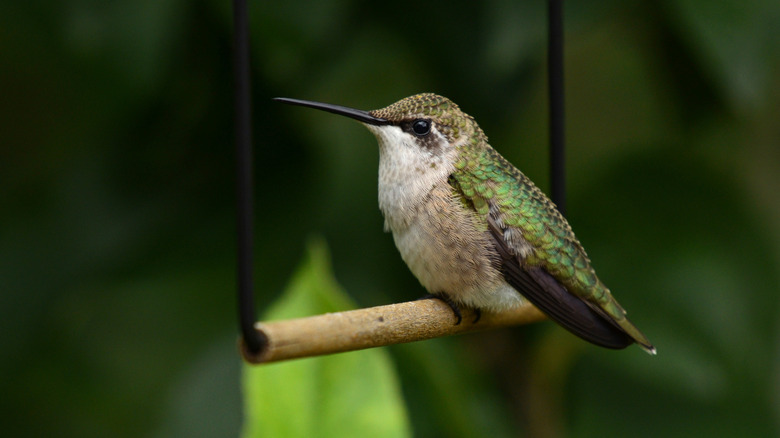
Whether you're a seasoned birdwatcher or an eager novice hoping to see your first backyard hummingbird, you can start with tried and true methods such as offering dye-free nectar and cleaning your hummingbird feeder regularly. Hummingbirds are also attracted to numerous types of flowering plants that help them get their nectar fix. To accommodate them, many gardeners choose colors that hummingbirds are known to spot the best, such as red, orange, and pink. Despite all these efforts, though, it can be challenging for late-season hummingbirds to find natural sources of nectar if nearby plants flower exclusively in the spring and summer months. You can help fill in flower availability gaps for hummingbirds with autumn sage (Salvia greggii).
Depending on where you live and the exact species, hummingbirds may start visiting as early as late February through mid-May before heading back south for the winter anywhere between July and October. When maintaining a hummingbird-friendly garden, it's crucial to have a variety of flowering plants that can support these birds from spring to fall. Some flowers that attract hummingbirds bloom on the early part of this spectrum, including columbine and azaleas. Others, such as nasturtium and honeysuckle, tend to flower during peak season. With autumn sage's longer blooming timeline between early spring and through the fall, you can provide additional food sources for hummingbirds and other pollinators. As a bonus, autumn sage is a native plant that also boasts the red tubular-shaped flowers that can attract these types of birds.
How to plant autumn sage for hummingbirds in your garden
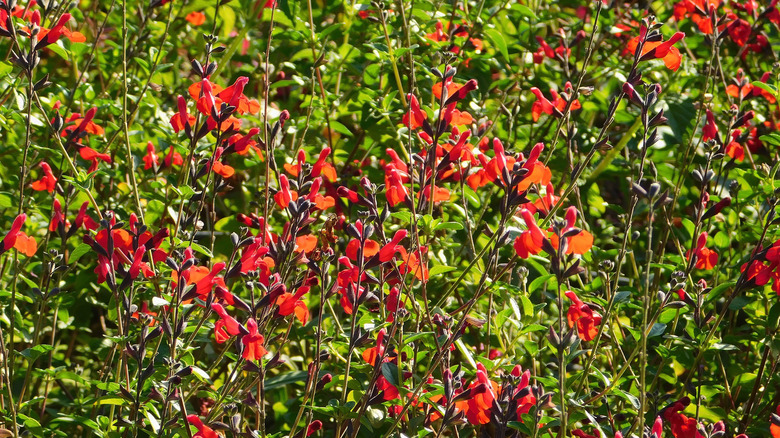
If you'd like to add this pretty late season plant in your garden to help hummingbirds, the good news is that it's easy to get started growing sage. First, know that autumn sage is considered hardy in Zones 6 through 9. The plant prefers full sun and light water, and it can do well in dry conditions. During the hottest times of the year, the University of Florida IFAS recommends watering autumn sage 1 to 2 times each week. While this plant is tolerant to both drought and heat, it doesn't do well with too much water. For best results, plant autumn sage by early spring so it can get established for hummingbird season.
Autumn sage can also grow rather tall and spread out — in fact, some plants may reach up to 4 feet in both height and width. If you don't have quite the bandwidth in your garden for this large of a plant, consider growing autumn sage in large containers. When planted in well-draining soil and in a location that gets at least 6 hours of sunlight per day, container-grown autumn sage can do just as well as those planted in landscape beds as hedges and border plants. Deadheading old flowers on a regular basis can encourage even more blooming for as long as possible. You might also consider pruning the plant in the late winter ahead of your hummingbird friends' journeys back north to your area.