

Do You Really Have To Remove Old Mulch Before Adding New?
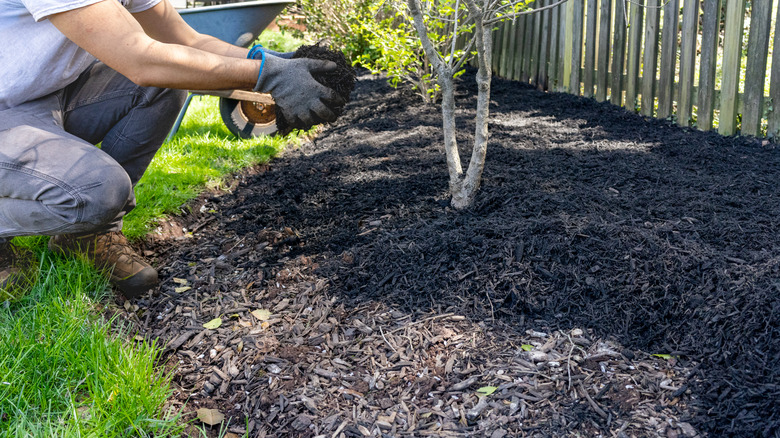
If you're getting your garden ready for the changing seasons, one of the steps on your list is probably refreshing the old mulch around your plants. Mulch is important for insulating roots and suppressing weeds, but it doesn't last forever. You may know how to mulch, but you may be left wondering if you should remove the old mulch or pile the new mulch right on top. Looking for answers online can be confusing, as there are some conflicting recommendations out there. That's because the answer isn't a simple yes or no — it actually depends on a few factors. In many cases, you don't need to remove the old mulch first. Organic mulch will break down slowly, so you don't need to worry about leaving it for too long. However, you should generally remove inorganic mulch.
Instead of removing organic mulch, you can add a new layer of fresh mulch on top whenever the existing mulch is starting to get thin or you see weeds beginning to grow through it. Just make sure that the overall layer of mulch is no thicker than three inches. If the mulch is too thick, it may prevent air or water from reaching the roots. If you want to refresh your mulch, but the existing layer is already at three inches, you can remove some of it to make room. Even if you don't remove any, you should rake the old mulch to loosen it, as it can become compacted over time.
When should you remove old mulch?

While it isn't always necessary to remove your old mulch, there are some times when it can be beneficial. A simple example is if you're switching between an organic and inorganic mulch, such as changing from pine straw mulch to landscape fabric. If you've decided that the best type of mulch for your project is different from the type you're currently using, you may want to clear the old mulch away first.
If you're using the same type of mulch, you may want to inspect the existing mulch to ensure it's still in good shape. It's normal for organic mulch to break down, but if it is moldy or full of pests then it's time to clear it out. Some pests are attracted to the dark, warm environment of your mulch pile, and while a few insects are perfectly normal you don't want to see an entire swarm. The same goes for fungi. While many common fungi are not harmful to plants, if there's a large amount it may mean your mulch has poor drainage and is holding on to too much moisture.
If you're replacing your mulch, rake or scoop it up and set it to the side. Depending on why you're replacing it, you can toss it, compost it, or use it for another project. Before adding your new mulch, address any issues that need resolving. Pull up any sprouting weeds and deal with any garden pests that were lurking underneath. Add your fresh, clean mulch, and finish by watering your plants.