

The Colorful Spring-Blooming Flower You'll Want To Plant Near Your Hostas

Hostas (Hosta spp.) are among the most common perennials grown in home gardens. Unless you have an active deer issue, these plants are relatively hardy and do well with little care or maintenance. Despite their beautiful leaves, hosta cultivars only flower between the summer and fall months. To add interest alongside hostas in your garden in spring, it's smart to choose a plant that blooms at this time which also needs similar growing conditions. In this case, you might consider lungwort (Pulmonaria officinalis).
From an aesthetic perspective, hostas and lungwort pair well together due to their varying colors. Lungwort's silver-speckled leaves offset the plain green of hosta foliage. There's also each plant's flowers to consider. Lungwort can bring color to your garden in spring thanks to its flowers which evolve from pink to blue. As another perk, the flowers tend to open and change color at different times, which helps ensure there's some variety in your garden throughout the blooming season. Lungwort flowers are also known to attract pollinators such as butterflies and bees, and they are resistant to deer. Once its flowering is complete for the year, lungwort can take a backseat to the neighboring hosta, which blooms during the summer months.
Aside from the visual appeal of planting hostas and lungwort next to one another, there's also some practicalities to consider. Despite their differences in blooming times, lungwort and hostas both love shady conditions. As perennials, the two are considered cold-hardy and they do well in similar growing zones. Lungwort is hardy in zones 3 through 8, while hostas are considered hardy in zones 3 through 9.
Tips for growing lungwort near hostas in the garden
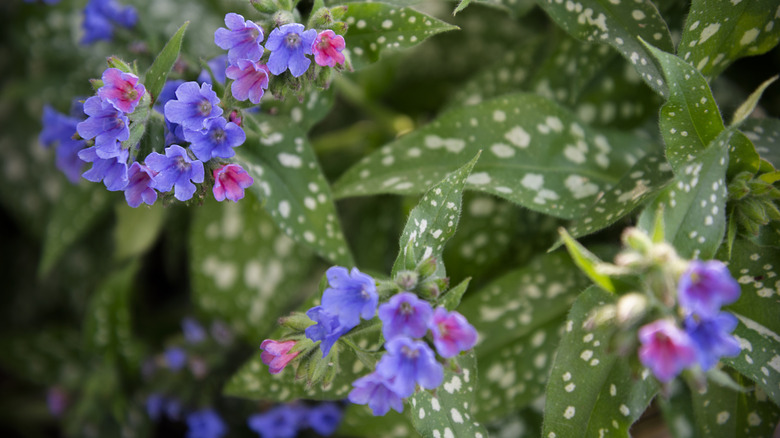
If you're ready to add this interesting plant next to hostas in your garden, the good news is it's relatively easy to grow. The first order of business is to make sure you pick a spot with partial to full shade. Like hostas, lungwort needs well-draining soil that's kept moist. Soil that is too wet or too dry is not conducive to lungwort growth. Lungwort also prefers air circulation in-between plants to prevent powdery mildew growth, and you may need to check for slugs on the leaves of both lungwort and hostas from time to time.
While you can technically grow lungwort with newly acquired plants in the spring, you can also propagate existing ones by division. This can be done in the spring or early fall (which allows the plant to better prepare for the following spring). Be aware that lungwort is considered a groundcover plant that works particularly well in garden and landscape beds.
Depending on the variety, lungwort has the potential to grow 2 to 3 feet wide and between 9 and 18 inches tall. Unlike many other groundcovers, lungwort grows slowly and isn't invasive to surrounding plants — including hosta. With these key tips in mind, you should be able to enjoy the beautiful addition of lungwort next to hostas in your garden. (If you don't have either plant yet, know that hostas can likewise be planted in the spring.)