

What It Means If Your Yard Is Overrun By Ladybugs
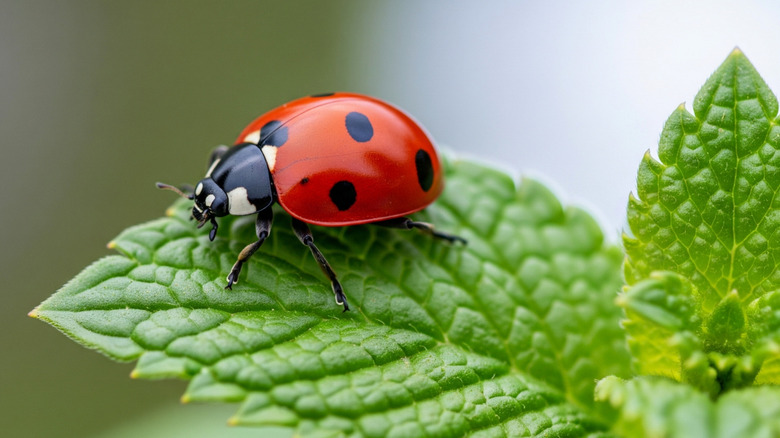
If you want your yard to look pristine, knowing how to deal with common garden pests is extremely helpful. Some insects ruin plants or spread diseases, but not all of them are bad. Ladybugs are generally considered beneficial to have around, and some people even release ladybugs into gardens since they eat harmful insects and help pollinate flowers. However, they can sometimes become overwhelming when they swarm. To help us understand why this happens and what you can do about it, we reached out to Orkin entomologist and national technical director Shannon Sked.
"Ladybugs are attracted to areas where there is a steady food source, particularly other insects like aphids. Plants, shrubs, and trees where aphids or similar small pests live can draw ladybugs in," Shannon said. However, there is another reason you might see an uptick in ladybugs. "Additionally, ladybugs are attracted to warm, sunny areas and may gather on light-colored surfaces. In the fall, they begin looking for protected places to 'overwinter,' a process similar to hibernation which can also draw some species inside homes, sheds, and other warm structures."
This isn't necessarily a bad thing. Ladybugs offer plenty of benefits to gardens, and hundreds of species of ladybugs are native – though, importantly, not all. According to Shannon, "Native ladybugs provide natural pest control for smaller insects. However, the invasive multicolored Asian lady beetle can be more problematic. While Asian lady beetle nymphs feed on smaller pests, the adults are more likely to gather in large numbers and invade homes." They can outcompete native ladybugs and are particularly annoying indoors as they emit a smelly, bitter substance when threatened.
What should you do to stop ladybugs from swarming?
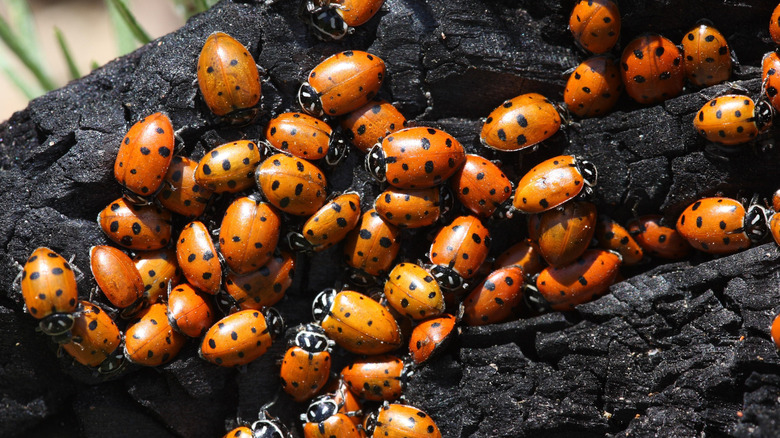
The good news is that if you have native ladybugs in your yard, you don't actually need to do anything. "Ladybugs don't damage lawns, structures, or most plants, and tend to only become a problem when they move indoors." Shannon explained. Instead of trying to eliminate them, focus on keeping them out of your home by identifying and sealing any cracks or gaps they might enter through. If you can get rid of the entrances pests have used in the past, you can prevent the home pest infestation from recurring. Pay close attention to the sides of your home that get the most sun, as these will be the warmest and most attractive to ladybugs. If you spot any indoors, a quick solution is to physically remove them with a broom or vacuum.
However, if you have invasive Asian lady beetles in your yard (or simply can't tolerate the ladybug swarm), there are steps you can take to discourage them from sticking around. "Because ladybugs are attracted to available food sources, managing aphid populations and other plant pests can help reduce their numbers." Shannon advised. Keep in mind that any chemical pesticides you use will also impact other beneficial insects and the environment, so follow the directions carefully to avoid overuse. Clearing out overgrown shrubs and weeds can also help, as it removes places for both the ladybugs and their food to shelter in. If you've done everything you can, Shannon offers one last bit of advice: "If ladybug activity becomes overwhelming, professional pest management can help identify the species and recommend appropriate treatment options."