

Some Designers Are Abandoning This Kitchen Island Trend — But Here's The Catch
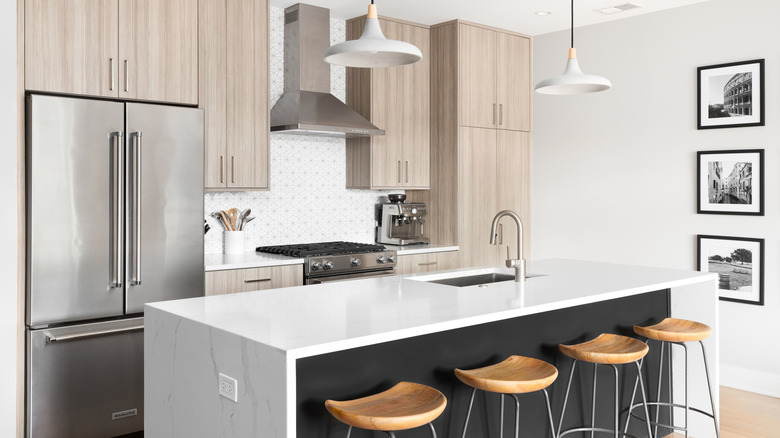
Waterfall kitchen islands – we've all seen them, and most love them. And yet, there's an undercurrent on social media and with trend experts that seems to suggest this design statement could be seeing the end to its kitchen remodel reign. Is it true? Are waterfall counters, where the material wraps the side of the cabinet, trending out or here to stay? As an interior designer, my take is that it's a little of both.
Here's my slight gripe with seamless waterfall kitchen islands. It's not that they're unattractive or not worth the investment, but what once started as a very intentional, thought-out design element has transformed into the overdone default "splurge" without much added creativity. When kitchen showrooms are cranking this island design out in generic Calacatta-look quartz by the hundreds, you know the trend has reached the masses. When this tipping point occurs, homeowners rely on this safe splurge already risked by someone else long ago, only to do it in a way that's uninspired and blasé. Where the waterfall edge used to be special and upscale, the endless photos of generic stone wrapping an island have become a bit mundane. Perhaps my gripe, however, is more that I'm over humdrum quartz as a whole (am I? No, surely I shouldn't be allowed to think or say that out loud? Sorry to my editor!) than I am quartz or marble waterfall countertops, but that's an argument for another day. Regardless of my perhaps controversial stance on quartz, let me break down all the details on when waterfall islands work and feel timeless versus where they fall absolutely flat like a faded trend, as well as what considerations you need to take into account if you want to incorporate this type of countertop in your own home with success.
When waterfall countertops feel unnecessary and uninspired
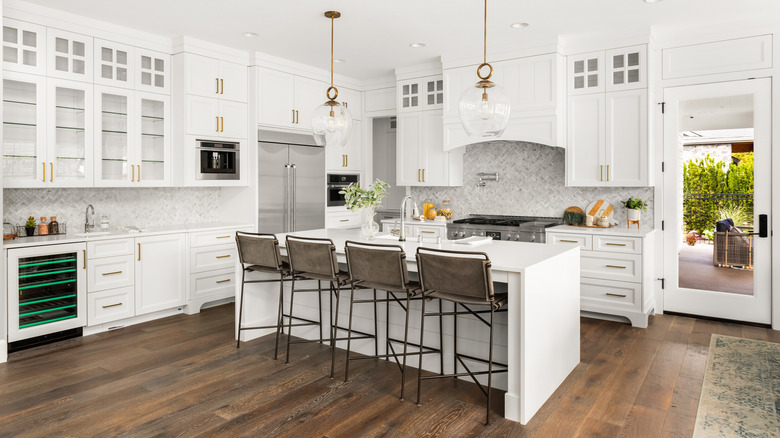
Let's start this waterfall countertop discussion with what I think is no longer working, which gives your kitchen an unfortunate date stamp of when it was remodeled. Again, not to unnecessarily rail on quartz, but I rarely find manmade slabs worth celebrating to the degree (and cost) of a waterfall edge. It's not that there aren't beautiful manufactured slab options worth considering for practical, nearly maintenance-free countertops, but when it comes to using them for a waterfall edge, I typically feel that the juice isn't worth the squeeze, as they say. The exorbitant material and labor costs to fabricate this countertop feature simply don't have as much ROI for me when the slab is only mediocre. The visual design impact of an island wrapped in a slab that's anything less than a showstopper rarely feels like it's worth the investment. Instead, it gives your kitchen the distinct appearance that it was renovated during the mid-2020s when ubiquitous, generic waterfall counters fell under the "everybody is doing it" category.
There's another issue that turns what should be a mind-blowing design moment into an uninspired half-measure: hiring an unskilled fabricator to do the job. It's become common knowledge that cost plays a major role in adding a waterfall edge to your kitchen remodel, both because of the additional material required to make it happen, as well as the specialized and custom fabrication. But you truly get what you pay for, so be ready to shell out for a trained professional – waterfall islands are not the time to skimp on cut-rate labor, as the level of skill and precision required for a high-quality result is high, especially matching seams with heavily-veined stone. And absolutely nothing brings down a waterfall edge like poor craftsmanship.
How to make waterfall countertops work
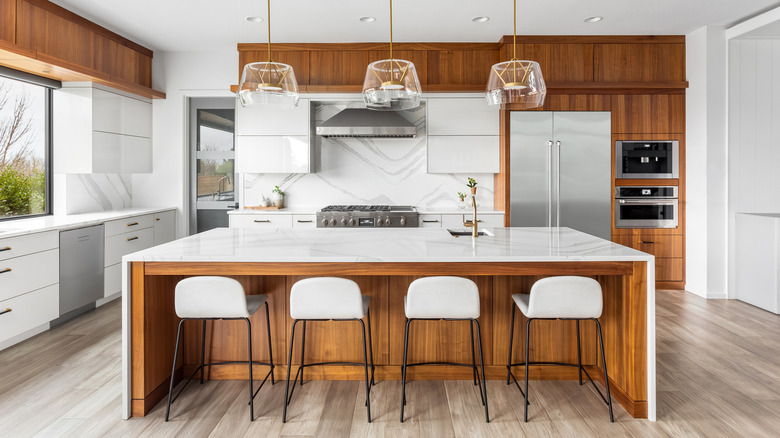
Now that I've probably scared you off, let's chat about when the waterfall edge island design statement still works beautifully, as I truly don't feel like this trend is gone. Since the point of a waterfall edge is to showcase the stone's inherent beauty, it should be no surprise that I think the best candidate for this treatment is a unique natural stone material with exquisite veining. When the stone's organic movement carries meticulously over the 90-degree turn, the result is truly exceptional, a jaw-dropping countertop upgrade worth every penny.
Additionally, some designers are playing with the way the stone and other mixed materials interact with the cabinetry to set their islands apart from the default waterfall edge configuration. For example, this could look like a thin waterfall slab lined on the underside (the seating overhang) with a thick inner material like natural wood, perhaps separated by a gorgeous reveal as an added detail. Or some feature a small waterfall edge where the counter-height island flows into an attached lower-height kitchen table. And, funny enough, I still have an affinity for a lovely one-sided waterfall peninsula. By changing up the standard interaction between the countertop, cabinets, and material(s) lining the space created by the overhang, the unexpected result is exciting and worth exploring.
What this boils down to is that if you have a spectacular, one-of-a-kind stone and maybe a unique way to configure it, a waterfall edge island can certainly still pack the design punch it once had and is worth the splurge to really go all out. But if you have a run-of-the-mill manmade slab, don't waste your money on this edge detail that likely won't have the wow-factor you're looking for.