

What's That Nest In Your Yard? 12 Common Types And How To Tell Them Apart
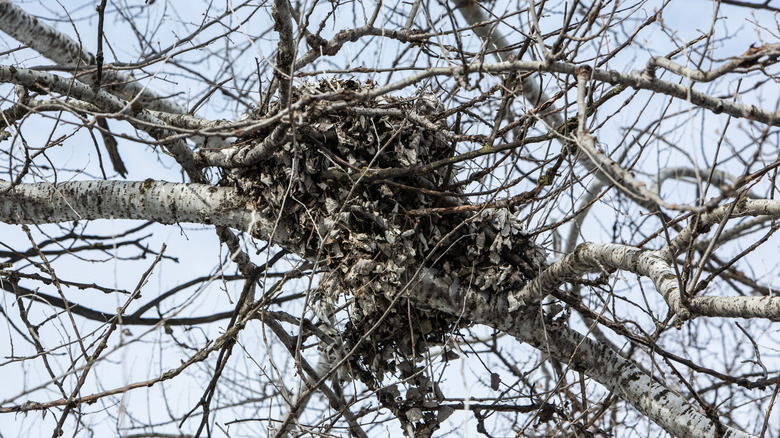
For many of us, our yards are spaces for both play and relaxation, and they offer opportunities to experience the benefits of being outdoors. No matter how much you try to make this space your own sanctuary, the reality is that other creatures will share this area, too. It's common to see a variety of nests in your yard from time to time, particularly during the spring and summer months as this window is peak breeding time for many species such as insects, rodents, reptiles, and birds.
Perhaps you've stumbled upon a surprise nest on the ground while hanging out in your yard or doing some seasonal landscape maintenance. Or maybe you've seen an unidentified nest gradually grow larger near your patio or on a nearby tree. In either case, it's best to know some of the most common types of nests and what they look like before proceeding. While some nests are harmless, others may contain insects that can turn aggressive if you, your children, or pets get a little too close for their comfort. It's also a good idea to contact a pest control service in certain cases for safe removal of any nest that could pose any danger to your household.
Songbirds
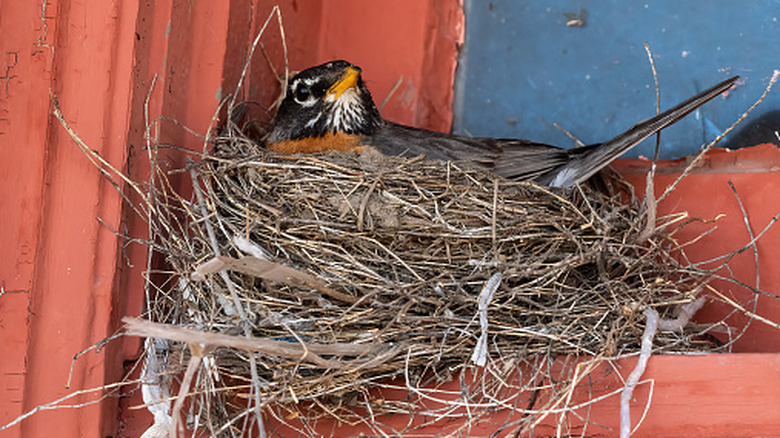
During the spring and summer months, it's common to see songbird nests around your yard. While these types of nests can vary between bird species, some telling signs are small entities containing pine straw, sticks, grasses, dirt, moss, and feathers. The most common type is called a "cup nest," which is rounded and deep enough for eggs and hatchlings. Songbird nests are usually found in trees, bushes, or occasionally on top of that seasonal outdoor wreath on your front door.
Barn swallows
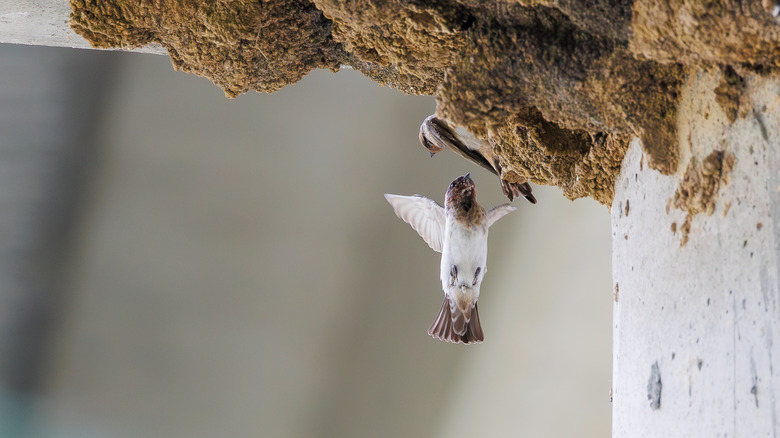
If it appears someone has thrown a pile of mud in the top corner of your patio or porch awning, you could actually be looking at a barn swallow nest. Barn swallows use mud to make their nests stick better to surfaces, but they also use other materials, such as pine straw, grass, and their own saliva. Outside of homes, barn swallows are also known to build nests inside barns (hence their namesakes), as well as underneath bridges. Be on the lookout for barn swallow nests during their long breeding season, which lasts throughout the spring and summer.
Squirrels
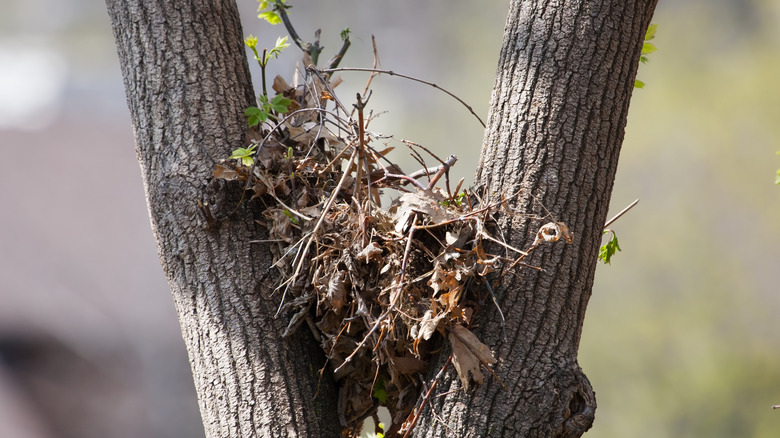
Occasionally, you might look up into the trees around your yard and see large nests mostly made with leaves as well as sticks and other natural materials. At first glance, you may assume it belongs to a large bird. You could actually be looking at a squirrel nest, though. Also known as leaf nests or dreys, squirrels build these entities as high off the ground as possible. You're also most likely to see them in the forks of larger tree branches. Another telling sign? According to Audubon Magazine, squirrel nests usually have a diameter of 1 to 2 feet.
Paper wasps
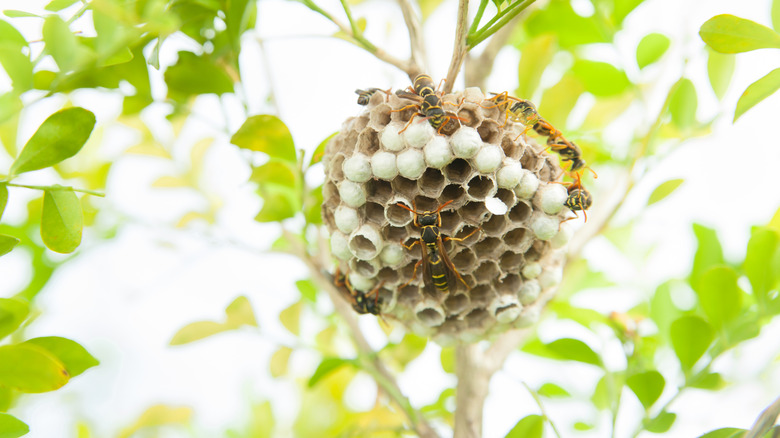
Paper wasp nests are perhaps some of the most common types of nests people find around their homes. These flying insects are in fact named for the nests they construct. If you see a gray colored, paper-like honeycomb nest hanging from the ceiling or tree around your outdoor spaces, chances are this belongs to paper wasps. Another sign is if you see multiple wasps guarding the nest (or if you get stung by aggressive guards!). Such nests can also become quite sizable as nesting season goes on, with some reaching 6 to 8 inches, per North Carolina State Extension.
Hornets
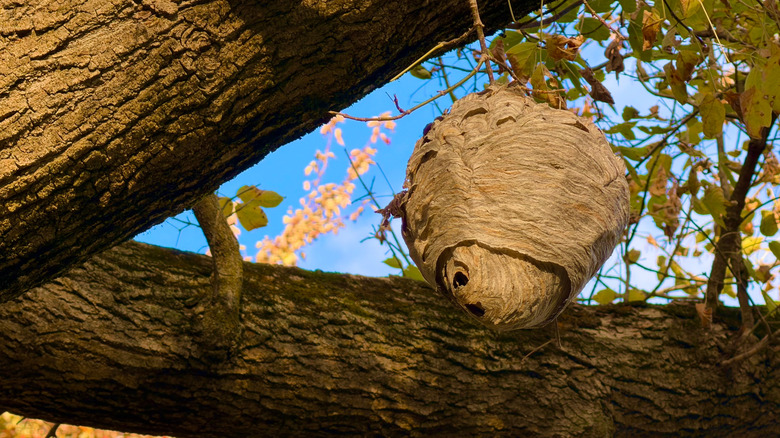
Hornets also build nests that look like paper. But unlike the openness of a paper wasp nest, a hornet nest is enclosed. You might not see a European hornet nest due to their preference for enclosures, such as the insides of trees. A bald-faced hornet nest looks like a large enclosed hive, and usually hangs from trees. If a hornet nest is in a high-traffic area around your yard, consider calling a pest control expert for help with removal. As Iowa State University Extension notes, hornets can attack those who get within 3 feet of their nest.
Carpenter bees
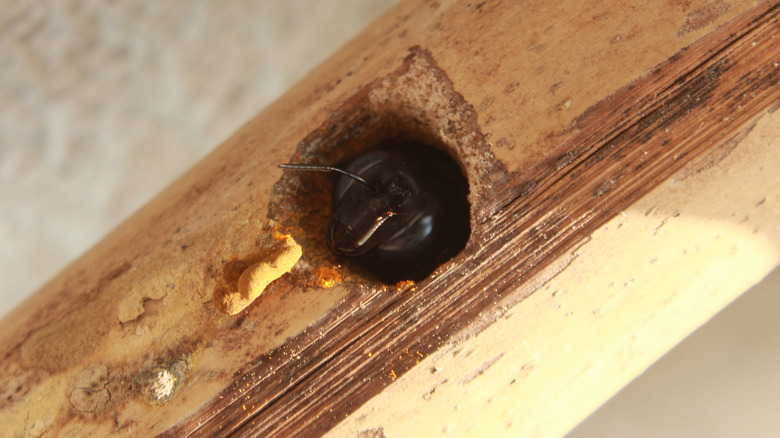
Carpenter bees are among the bee species that do not exclusively build nests on trees. They can build nests deep inside trees, as well as wood structures, such as decks, fencing, siding, and even soffits. You may not see the nest outside any of these entities, but you might see an adult female carpenter bee fly in and out of a hole they've bored into for creating tunnels that connects to the nest. According to the University of Maryland Extension, these nests extend between 6 and 12 inches long, which underscores the damage they can cause.
Honeybees
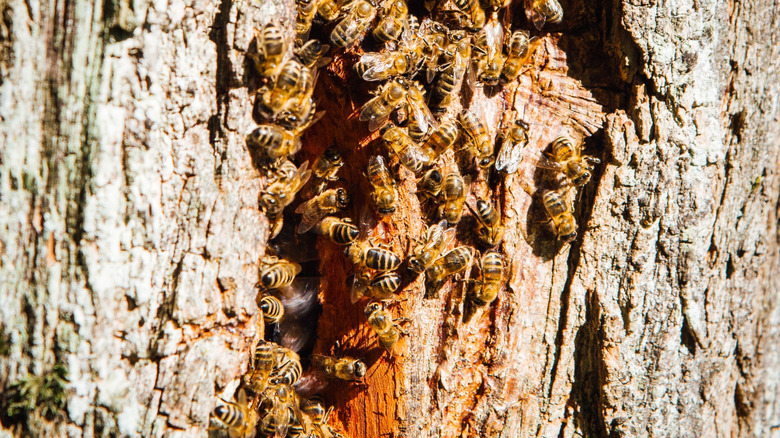
If you see (or hear) a lot of buzzing insects around one spot without the visibility of a hornet or paper wasp nest, you might have honeybees in your yard. Honeybees typically build their nests within hollow spaces, such as spaces inside old trees. However, they do occasionally target sheds, chimneys, and other exterior structures, so you'll want to be mindful of these areas as well. You might not actually see the nest itself due its placement and the large number of bees that protect it. If the nest is a safety concern, call a bee expert for help.
Ground nesting bees
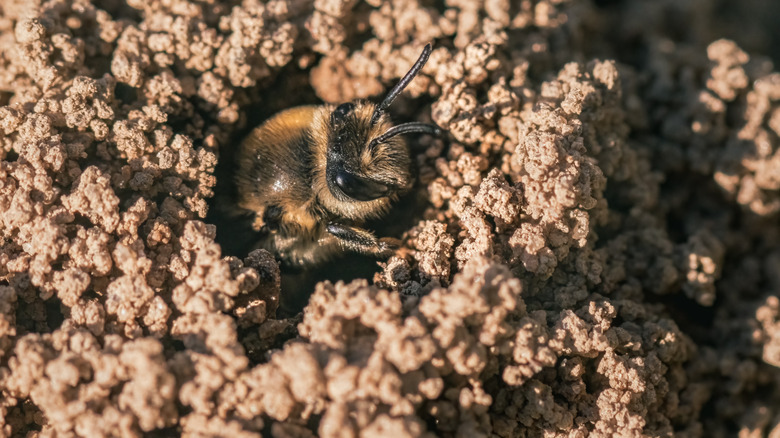
Unlike honeybees who tend to construct aerial nests, ground nesting bees unsurprisingly build theirs under the ground. According to North Carolina State Extension, about 70% of the world's bee population builds their nests in this manner. These are identifiable with their small mounds of dirt and entry holes, and there are usually several of them clustered together. Due to the excavated soil surrounding these nests, these are sometimes mistaken for ant nests.
Pavement ants
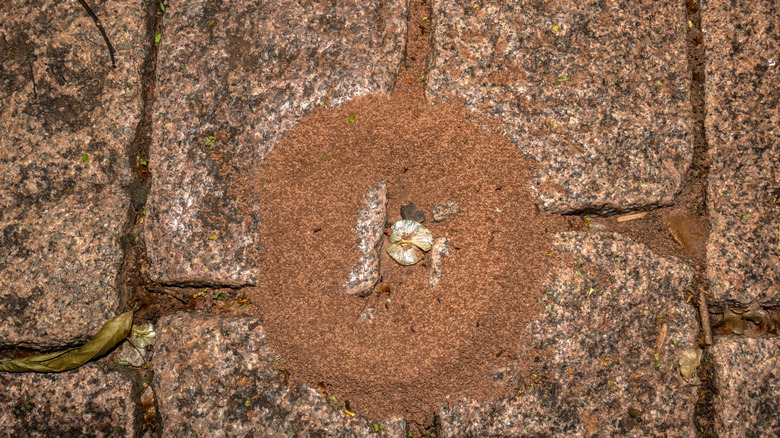
If you see small patches of soil or sand around your patio, driveway, or walkways, you could be dealing with pavement ant nests. While generally considered harmless, pavement ants tend to build these small nests within crooks and crannies of these home entities. They also have the reputation of causing infestations inside homes. Seeing these small nests outside of your home warrants paying close attention to signs of pavement ants indoors, too.
Fire ants
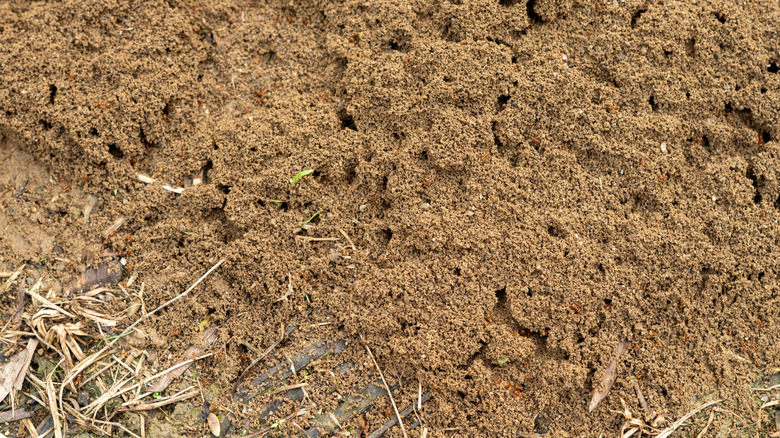
Fire ants may be found in numerous parts of the U.S., but you should be extra diligent if you live in the southeast where these invasive insects are especially prominent. Their nests can range from small, soil-level patches to larger dome-shaped mounds without visible entry points. Not only do fire ants build these nests in lawns, but they also favor the perimeters of driveways and footpaths, as well as in garden beds. Since their nests can often match the surrounding ground upon which they're built, these can become dangerous to unsuspecting humans or pets who accidentally disturb them.
Termites
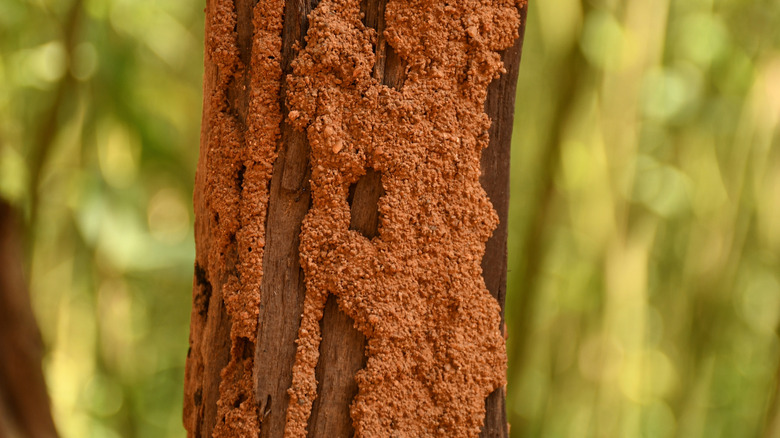
No homeowner wants to hear about termites, as a confirmed infestation usually means structural damage has already occurred. The exact types of nests vary by species, with most U.S. termites building them underneath the ground. However, Formosan termites are considered the most destructive termite species in the U.S., and they also have larger nests. As their colonies grow, Formosan termites may build above-ground nests along buildings they've infested. These are made with soil and wood, as well as termite excrement and soil. According to Texas A & M University, Formosan termite nests can grow up to multiple cubic feet!
Lizards
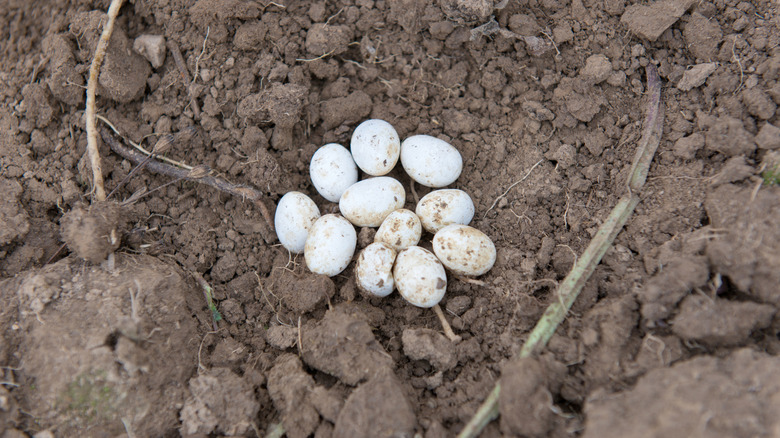
In spring and summer, you may also need to be on the lookout for lizard activity. This includes building nests for their eggs around your yard and garden. Rather than using materials to build nests like birds and squirrels do, lizards usually dig holes in the ground and bury their eggs with surrounding soil. It's also common for these reptiles to build nests underneath sheds and other areas like shrubs and logs that can provide warmth, moisture, and shelter. You're most likely to stumble upon lizard nests incidentally after digging the ground.