

Why Your Laundry Is Taking So Long To Dry In Your Dryer (And How To Fix It)

Whether you toss in a load of towels at the maximum temperature for a clothes dryer or just want to speed up the process of your delicates drying on low, nothing is more frustrating than opening the dryer door to find a pile of laundry that's damp and steamy rather than warm and fluffy. Unfortunately, it's a common issue — and for many households, a persistent one. Running your dryer multiple times just to get clothes mostly dry wastes time and drives up energy costs. Depending on the cause, though, you might be able to find a solution in a matter of minutes.
Damaged components and mechanical failures will obviously take some time — and likely money — to repair, but in many cases, slow drying comes down to sheer user error or neglected maintenance. While it might be annoying to realize you've been making mistakes while doing your laundry for years, the payoff is worth it. You get clothes that come out fresh, dry, and ready to put away after only a single cycle.
Let's run through a few of the most common causes of a poorly performing dryer and what you should look out for in your own machine and laundry routine. Hopefully, you'll be able to get things back to maximum efficiency without spending a dime or calling out the pros.
Your dryer needs to be cleaned
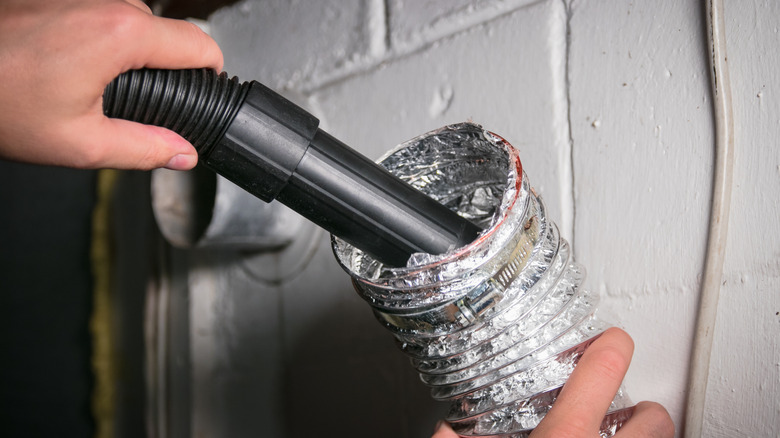
You absolutely must clean your dryer. While this is a slightly annoying task that can easily fall to the wayside if you have a busy schedule, lint buildup is one of the most common reasons a dryer struggles to fully dry clothes. If you're simply tumbling your laundry in a warm drum with no way for moisture to escape, clothes will stay damp, leaving you to run multiple cycles to see even a slight difference.
This is one of the first things you should check if you're having dryer issues. If you notice clogs and debris, you'll likely be able to solve the problem without much fuss. First, check your lint trap. You should already be cleaning it out after each cycle to allow for proper ventilation, improve your dryer's performance, and reduce the risk of a fire. If you've neglected this task, now's your reminder. While you're there, clean out any debris that's built up in the cavity where the lint screen sits. To really get into the nooks and crannies, use the narrow attachment on your vacuum.
This isn't the only area you should be cleaning, though. You should also check on your dryer vent at least every two years. Pull your machine away from the wall, unplug it, detach the exhaust vent, and clean it out with a brush or a vacuum. From there, head outside and do the same for the exterior vent. After reconnecting everything, you should notice that it runs much more efficiently. If not, it's time to move on and look for a more fitting diagnosis.
Your clothing doesn't have enough room to tumble
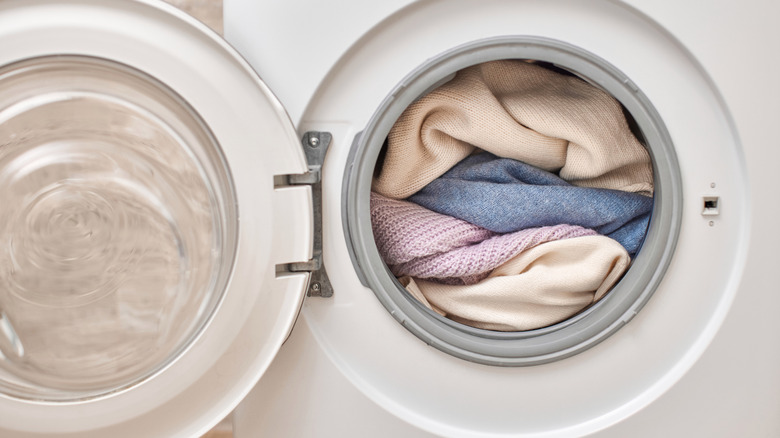
If you only notice your dryer acting up when you dry large loads, very small loads, or big items like sheets and blankets, it's likely a tumbling issue. Dryers don't just work by blowing hot air on your laundry — they tumble it so the air can reach every part of the fabric. In a regular load, items bounce off each other and move freely around the drum. If you're drying too large a load, your laundry gets packed together and can't tumble properly. You might notice that one or two items are extra hot or completely dry, while fabric in the middle is still cold and wet. The same is true for very small loads — if you only toss one thing in, it's less likely to bounce around freely and may just stick to the walls of the drum as it rotates.
A similar situation can happen if you're drying large items like sheets or duvet covers. As the dryer rotates, smaller items can get trapped and twisted inside larger ones, leaving you with an annoying, damp ball when it's time to unload. The easiest way to stop sheets from balling up in the dryer is to add items that encourage proper tumbling, like dryer balls, tennis balls, or a towel. These help everything bounce around more and can prevent that dreaded clump of damp linens. In these cases, remember that it's still important to make sure your dryer isn't overloaded — bedding is bulky, and it may help to split it into separate loads.
Not enough power is going to your dryer
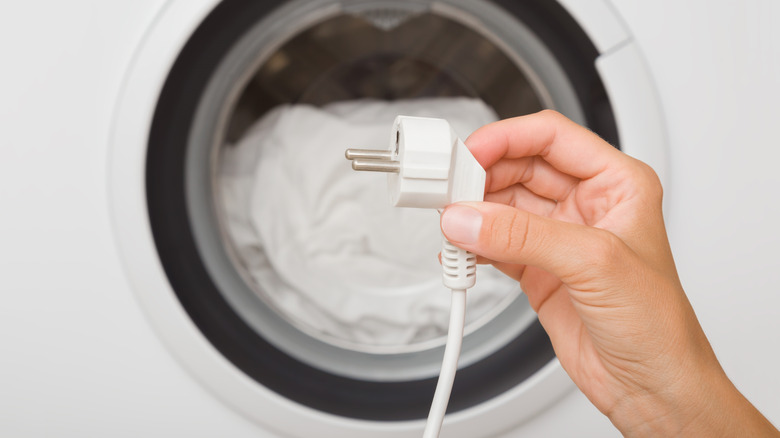
Energy efficiency is great, but when you're forced to run multiple drying cycles just to make sure your clothes don't come out damp, there's a problem. Dryers use anywhere between 1,500 and 5,000 watts of electricity, depending on the model and cycle. Many newer machines include eco or energy-saving settings that lower heat levels to reduce electricity use. If your dryer has an eco setting and you're dealing with extended drying times, consider turning it off or adjusting the dryness level to "dry" or "more dry." Even if you don't remember turning it on, some dryers default to energy-saving modes.
There's also the issue of power reaching your machine. If you've recently switched from a gas dryer to an electric dryer, your home's outlet might not be providing enough power for quick drying. Gas dryers typically use a standard 120-volt outlet to power the motor and controls, while electric dryers require a dedicated 240-volt circuit in most U.S. homes. If an electric dryer isn't receiving the full 240 volts, it may still run but produce less heat, which significantly increases drying time. If you suspect this could be the problem, you might need to revert to a gas dryer or work with an electrician to install an outlet that has the proper output for your appliance.
You're dealing with a mechanical issue
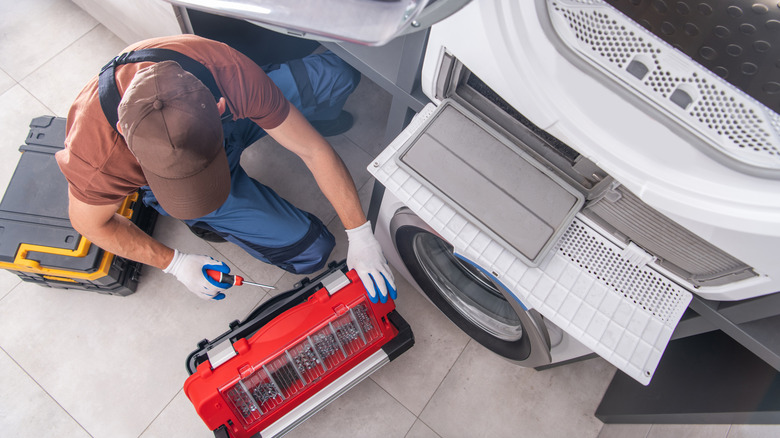
If you've exhausted the other options and your dryer is still underperforming, it may be time to call in a professional. Just like any other appliance, dryers wear down with time. A faulty switch, poorly performing heating element, or damaged moisture sensor can all result in clothes coming out wetter than expected. These appliances, on average, will last for around a decade, so if you're coming up on the 10-year anniversary of your purchase, it might be worth choosing a new washer and dryer rather than shelling out money on repairs.
That said, it might not be your dryer that's to blame. Washers break down, too. If clothes are going into the dryer sopping wet, it's worth turning your attention to the washing machine. Dryers are designed to dry clothing that's been adequately spun out. While they will still work on items that are dripping with water, you won't get an efficient cycle. In this case, you may be dealing with an issue related to the washer's spin cycle or water valve. If water continues to flow in while the spin cycle is running, clothes will come out soggy. As a quick test, try wringing out a piece of clothing before placing it in the dryer. If drying time improves significantly, your washer may be the source of the problem.