

Think Twice Before Using A Swiffer To Clean These 11 Common Things
We may receive a commission on purchases made from links.
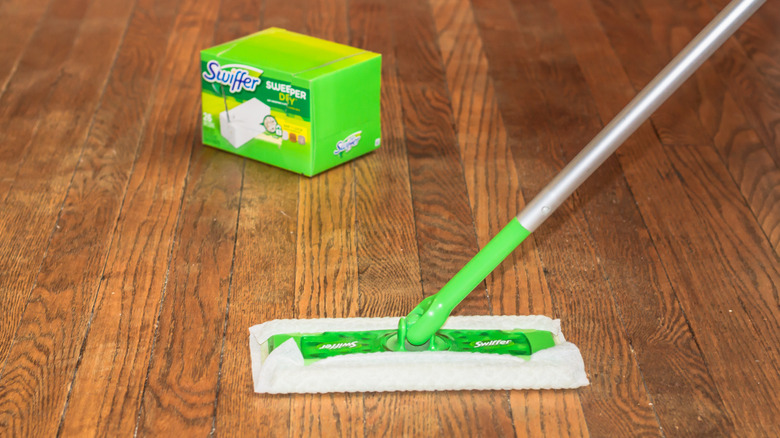
Getting sparkling-clean floors throughout your home is hard work, whether you're scrubbing them by hand with a homemade cleaning solution or using a mop and a bucket. So it's no surprise that plenty of homeowners love turning to Swiffer, a quick, easy-to-use tool that aims to make dusting, sweeping, and mopping almost effortless. With Swiffer's wide range of products, you can freshen up seemingly countless things in your home, even unexpected spots like ceiling fans.
From the Swiffer WetJet to the Swiffer Sweep & Mop, there are multiple products from the brand, each designed to work a bit differently and for different areas in your home. All Swiffer products feature disposable pads or cloths designed to be thrown out after use, eliminating the need to wash dirty mop heads or dusting cloths after a round of cleaning.
However, despite the versatility of Swiffer's various items, they may not be the best cleaning tool for absolutely everything. In fact, using a Swiffer mop or duster on certain home goods, surfaces, and materials can actually do more harm than good, so you'll want to put the Swiffer away when you encounter the following.
Carpeted floors and soft rugs
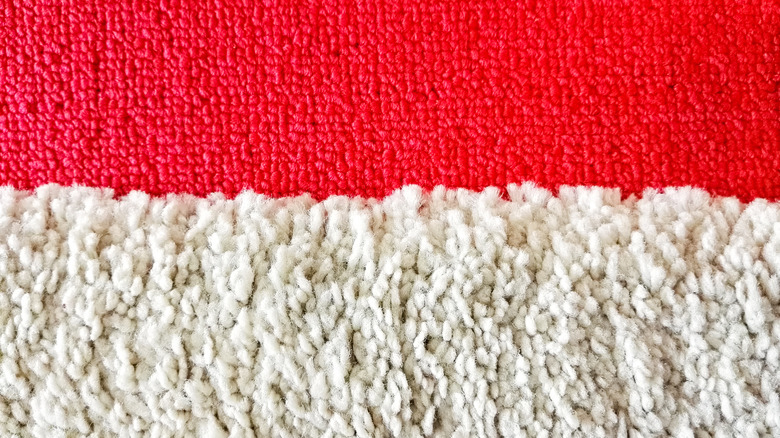
You shouldn't reach for your wet or dry Swiffer to clean carpets or rugs. The fluffy fibers of both low-pile and high-pile carpeting and rugs are the opposite kind of material that Swiffer's products are designed to clean. Swiffer's mops won't pick up dust, hair, or other debris hiding in carpet fibers, and the wet mopping solutions can create a bigger problem by getting your soft surfaces wet. So, don't run the risk of damaging your carpet or rug; stick with vacuuming or using a carpet rake for more effective cleaning.
Porous natural stone floors
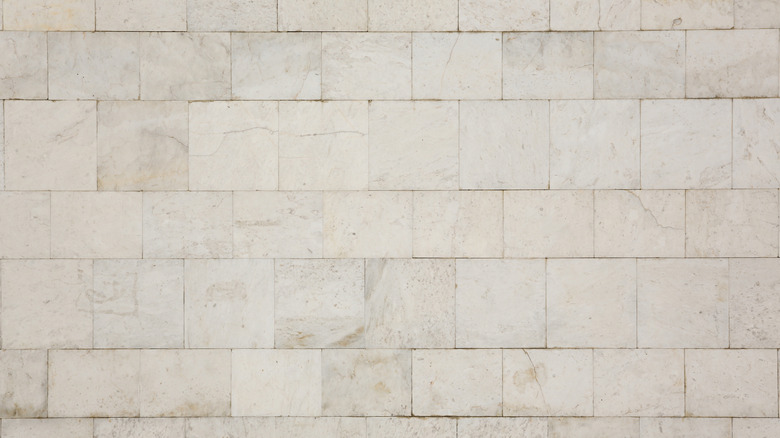
If your home has any natural stone flooring, you'll need to put your Swiffer Wet Mopping Pads, WetJet, and other liquid-based solutions away. Natural stone floors made out of materials like granite, marble, and limestone are all porous to some degree, which means liquids can penetrate them and seep inside, creating all sorts of problems. Plus, Swiffer's wet mop pads are highly alkaline, which can damage stone flooring, etching it and stripping its sealant. Stone fares best with neutral cleaning solutions, and it's even better to seek out one that's specifically made for the type of stone you're working with.
Unfinished wood floors
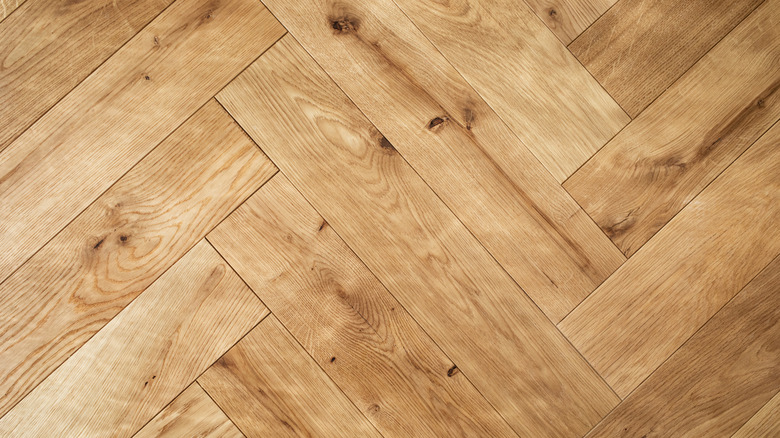
Have a Swiffer WetJet mop at home? You need to read the fine print before grabbing it to clean any unfinished wood floors. While the WetJet cleaning solution is perfectly safe to use on other hard, smooth surfaces, its label points out that it's not safe for any water-sensitive wood — including unfinished boards. Like natural stone, unfinished wood is porous, so it's best to avoid any wet or water-based cleaning solutions that could cause it to swell, warp, or permanently stain.
Laminate floors
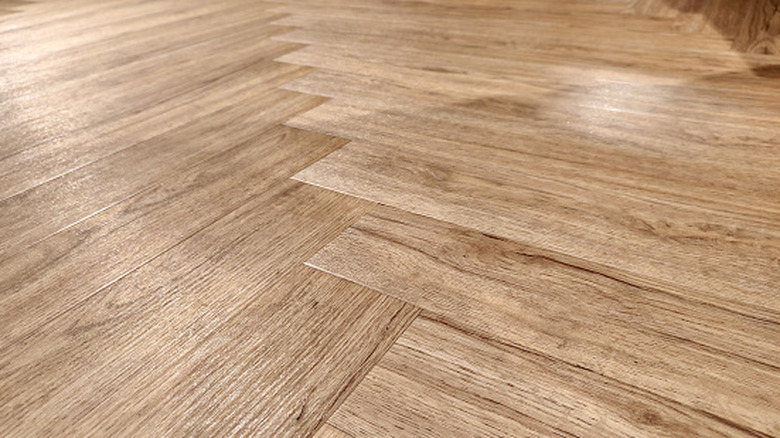
Laminate flooring isn't as durable as hardwood flooring — hardwood, on average, will last four to six times longer. If you use Swiffer's wet mopping products on your laminate floors, odds are you'll shorten their lifespan even more. The alkaline nature of the cleaning solution may strip the finish of your flooring, and since laminate isn't designed to handle a lot of moisture, you'll want to be cautious about how much liquid you use to clean up everyday dirt and debris. You can consider one of Swiffer's laminate-safe options, but you'll want to double-check the pH level first and make sure it's low.
Unsealed tile and grout
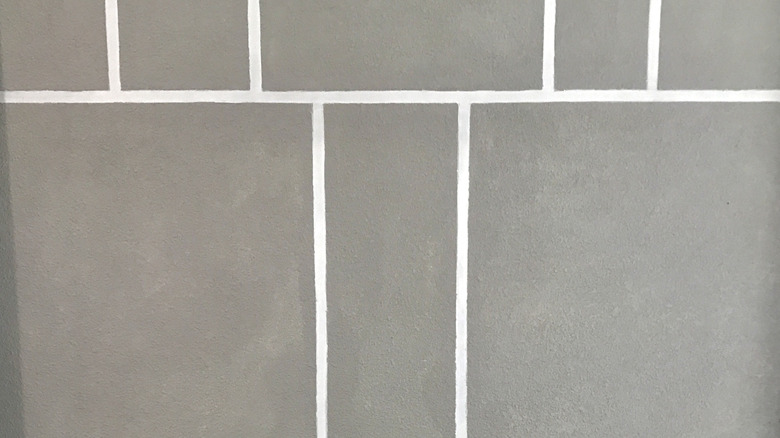
Both wet and dry Swiffer products can be a great solution for tile floors — but only if that tile and its grout are properly sealed. Otherwise, if you're looking to clean unsealed tile or unsealed grout in your home, you're working with yet another porous material that could absorb a wet Swiffer's cleaning solution. Plus, the mop itself isn't tough enough to scrub out the trapped dirt that's present, and may even end up adding to it. You'll need something that can get into the nooks, crannies, and tiny pores of unsealed tile and grout, like a scrub brush, rather than a mop.
Waxed or oiled floors
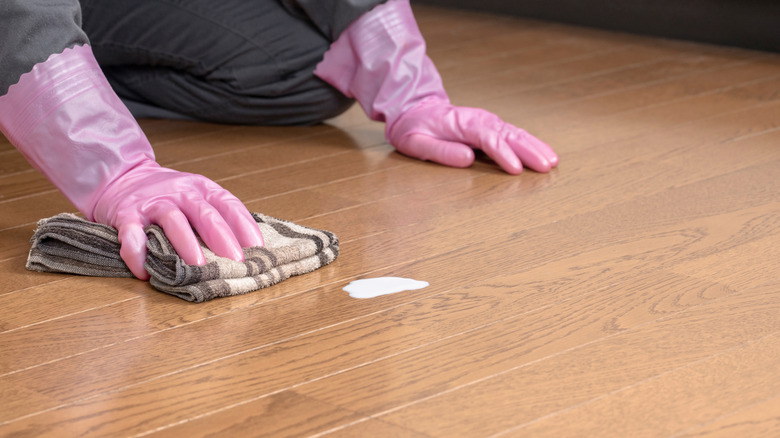
Take the time to read the labels on your Swiffer wet mopping products, and you'll discover none of them are meant to be used on waxed or oiled wood floors. While oiling hardwood is really a floor-dependent process (only certain types of hardwood with an oil finish require it), waxing hardwood floors is the key to keeping them well-maintained and looking their best; homeowners typically need to apply wax every six to 18 months. If you're practicing proper upkeep, using a Swiffer product like the Swiffer PowerMop designed for wood floors could do some damage to the oil and wax surface.
Plastic mats or surfaces
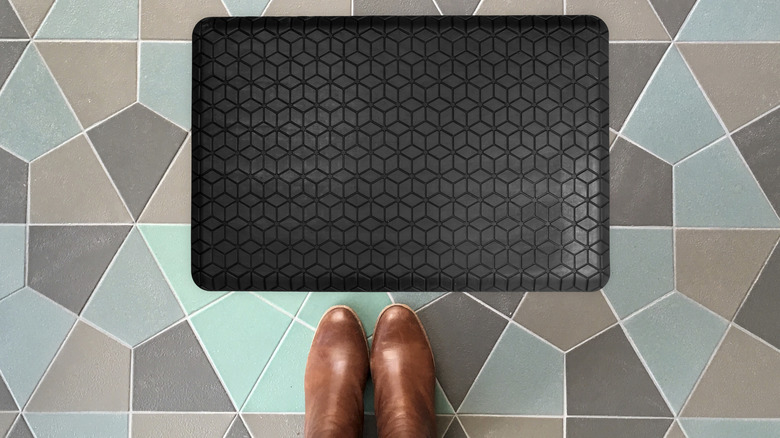
While it's tempting to run your Swiffer mop over any plastic mats you might have in your kitchen, like a cushioned anti-fatigue mat, you're better off cleaning them by hand. A dry Swiffer could potentially pick up loose debris that's hanging out on these types of mats, but the wet mopping products don't deliver an effective enough clean. Regular ol' dish soap and water paired with a scrub brush make for a more effective solution, as you'll need a little bit of elbow grease to get these kinds of plastic pieces clean.
TV and computer screens

Some Swiffer products are excellent dust-removing tools, like the basic Swiffer Dusters. Thanks to their finger-like fibers and soft nature, they can get into the nooks and crannies of keyboards and other electronics. Think twice, though, if you're thinking about using one of Swiffer's wet cleaning products to get stubborn fingerprints off your devices' screens. These wet Swiffers can not only let moisture slip into your electronics, but they'll also leave behind a film or residue that streaks (or worse, damages) their screens and ruins your visibility.
Reclaimed wood floors and home accents
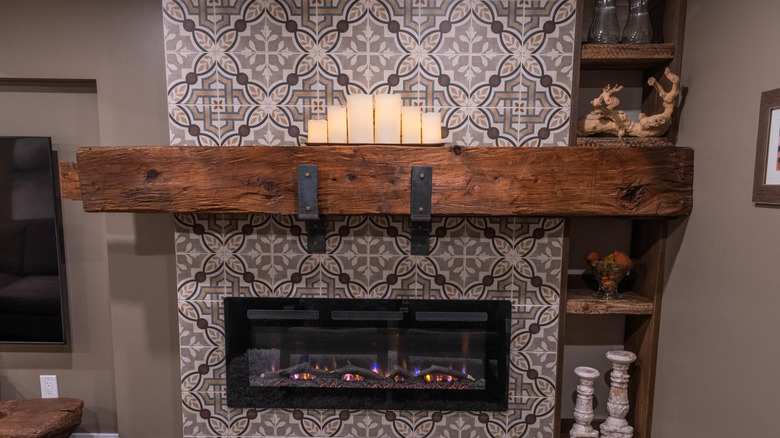
Reclaimed wood is a statement-making addition, whether you've used it for an accent wall, a mantel, flooring, or even pieces of decor. It is slightly tricky to maintain, though, since it has a rougher, more unfinished texture. Because of this, both dry and wet Swiffer cloths are likely to snag on reclaimed wood, and that can leave bits of fluff and fibers stuck in the grains of your wood floors or accent pieces. Remember, any unsealed or unfinished wood can swell, warp, or develop staining with moisture on its porous surface, too.
Fiberglass showers and tubs
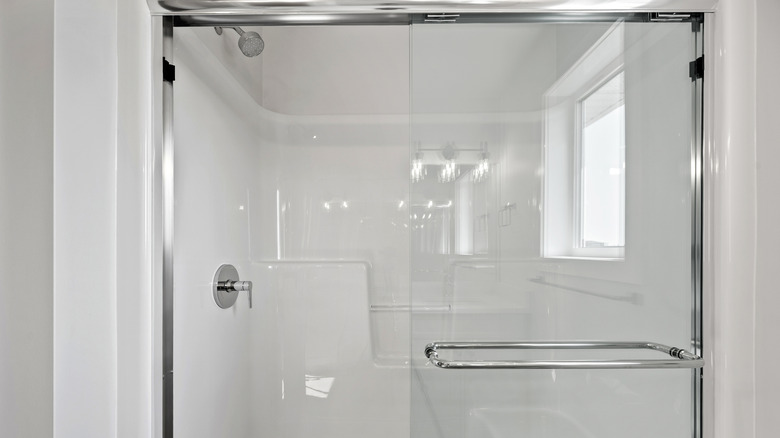
Fiberglass shower stalls and bathtubs can require quite a lot of elbow grease to clean from top to bottom or corner to corner, and their flat, slick surfaces might seem like the perfect place to enlist the help of a Swiffer. While wiping them down with a dry Swiffer is fine, you shouldn't use a wet pad or mopping solution. Fiberglass tends to need a slightly more abrasive approach to get rid of soap scum or potential mold and mildew, so you'll want to opt for gentle-but-effective alternatives like baking soda, vinegar, or even hydrogen peroxide.
Concrete floors
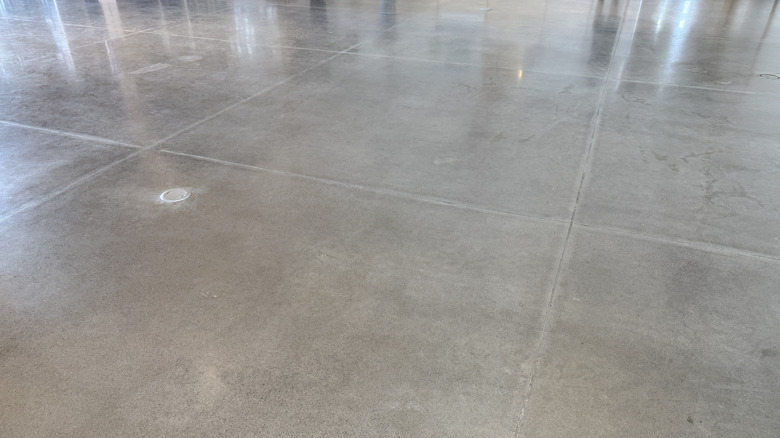
Swiffer's dry mops are a great dust and debris solution for concrete floors, but the brand's wet mopping products pose a problem. While it may not seem like it, just like unfinished wood and natural stone, concrete is a porous material — and you don't want to run the risk of causing damage by applying a wet, too-tough cleaner. Concrete floors need a neutral cleaning solution, and Swiffer's wet mop products are way too alkaline, having a pH of 11. Instead, you'll want to choose a cleaning agent that sits at a pH of 7 to 8.