

Not Once A Day Or Every Two Weeks: How Often You Should Actually Mop Hardwood Floors
We may receive a commission on purchases made from links.
Despite the rising popularity of luxury vinyl plank flooring, hardwood floors continue to be favorites in homes for good reasons. Hardwood has a reputation for having a solid resale value and return on investment (ROI) while also offering an upscale appearance. If you have hardwood floors in your home, you likely know some of these benefits—you're also probably aware of some of the downsides in upkeep, too. All types of hardwood floors are notorious for scratching, and they cannot be "mopped" in the traditional sense, or in the same way you might be able to clean a water-resistant floor like tile. You shouldn't let this stop you from cleaning your floors, though. With the right products, tools, and techniques, you should mop most hardwood floors on a weekly basis. There are also some exceptions to this rule to be aware of based on the exact type of finish you have, as well as your specific household needs.
The once-a-week recommendation for mopping hardwood floors is based on several factors. Weekly mopping can help remove dirt, spots, and allergens to maintain the health of your home. Unless your floors are sealed, you shouldn't let hardwood go for weeks without mopping. At the same time, you don't want to mop too frequently, either. Daily mopping is not necessary for hardwood floors, nor is it good for them. Constant exposure to moisture will ultimately damage the wood and increase the risk of discoloration and warping. (Excess moisture can even cause issues with mold growth!)
Best practices for cleaning hardwood floors
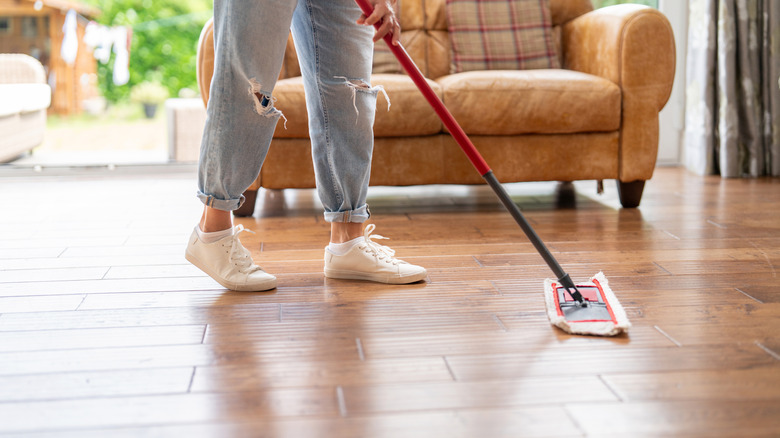
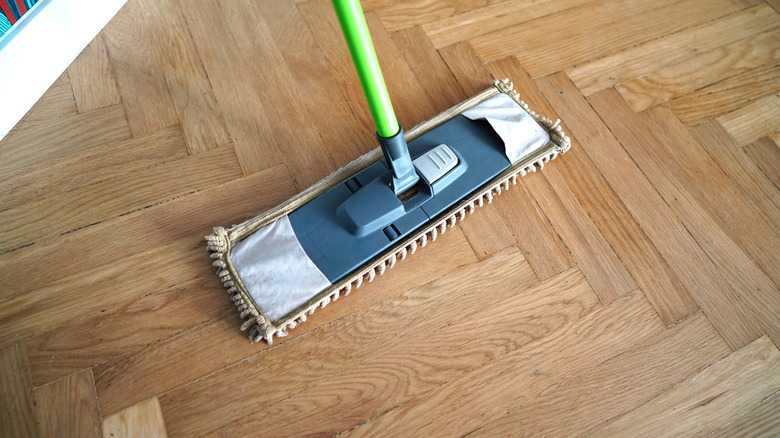
Mopping hardwood floors once a week doesn't mean you can use a traditional mop and bucket of water to get the job done. Doing so — even at weekly intervals — is enough to damage your floors. Instead, you should only use a damp microfiber mop, along with a cleaning solution designed specifically for hardwood floors. This Bona Hardwood Floor Premium Spray Mop kit is an easy way to ensure you have all the right tools without the guesswork. Always sweep or vacuum debris before mopping hardwood floors to decrease the risk of scratching them, and consider the best vacuums for hardwood floors when going this route. After you have vacuumed and mopped, consider grabbing a separate dry cloth to help absorb excess moisture from the floor.
Aside from adherence to a regular mopping schedule, hardwood floors have other maintenance needs to help protect them and to keep them looking their best. Just as you should never mop hardwood with a soaking-wet mopper, it's also vital that you absorb any wet spills on these floors immediately. Take a soft, damp cloth to clean up spilt liquids, or a dry paper towel to absorb water as soon as possible to help prevent damage to the wood. It's also important to vacuum your floors to pick up dust, allergens, debris, and hair. Be sure you use attachments designed for hardwood, and that you avoid using the rotating brush roll to prevent scratches. High-traffic rooms can benefit from daily vacuuming or dusting in between wet mops. You'll also want to be mindful of the things you should never do when cleaning hardwood floors.