

19 Stunning Self-Seeding Flowers You Plant Once And Enjoy For Years
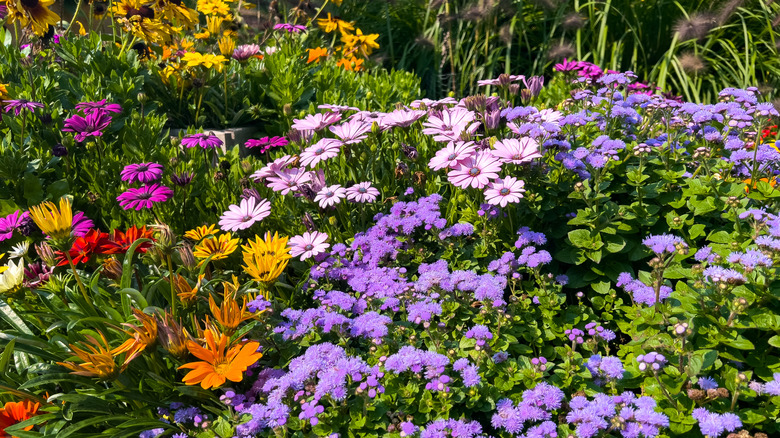
Some gardeners go all-out when it comes to planning their gardens, and there are plenty of stunning flower bed ideas to choose from. If you want a gorgeous garden, but you don't enjoy planting new flowers every year, then you'll be delighted to know that there are tons of self-seeding flowers to match any theme, aesthetic, and climate. Self-seeding flowers, also called self-sowing or reseeding flowers, are plants that produce seeds that will fall to the ground and germinate with little-to-no intervention.
There are a number of benefits to choosing self-seeding flowers over other plants. For starters, you won't need to replant your entire garden every year. While you can't guarantee an exact number of plants, and you may need to fill in a few gaps if you want your garden to look a certain way, you can expect to see some familiar flowers each year. If you find planning stressful or you enjoy surprises, self-seeding flowers may be a good fit. There's no telling where exactly the seeds will land, meaning your garden will be fresh and different every year without any extra effort on your part.
However, there is one crucial detail to be aware of. Since there's no way to control how many seeds each flower drops, some plants may spread out of control. You may see seedlings popping up in other nearby flower beds, for example. This can be particularly problematic if the flower is invasive, as invasive plants often have more seeds, a higher germination rate, or the ability for seeds to remain dormant in the soil for longer before germinating. These factors allow them to spread more quickly and easily. That's why we've compiled this list of 20 native self-seeding flowers for you to grow.
Anise hyssop
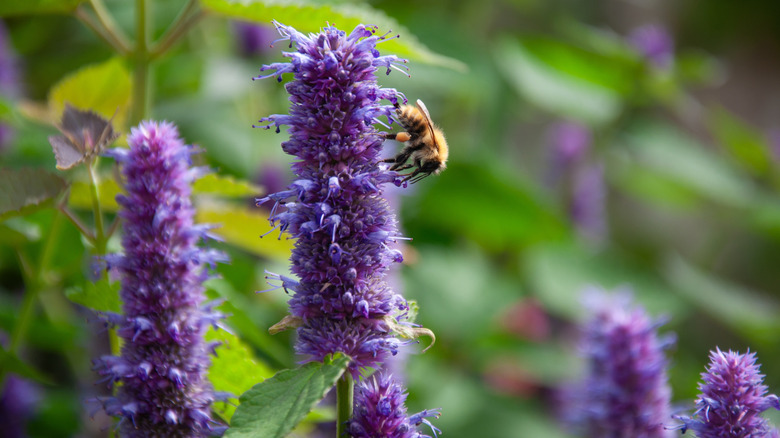
Anise hyssop (Agastache foeniculum) is a hardy wildflower native to the prairies and plains of North America. During late summer through fall, it produces flower spikes covered in tiny blue or purple flowers. Bees, butterflies, and hummingbirds love them, making them the perfect plant to add to your list if you want to start a hummingbird garden. Anise hyssop is hardy in zones 3 through 8, and it grows best in full to partial sun and well-draining soil. As long as its needs are met, it will self-seed without issue and regrow year after year.
Blanket flower
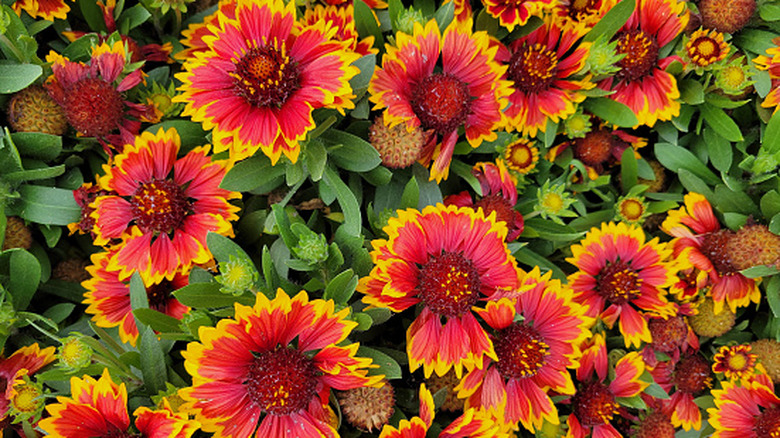
If you want a vibrant self-seeding plant, blanket flowers (Gaillardia spp.) are the way to go. Known for their red, orange, and yellow blossoms, there are over 20 different species of gaillardia which are native to North or South America — and most of which will self-seed. Their hardiness ranges can vary by species, but common blanket flowers (Gaillardia aristata), which are native to North America, are hardy in zones 3 through 8. They prefer full sun and well-draining soil, and they typically bloom in late summer and early fall.
Black-eyed Susans
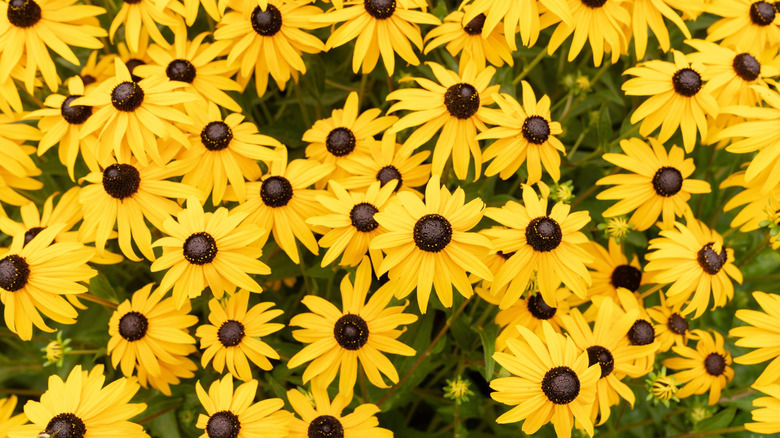
Black-eyed Susans (Rudbeckia hirta) are a classic addition to wildflower gardens, and for good reason. Their cheerful yellow flowers and bold black centers make for a striking aesthetic. Pollinators enjoy these flowers, and birds like to snack on the seeds. If there are any seeds left after the birds are done, they'll self-sow easily. Black-eyed Susans are hardy in zones 3 through 8, and they grow best in full sun and well-draining soil. However, they're fairly hardy and will tolerate less than ideal growing circumstances as long as their basic needs are met.
Blazing star
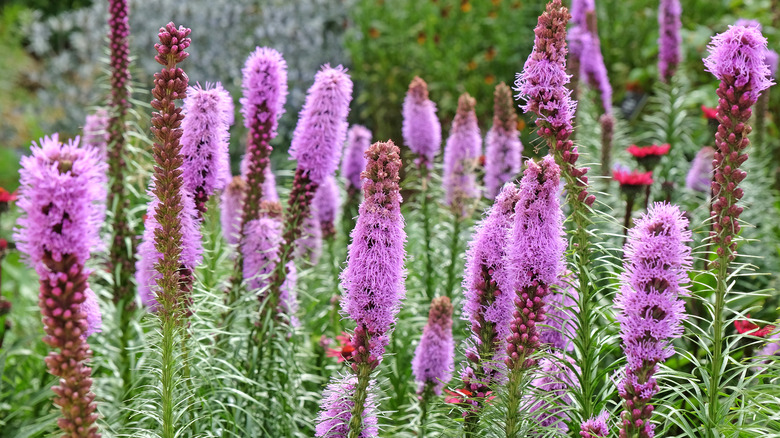
If your garden needs something tall and unique to give it a bit of visual interest, blazing star (Liatris spicata) is the ideal self-seeding flower for you. Growing up to six feet tall and topped with fluffy purple flowers in summer, this native prairie plant is beloved by butterflies, bees, and gardeners alike. Blazing star is hardy in zones 3 through 8, and while it tolerates a range of conditions, it thrives in full sun. Leave the flowers to self-seed and keep the stems to provide shelter for bees to get the most out of this plant.
Blue curls
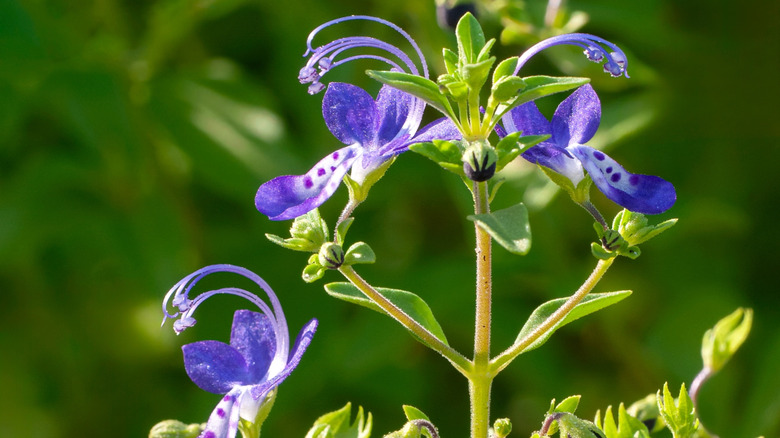
The aptly-named blue curls (Trichostema dichotomum), also called forked blue curls, are a less common native wildflower. In late summer through fall, they grow bright blue flowers with petals and stamen that curve and curl, giving them a distinctive shape. Blue curls are native to the eastern U.S., and they're hardy in zones 7 through 11. These flowers are vigorous self-seeders, so plant them sparingly and deadhead some of the flowers if you don't want them to spread too much.
Blue mistflower
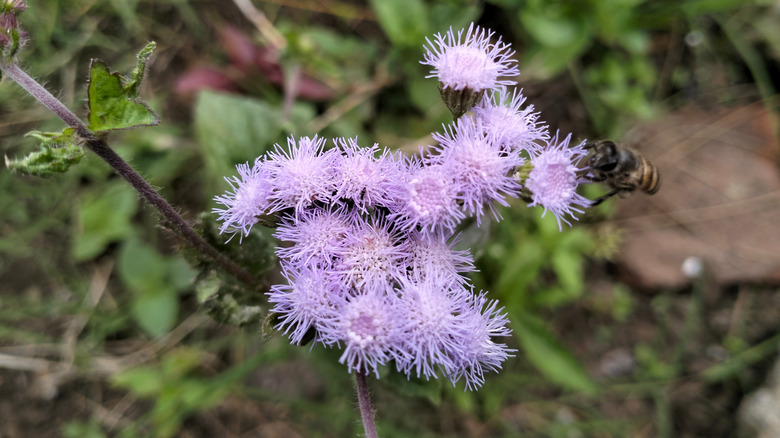
Blue mistflowers (Conoclinium coelestinum) are named for their blue or purple flowers, which have tiny petals that give the flower clusters a hazy or misty appearance. They're hardy in zones 5 through 10 and are perfect if you want self-seeding flowers to plant near a water feature. Blue mistflowers thrive in moist soil and full sun to partial shade. They bloom throughout summer and fall, and the flowers are highly attractive to pollinators. They can also spread quite a bit, so avoid planting them near more delicate plants that could be crowded by them.
California poppy
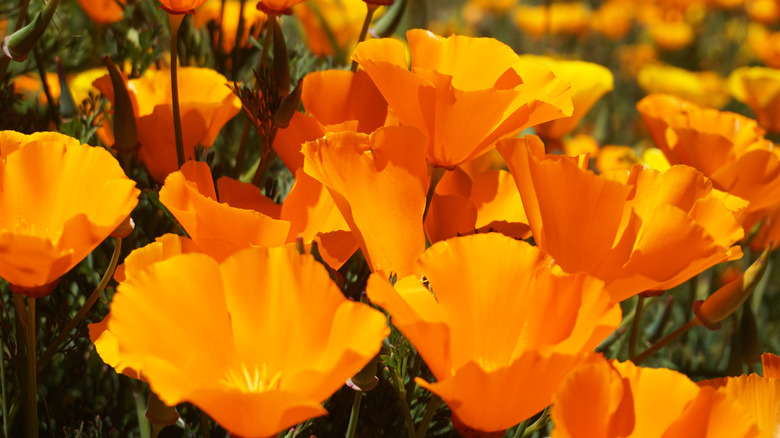
Unlike the popular-but-invasive common poppy (Papaver rhoeas), the California poppy (Eschscholzia californica) is native to the western U.S. The flowers have the classic poppy shape, but with a distinctive honey color that makes them particularly eye-catching. It is hardy in zones 6 through 10 and can be grown as either an annual or a perennial. The flowers last for only a couple months in summer, but they self-seed easily. California poppies are a good fit for west coast gardeners with plenty of sun and well-draining soil.
Coneflowers
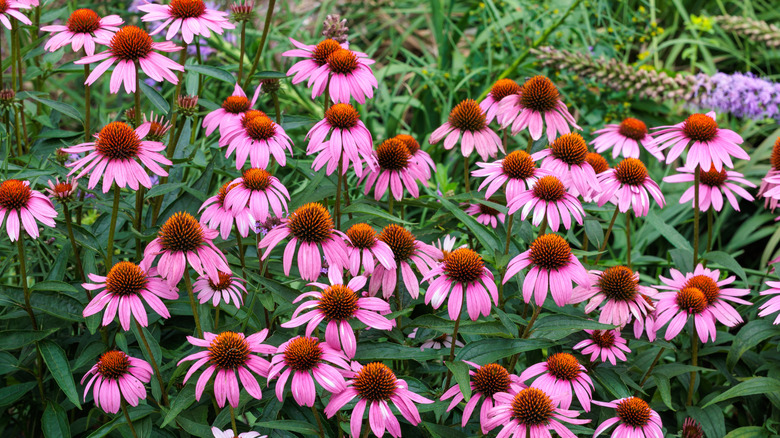
Coneflowers (Echinacea spp.) are a group of native wildflowers named for their distinctive shape. Their cone-shaped centers with petals flaring away make them stand out, and the flowers are particularly appealing to birds and butterflies. Purple coneflowers (Echinacea purpurea) are one of the most commonly-planted coneflower species, but don't let that stop you. Less common species like yellow coneflowers (Echinacea paradoxa) will also self-seed and add charm to your flower beds. Both are hardy in zones 3 through 8, although yellow coneflowers are also hardy in zone 9; be sure to plant them in full to partial sun.
Coreopsis
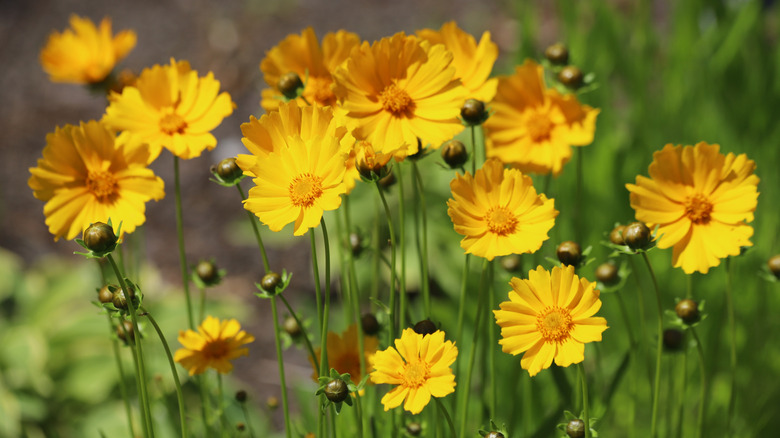
Coreopsis (Coreopsis spp.) is also commonly called tickseed — but it doesn't actually attract ticks. Rather, the seeds look like tiny ticks. Coreopsis will self-sow easily as those little tick-like seeds fall to the ground, and it boasts several common species for you to choose from. Lanceleaf coreopsis (Coreopsis lanceolata) is a popular choice, as it is found in most states, low-maintenance, and has a wide hardiness range of zones 3 through 8. Another excellent choice is plains coreopsis (Coreopsis tinctoria), which is hardy in zones 2 through 11.
Cosmos
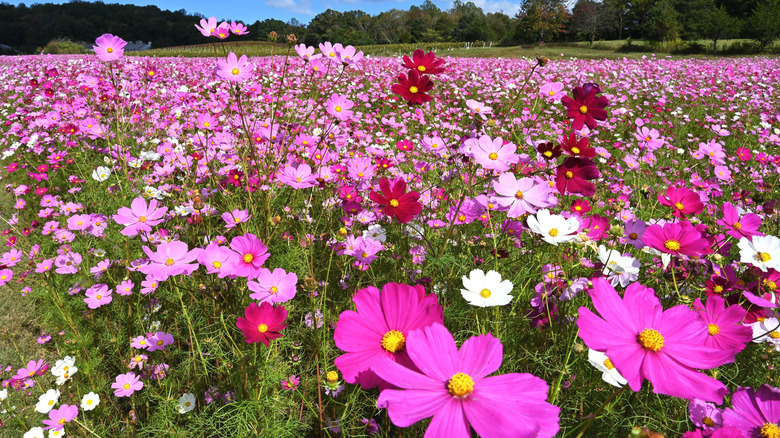
If you want something simple, classic, and fuss-free for your garden, consider planting cosmos (Cosmos spp.) flowers. They thrive in full to partial sun and are drought resistant, needing little care in order to flourish. These self-seeding annuals can be grown in zones 2 through 11, and the flowers bloom in practically every color. They flower from spring through fall, attracting bees and butterflies to your garden. Whether you're a beginner or an expert, cosmos can add color and life to your garden for years to come.
Desert bluebells
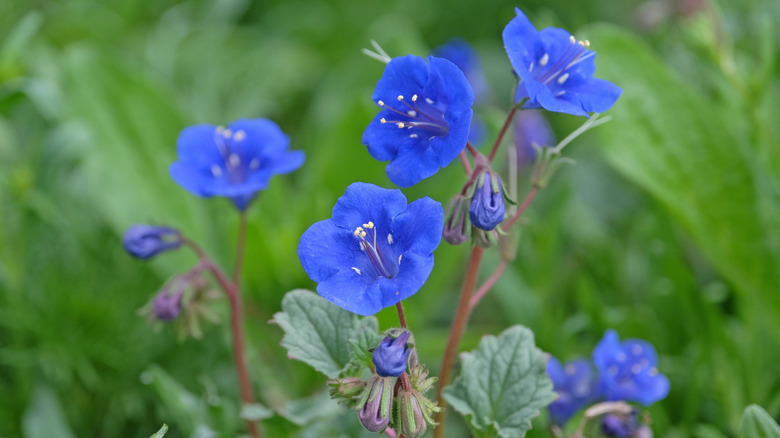
Desert bluebells (Phacelia campanularia) are native wildflowers that, true to their name, thrive in hot, dry climates. During early spring, they grow vibrant blue cup-shaped flowers that are highly attractive to bees. They struggle in the cold and are only hardy in zones 5 through 10, but desert bluebells will self-sow if given the chance. They're also drought tolerant and generally low-maintenance, so they're perfect for beginners or busy gardeners who don't have much time to spend on more particular flowers.
Eastern red columbine
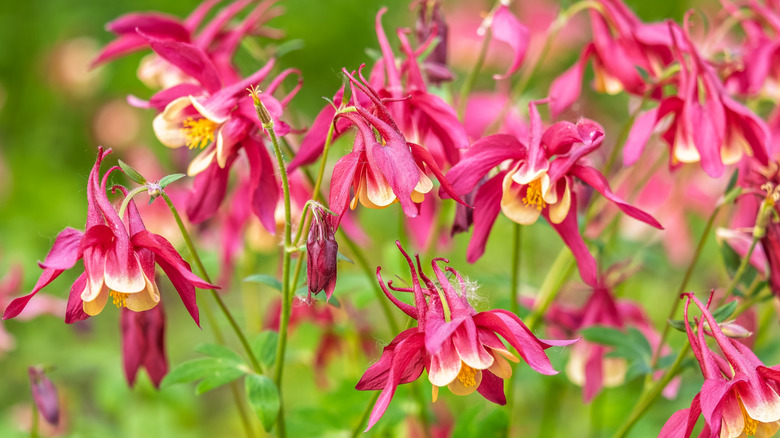
Columbine (Aquilegia spp.) are beautiful flowers, and eastern red columbine (Aquilegia canadensis) are both gorgeous and native. Their tubular flowers with flared, star-shaped outer petals are striking and attractive to hummingbirds. Eastern red columbine grow best in partial shade and rich soil, similar to what you might find in a forest. They're hardy in zones 3 through 8 and will self-seed easily, so you can enjoy a fresh wave of vibrant red flowers every spring for years to come.
Lobelia
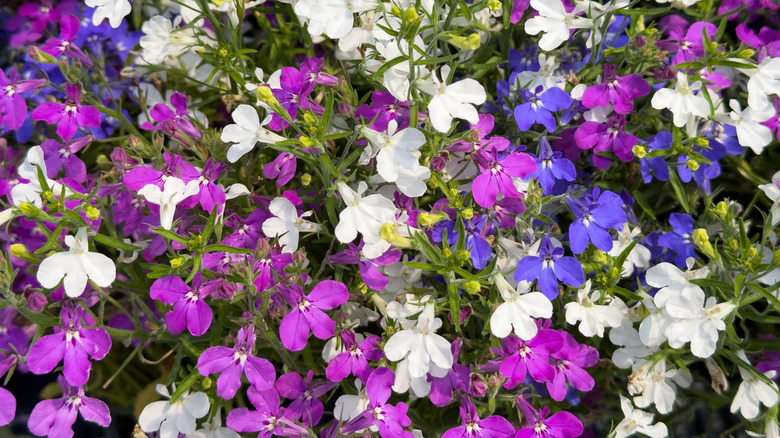
Lobelia (Lobelia spp.) is a genus of gorgeous flowers that come in a wide range of colors and sizes. Two of the most popular species are cardinal flowers (Lobelia cardinalis) and great blue lobelia (Lobelia siphilitica), and both will spread through self-seeding. Cardinal flowers are known for their bright red flowers and are hardy in zones 3 through 9. Great blue lobelia, as the name suggests, is tall and blue, and it is hardy in zones 4 through 9. Both thrive in full sun to partial shade and rich, moist soil.
New England aster
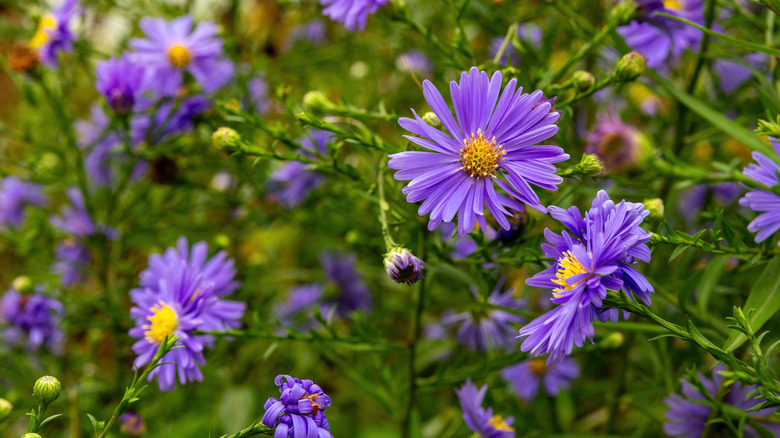
New England asters (Symphyotrichum novae-angliae) are sweet, simple flowers that can self-sow if their needs are met. The flowers appear in summer through fall, filling your garden with purple flowers that attract pollinators. They work nicely as cut flowers, too, although you'll need to leave some in your garden if you want them to self-seed. New England asters are hardy in zones 4 through 8, and they're generally tolerant of most soil types. You should plant them in full to partial sun for the healthiest plants.
Partridge pea
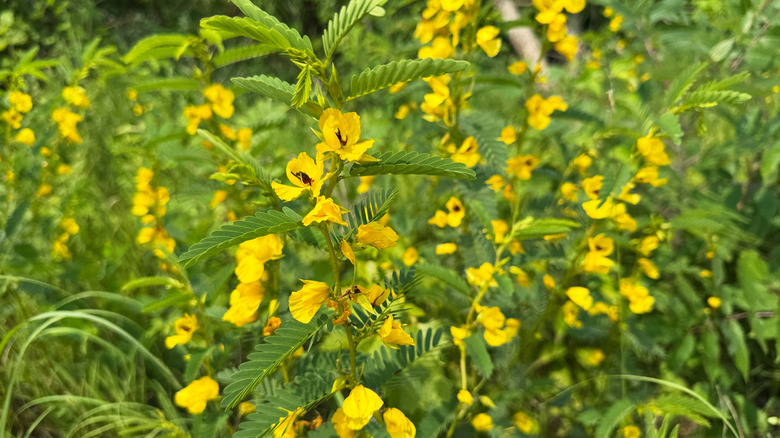
Partridge pea (Chamaecrista fasciculata) is another fantastic self-seeding native plant to consider adding to your garden. It can spread a little too effectively and become weedy, so it works best in more natural gardens where you're less worried about keeping things neat. During summer, it grows bright yellow flowers with red centers, followed by seedpods that birds enjoy eating. Partridge pea is a member of the legueme family and will add nitrogen to the soil over time, making it very beneficial to have around.
Swamp marigold
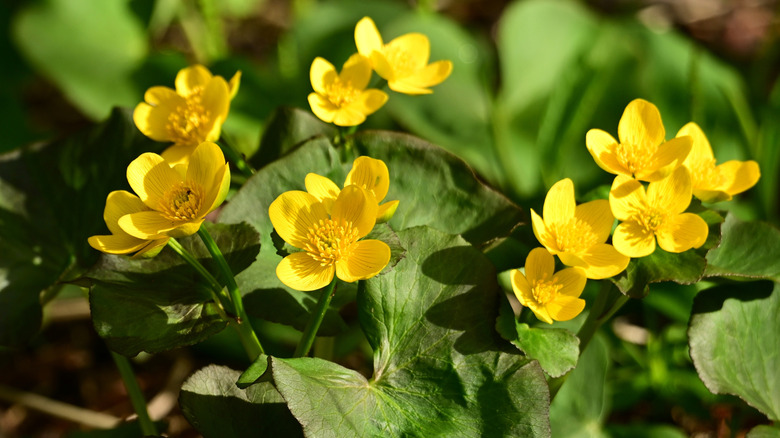
Despite the name, swamp marigolds (Caltha palustris) are actually buttercups, not marigolds. With sunny yellow cup-shaped flowers and broad leaves, swamp marigolds add charm to any garden where the soil is too wet for other plants to grow. This lovely flower is hardy in zones 3 through 7 and will self-seed regularly. Plant them in full sun to partial shade near a water feature; if you don't have a pond or river, you may need to water them more often.
Tall bellflower
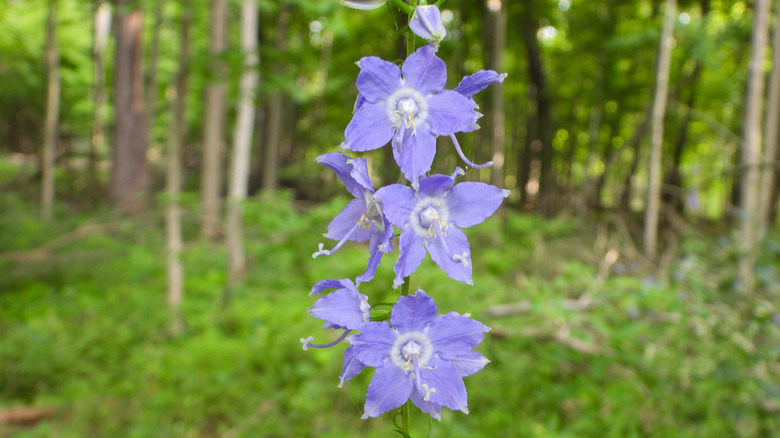
Tall bellflowers (Campanula americana), also called American bellflowers, are a good choice for gardeners who want to add height to their shade gardens with a self-seeding annual or biennial. They can grow up to six feet tall, and they bloom striking blue star-shaped flowers throughout summer. Tall bellflowers are hardy in zones 4 through 7, and they thrive in partial shade. Native to woodland riverbanks, these gorgeous flowers are an excellent choice for areas of your garden that are just a bit too shady and moist for other plants.
Texas bluebonnet
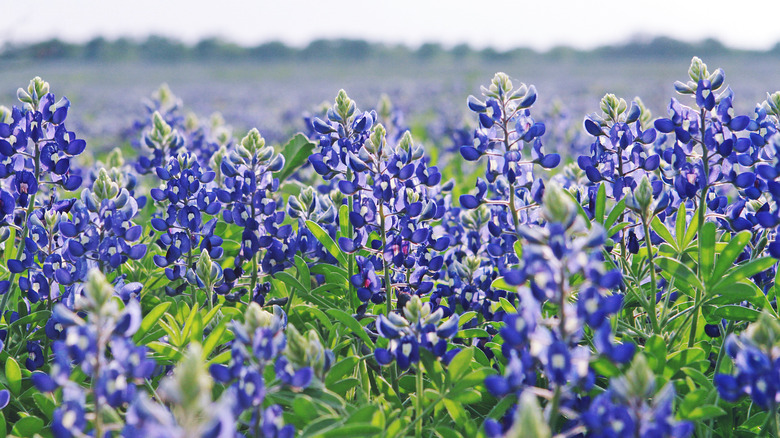
Texas bluebonnets (Lupinus texensis) are known for having vibrant blue blossoms and being one of the state flowers of Texas. They're also self-seeding flowers that will fill your garden with bright blooms year after year. While you can collect the seeds and treat them to increase the germination rate, you don't need to. Plant your Texas bluebonnets in full sun and well-draining soil and you'll have a garden full of butterflies for years to come. However, be careful when planting them, as these are actually one of the state flowers that are toxic to dogs.
White snakeroot
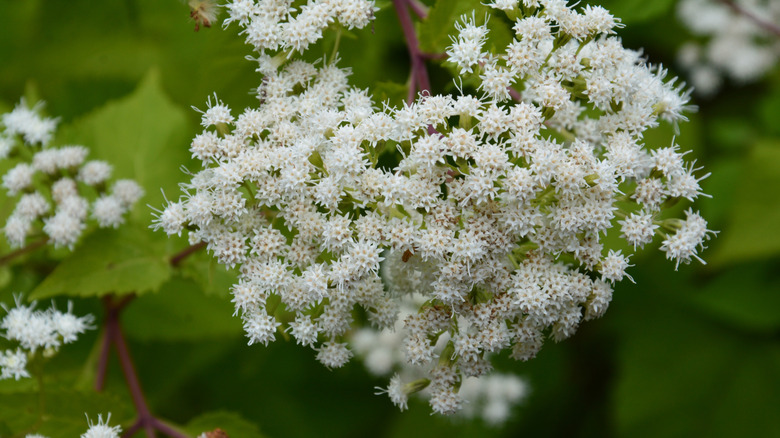
If you want something a little more subtle, try growing white snakeroot (Ageratina altissima). Native to the eastern U.S., white snakeroot grows clusters of small white flowers from summer to fall. It's hardy in zones 3 through 9 and self-seeds regularly. However, while this flower is beautiful and attractive to pollinators, you should avoid growing it if you have curious kids or pets. White snakeroot is highly toxic, and it's better to be safe than sorry. Otherwise, simply be careful when caring for it and wash your hands thoroughly after handling it.