

Move Over Granite: This Practical, Stylish Countertop Option Is Both Sleek And Durable
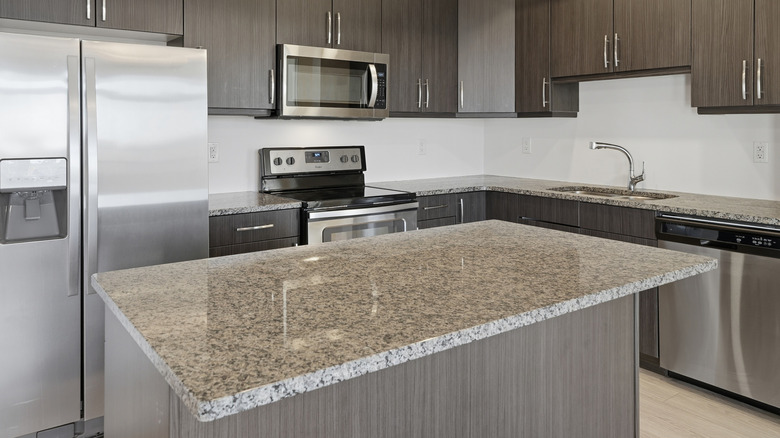
If it feels like granite is everywhere you look, you're not wrong: The perennially popular countertop material is still going strong. According to a survey from the National Association of Home Builders (NAHB), 73% of respondents named natural stone or granite countertops as a must-have in their home. With so many different variations in color choices, patterns, and textures, it's easy to customize your home and make a style statement with granite. There are, of course, benefits to choosing granite, including the stone's potential to add value to your home. But while granite is a classic choice, there are new favorite countertop materials that are drawing a lot of attention, including one that's also sleekly stylish and impressively durable. It's bluestone, a natural stone that stands out thanks to its bold but neutral colors and texture-driven patterns.
Bluestone is, as its name suggests, a blue-hued and cool-toned sedimentary rock. Slabs of bluestone may appear as one solid color, like a deep blue-gray or blue-tinged brown, or they can feature subtle pops of accent colors like brown, olive, and gray as lines of sediment or speckles. The exact coloring depends on where your bluestone slabs are sourced from, as this countertop material most commonly comes in two varieties: Pennsylvania bluestone or Shenandoah bluestone. It's long been a popular choice for outdoor landscaping (in fact, it's been used for more than 250 years in the U.S.) as the go-to option for durable patio pavers, pool decks, and even countertops in outdoor kitchens. But now, as increasingly more homeowners discover the benefits of bluestone, this eye-catching stone is heading indoors.
How does bluestone compare to granite
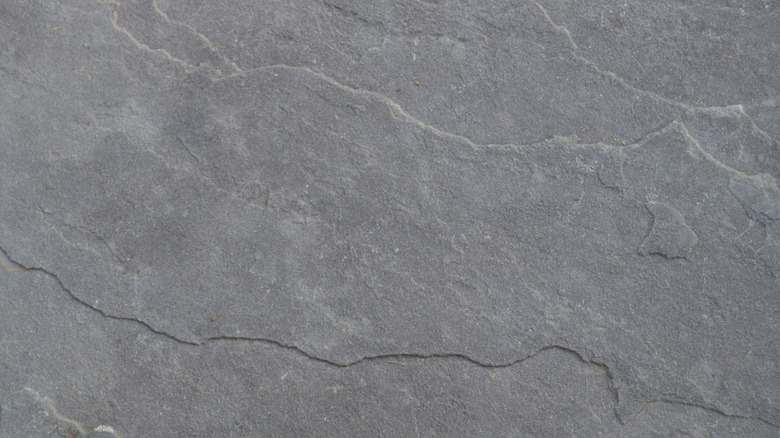
Countertops are the eye-catching centerpiece of your kitchen, and choosing bluestone can add unique visual interest. Just like granite, it can be finished in multiple ways, depending on what style you're going for : Polished for a glossy shine, honed for a dark and non-reflective appearance, or fine rubbed for a smooth-to-the-touch matte look. However, unlike granite, it doesn't come in a large variety of colorways — all slabs will have a blueish tinge.
While aesthetics are important, bluestone doesn't merely look good — it is also a durable stone (after all, it's able to survive life outdoors!). Just like granite, the material is tough enough to handle spills, bumps, and bangs without chipping, cracking, or developing stains. Thanks to its dense nature, bluestone can also handle temperature swings like boiling-hot pans set on its surface.
Since bluestone is also a natural stone, it's porous. Which means, just like granite, you'll need to seal your countertops, and over time, reseal them or else they will stain. Beyond staining, though, bluestone counters are easy to maintain and won't require any kind of special treatment. They'll continue to shine (literally or not, depending on the finish you choose) for years to come.