

These 12 Plants From Garden Centers May Look Pretty, But Think Twice Before Buying

If you're trying to fill your garden, you have a few options. There are great places to shop for plants online as well as brick and mortar garden centers. It can be tempting to walk out of a garden center with one of every plant, but not every available plant is a good fit for your garden. In addition to plants that simply aren't suited for the conditions in your garden, there are plenty of invasive plants available for sale. It's unfortunately easy to go home with a plant that seems wonderful, but is actually harmful for the environment.
One of the best ways to protect your garden and the local ecosystem from invasive plants is to avoid planting them in the first place. Once they're established, it can be hard to get rid of them. Some have deep roots, resistances to chemical herbicides, or impressive regenerative abilities that make individual plants hard to get rid of. Many invasive plants spread aggressively, so even if you're able to eradicate some of them, it's difficult to uproot them all.
However, avoiding invasive plants can be tricky. They aren't always clearly labeled, for one. And while some invasive plants are banned in the United States, others are still sold regularly. In fact, a recent study found that 61% of known invasive plant species are still sold in the United States. Identifying each plant and checking its native range before bringing it home is the only way to be certain your garden is free from invasives, but here are a few commonly sold invasive plants you should avoid.
Butterfly bushes
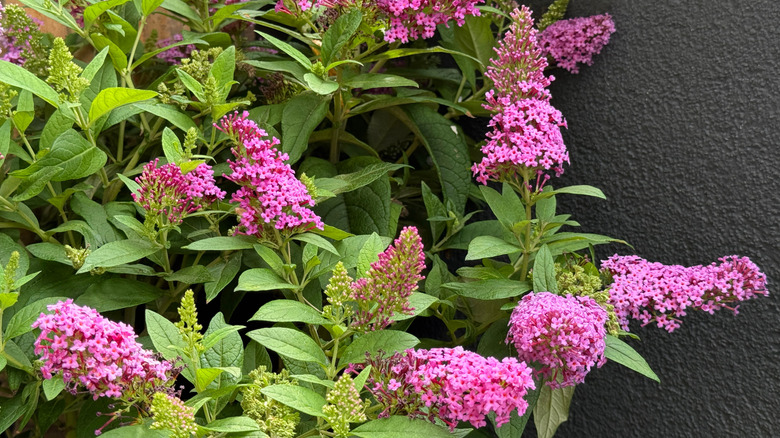
Butterfly bushes (Buddleja davidii) are beautiful shrubs. During summer they're overflowing with pink and purple flowers. True to their name, butterflies enjoy the nectar produced by these flowers, and they're often sold in garden centers as a way of attracting more pollinators. However, their seeds have a high germination rate that makes it easy for them to outcompete native food sources. This is a serious issue because caterpillars can't eat their leaves. Any eggs laid by visiting butterflies won't survive to become new butterflies. Plant native milkweed species (Asclepias spp.) and a variety of wildflowers instead.
Mimosa trees
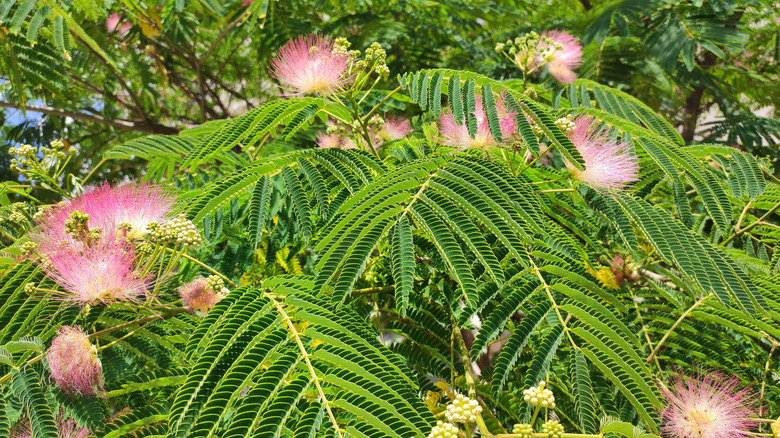
Touted as beautiful and quick growing, mimosa trees (Albizia julibrissin) are sold as shade trees. However, there are a few important reasons you should skip them and plant one of these 10 fast growing shade trees instead. Mimosa trees (aka Persian silk trees) may look inviting with their fern-like leaves and fuzzy pink flowers, but they spread aggressively and are easily damaged, meaning you're likely to see tons of saplings and fallen branches in your yard. Mimosa trees are also somewhat hazardous since they are quite flammable and the seeds are toxic.
Winter creeper
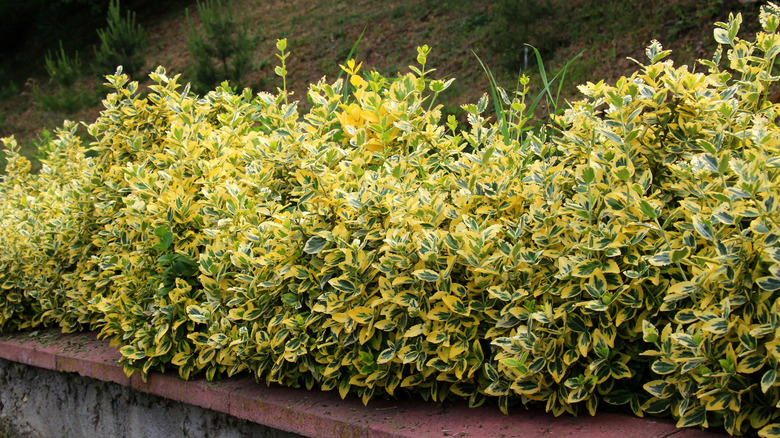
If you've ever perused a garden center looking for beautiful ground cover or shrubs, you've likely seen the lovely leaves of winter creeper (Euonymus fortunei). Winter creeper can be glossy and solid green or variegated with cream or yellow stripes and may grow as a vine or a small shrub. It grows small white flowers followed by red berries which birds love to snack on. It's primarily sold as a low-maintenance landscape plant, but it's unfortunately a little too low-maintenance. Winter creeper thrives in a variety of conditions and spreads rapidly, and it can easily escape into natural areas.
Japanese honeysuckle
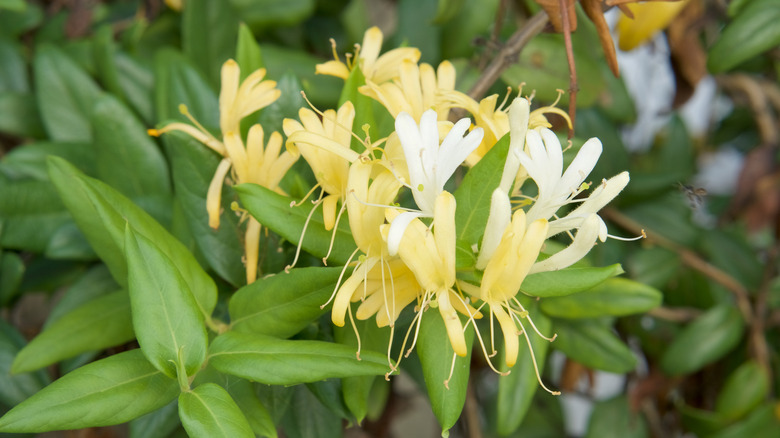
The sweet scent of Japanese honeysuckle (Lonicera japonica) heralds summer in many places, but it can also spell disaster for native plants. You can find these vines in garden centers as ornamentals for fences or groundcover, but they're also commonly found spread across the eastern United States as an invasive vine. The vines spread quickly and are extremely difficult to get rid of. If left to their own devices, Japanese honeysuckle vines can overwhelm and smother other plants. Luckily, there are easy alternatives in the form of native honeysuckle species like coral honeysuckle (Lonicera sempervirens).
Chinese wisteria
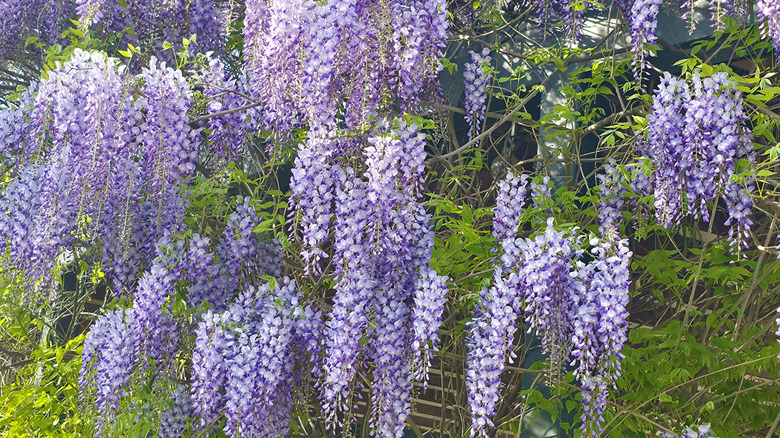
Chinese wisteria (Wisteria sinensis) is prized for its gorgeous purple flowers and sturdy vines, but despite its popularity at garden centers you should avoid taking it home. The vines can spread rapidly through quick growth, seeds, and root suckers. The thick vines that support its large flowers also have a habit of growing tightly around trees, girdling and eventually killing them. It doesn't offer much value to wildlife except for butterflies, so its primary benefit is aesthetic. Instead of growing this invasive species, plant its native cousin American wisteria (Wisteria frutescens). American wisteria looks similar but isn't harmful.
Nandina
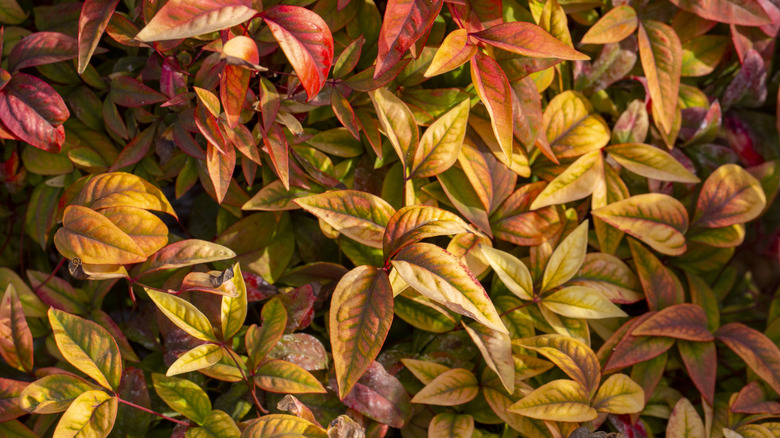
Nandina (Nandina domestica), also called heavenly or sacred bamboo, is a small, invasive shrub popular for it's beautiful red berries and foliage that turns bronze in fall. The red berries often last through winter, so gardeners sometimes plant them for winter color and as a food source for birds. However, nandina berries are toxic and can actually be fatal to birds if eaten in large quantities. If you want to provide winter food for birds, you're better off planting native holly shrubs like Yaupon holly (Ilex vomitoria) or Winterberry (Ilex verticillata).
Chinese holly
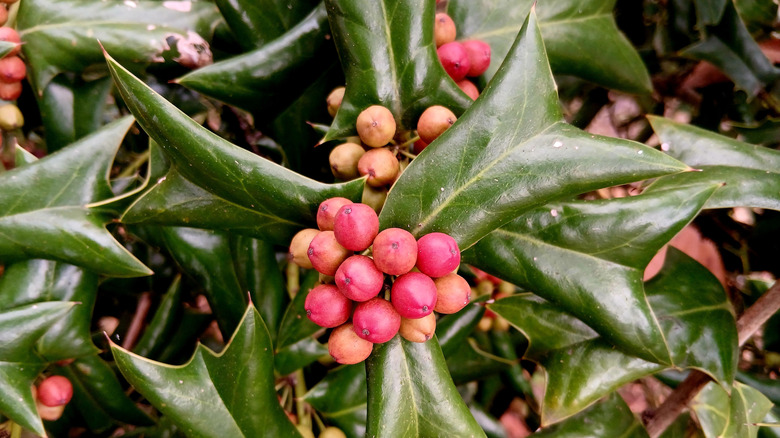
When looking for a lovely holly bush to add to your yard, you should be aware that some popularly sold hollies are invasive. Chinese holly (Ilex cornuta) is a short, glossy shrub with bright red berries. The leaves have a unique shape to them, giving this plant its other common name; horned holly. However, it can spread and compete with native holly species. It can be tricky to tell one holly from another, especially when they are young, so avoid plants labeled only as holly and pick those labeled with specific species names instead.
Sweet autumn clematis
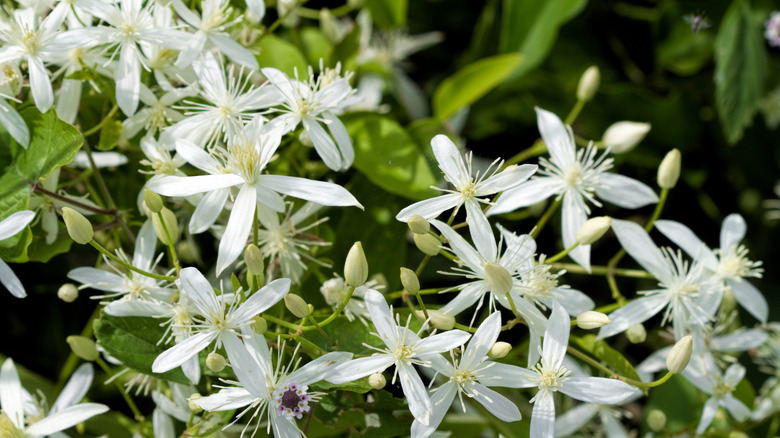
Sweet autumn clematis (Clematis terniflora) is a vining plant that grows a seemingly endless amount of small, white flowers. They're commonly sold as decorative vines to grow over fences and are popular for their flowers, sweet scent, and hardiness. The dense growth and hardy nature have a downside, though, as these invasive vines can quickly outcompete and smother other plants. While garden plants can be pruned to control their size and spread, any plants that escape into the wild have free reign to spread vigorously.
Burning bush
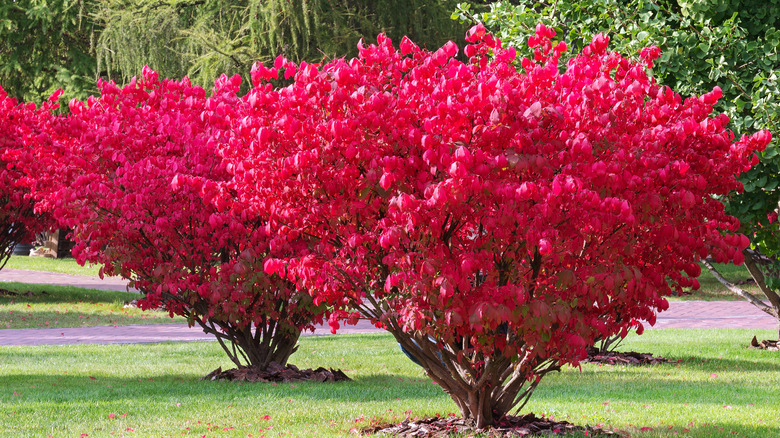
A cousin of winter creeper, burning bush (Euonymus alatus) is a compact shrub popularly sold for its glossy foliage that turns a shocking shade of red during fall. The small, red berries it grows add additional texture. However, as birds spread the seeds, burning bushes pop up in forests and fields across the country. It can be quite difficult to get rid of once it is mature and has actually been banned in Delaware for this reason. If you're looking for an alternative, consider its close native relative the eastern wahoo (Euonymus atropurpureus) which looks similar.
Common vinca
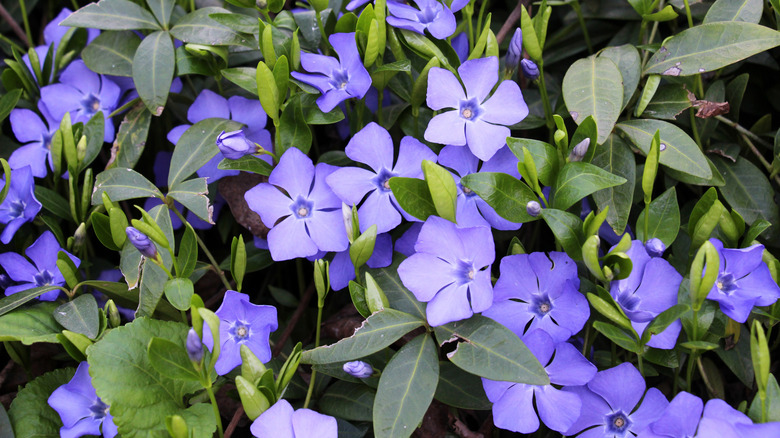
Common vinca (Vinca minor) is a popular flowering groundcover and ornamental plant. Also known as lesser periwinkle, garden centers praise it for being beautiful and resilient as it's resistant to deer and able to grow in shady gardens. As it spreads, it forms a thick carpet that can cover the ground and overtake smaller plants, making it devastating when it escapes into nearby forested areas. Whether you're growing it as an ornamental flower or a groundcover, there are a number of native alternatives to consider. A few popular ones include woodland phlox (Phlox divaricata) and rose vervain (Glandularia canadensis).
Japanese meadowsweet
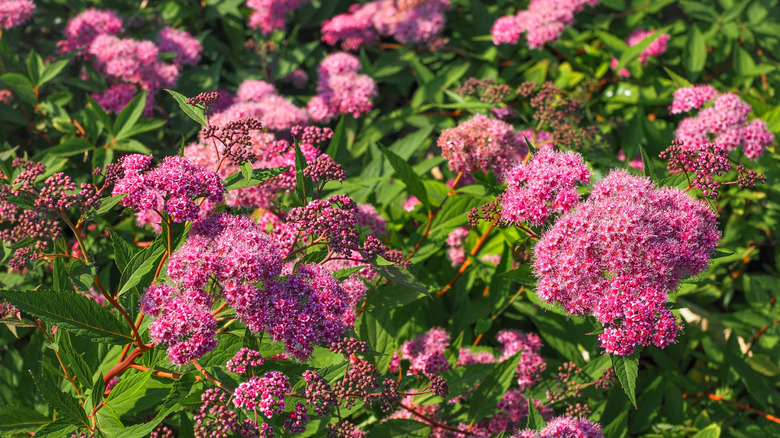
Japanese meadowsweet (Spiraea japonica), also called Japanese spirea, is prized for its beautiful flowers that bloom in shades of pink, purple, and white. It is commonly sold to be used in pollinator gardens, as butterflies enjoy the bright flowers. Japanese meadowsweet grows quickly, and if left alone it can form a dense hedge that is difficult to get rid of. This is a problem, as it has escaped and become invasive in the eastern United States, particularly in the Appalachian Mountains. Avoid picking it up at your local garden center and opt for the native white meadowsweet (Spiraea alba) instead.
Yellow flag iris
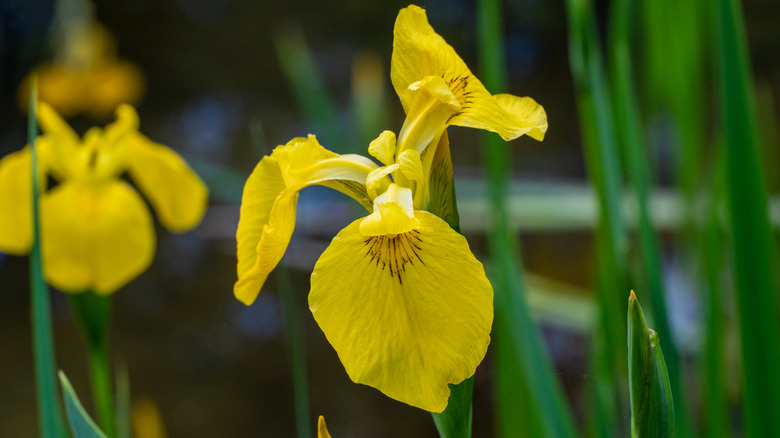
Yellow flag irises (Iris pseudacorus) are best known for their bright, cheerful flowers and love of wet soil. They grow in soggy soil where many other flowers won't, making them a popular choice for gardeners with ponds or frequently flooded gardens. Still, if you see the bulbs at your local garden center, don't be tempted. These invasive flowers can spread rapidly and push native plants out of their ecosystems. Yellow flag irises have done a lot of damage to delicate wetlands across the United States, so plant native southern blue flag irises (Iris virginica) or savannah irises (Iris tridentata) instead.