

No Paint Required: Try This DIY To Refresh Dated Closet Doors Without It
We may receive a commission on purchases made from links.
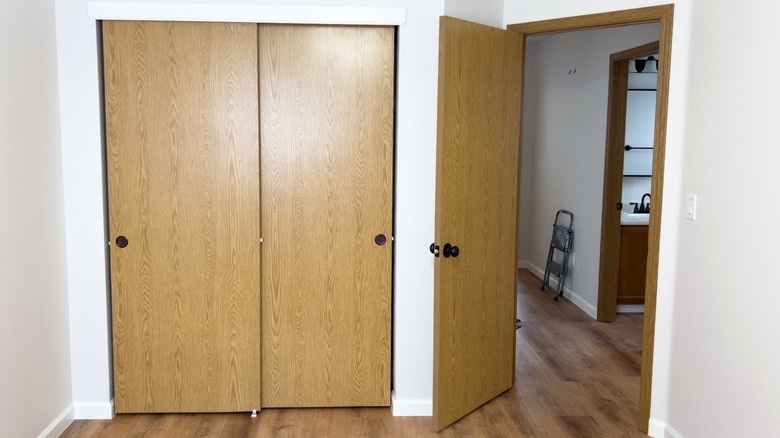
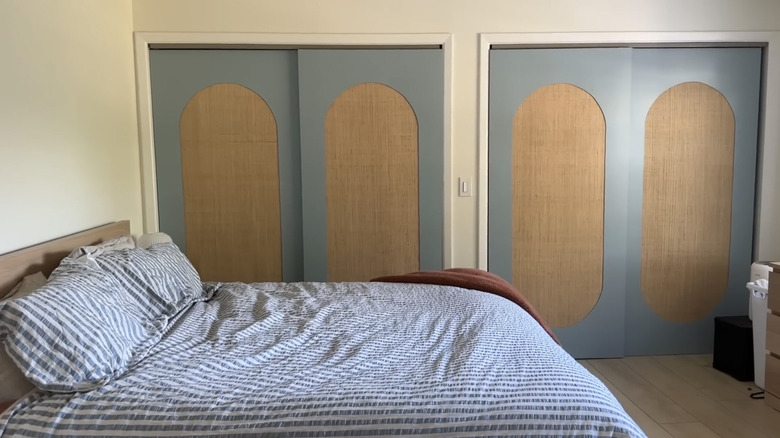
Even if they're hiding an extremely stylish wardrobe, dated closet doors can be downright depressing. Maybe you have those hollow sliding slabs that only let you access half of your clothes at a time. If you're slightly luckier, a set of builder-grade double doors is just boring you to death. Fortunately, one creative TikToker figured out an easy way to get a high-end custom look for out-of-style closet door like these. Using little more than some textured fabric and a few pieces of hardboard, @nataliezacek transformed basic slabs into a completely unique way to hide her wardrobe. To make them, she and her partner covered the doors with textured fabric and then covered that with custom-cut hardboard before hanging them on a simple set of tracks.
Although this may not be a project for total DIY novices, it's achievable by following a few basic steps. Getting accurate measurements of your closet doors and hardboard is crucial. Assuming you already have plain bypass or double doors, you'll need to carefully remove the sliding closet doors from the tracks before covering them with fabric and hardboard panels, so consider enlisting the help of a friend. In the video, @nataliezacek used a roll of neutral cloth, but you could repurpose old curtains, tablecloths, or large crafting scraps in any color, pattern, or texture you like. Along with enough fabric and hardboard to cover each of your doors, you'll need a jigsaw, a heavy-duty staple gun, and construction adhesive or wood glue product compatible with hardboard, like Titebond Original.
How to make custom closet doors with fabric and hardboard
Along with making precise measurements, the process of upgrading your ugly closet doors without replacing them also requires a sufficient workspace where you can lay the doors completely flat. Because your hardboard will essentially serve as a frame around your fabric, it's important to cover any exposed areas with the fabric first. Make sure the fabric is completely smooth before stapling it into place around the edges.
You'll then need to cut your hardboard. It's easiest to use a jigsaw to cut out any areas where you want the fabric to show. This is another step where you can make design choices based on your personal preference, opting for a large pill shape like @nataliezacek, a square box, or even an array of several smaller shapes. For easier cutting and to make sure your bypass doors don't get stuck against each other or too heavy to move easily, opt for thinner ⅛-inch-thick hardboard instead of thicker options.
Once your hardboard is cut to size, you'll need to attach it to the door. The smooth white or natural brown colors that hardboard typically comes in will complement a variety of fabrics, but if you do decide to prime and paint it, complete that step first. Then, carefully apply adhesive or wood glue to the back of your hardboard before positioning each sheet into place. Remove any excess adhesive before using heavy books or clamps to hold the hardboard in place until the glue has fully cured. After everything sets, you can work on rehanging your refreshed doors on your closet tracks.