

Plant This Long-Blooming Flower For A Garden Full Of Hummingbirds And Butterflies
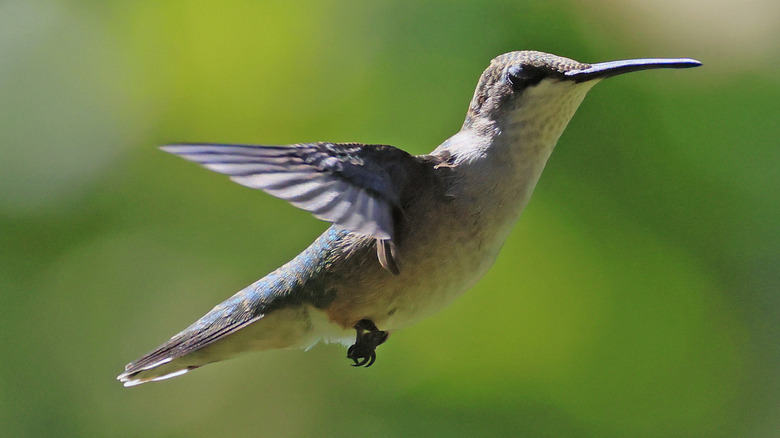
According to the University of California, there are about 350,000 types of pollinators worldwide, ranging from bees, wasps, and beetles to hummingbirds and butterflies. All pollinators are important to the ecosystem, but you're probably like many people and are hoping to see the latter two species around your garden. You also don't want to plant flowers with short bloom times if you're hoping to support these pollinators throughout the season. If these points are important to the creation of your own pollinator garden, consider the crimson red nasturtium (Trapaeolum majus) 'Empress of India' cultivar.
Hummingbirds are known for their love of bright flowers like nasturtiums, but this has nothing to do with their attractive value. Instead, it has everything to do with hummingbird eyesight and their ability to quickly spot food sources. (This is admittedly an important feature, as these tiny birds zip by and hover during feedings, all while flapping their wings up to 4,000 times per minute, per the National Audubon Society.) In particular, hummingbirds can see the color red easily, which is why they are attracted to bright red flowers like 'Empress of India.' What's more, hummingbirds also appreciate the extra sweet nectar that nasturtiums provide.
This popular nasturtium cultivar also fits the butterfly's preference for bright-colored flowers. Like hummingbirds, butterflies can also spot the color red easily, among other hues such as orange and purple. The large sizes of the blooms also accommodate butterflies well by giving them enough space to land and eat the nectar.
Tips for planting 'Empress of India' in a pollinator garden
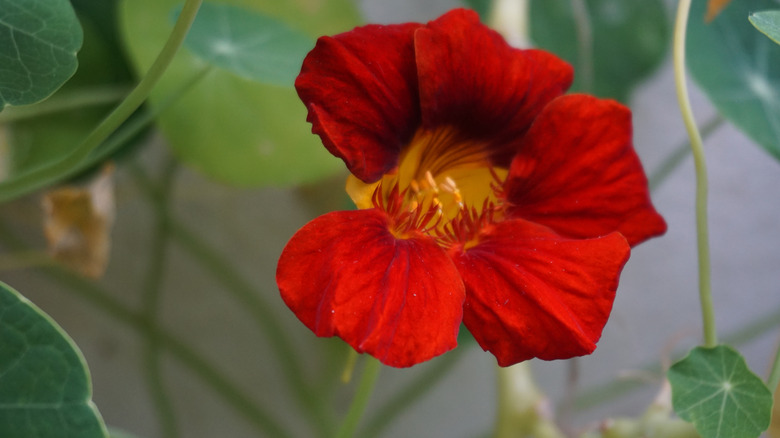
Red flowers like 'Empress of India' around your garden can encourage more hummingbirds and butterflies to visit. In fact, both you and pollinators can enjoy the blooms of these nasturtium cultivars throughout a long season, as these can bloom from the spring to fall months. These plants are considered relatively easy to grow with low maintenance by following a few key tips for growing nasturtium. First, you should know that these are typically considered annuals, but they can be grown as perennials in zones 9 through 11. You can pick a spot in your garden with either full sun or with partial shade, so long as you keep them well-watered (but never overwatered).
If you don't have the space for an extensive pollinator garden, the good news is that nasturtiums like 'Empress of India' also tend to work well for container gardens. Unlike taller or creeping nasturtiums, these cultivars tend to max out at 12 inches in height. No matter whether you grow 'Empress of India' in a garden bed or in containers, know that they prefer well-draining loamy or sandy soil. Also, you should refrain from adding fertilizers if you're specifically wanting lots of blooms for hummingbirds and butterflies. An all-purpose fertilizer could yield lots of lush purplish leaves, but it will ultimately reduce the number of flowers these nasturtiums produce.