

Stop Brown Tips On Snake Plant Leaves With One Easy Fix
We may receive a commission on purchases made from links.
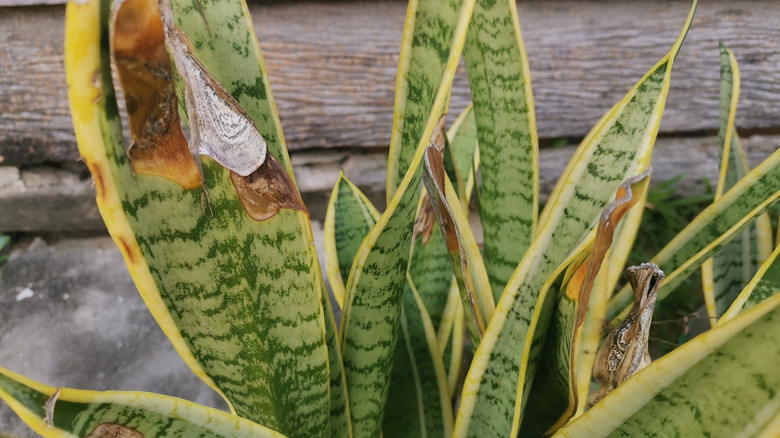
One of the most durable and low-maintenance indoor plants is Dracaena trifasciata, which is also known as the snake plant or "mother-in-law's tongue." Despite these less-than-flattering monikers, this plant is a beauty, with long, upright variegated green leaves often framed in yellow. This architectural plant complements any corner of your home and can thrive in low light. But even the hardy snake plant can have its moments, and brown tips on those elongated leaves signal a problem that should be immediately addressed.
The most common reason for browning leaves has to do with water, and adjusting your watering schedule may be a simple fix. The snake plant is native to dry and rocky areas of Africa and appreciates drying out between waterings, but long periods of neglect will dry out its tips. TikTok user @tannertheplanter recommends letting the soil completely dry out between waterings in fall and winter, when the plant is dormant, and letting it dry out about ¾ down the pot during the growing season. You can test soil dryness by using a moisture meter or long soil probe. If you have been overwatering your snake plant, you will also see browning leaves, but these brown spots will likely appear lower down on the shaft of the leaves, and the leaves themselves may feel squishy or look droopy.
Proper light, soil, and nutrients will also help
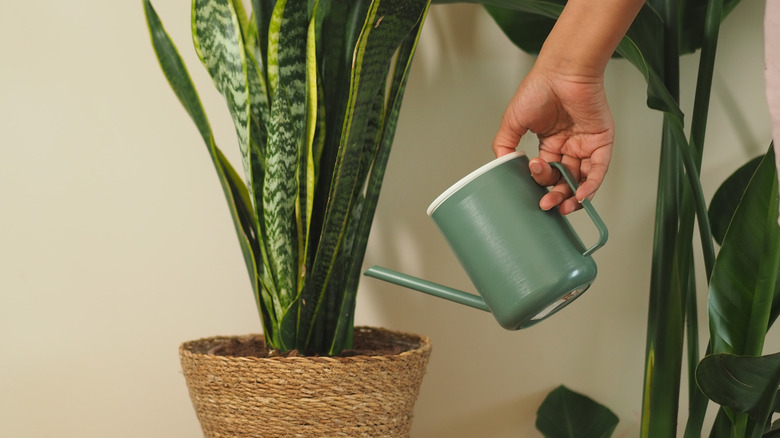
Your watering schedule will be affected by what soil you've used for your snake plant. This plant likes a well-drained soil mixture similar to what you'd use for cactus or succulents. If you have planted your snake plant in a regular potting mix, you'll need to add more sand or perlite to your mix to improve drainage, or otherwise, your plant could get root rot, the first sign of which can be browning leaves.
If your watering schedule and soil mix are spot on, browning leaves may indicate that your plant is getting too much sunlight. This plant is happy in shady corners with dim or artificial light, and direct sun can burn its leaves. Try moving it to a corner of your home with less light. Also be careful with fertilizing. Too much plant food can cause chemical burn, resulting in brown leaves. Fertilizing monthly only during the growing season is all this plant needs, with a plant food designed for succulents or with a standard plant food that you dilute by half.
Unsightly brown tips won't turn green again, but you can clip the brown parts off with clean, sharp scissors. The leaf will not grow back where it's cut, so you may want to just remove the entirety of the damaged leaf for aesthetic reasons.