

The 10 Best Ways To Hide Unsightly Tree Roots In Your Yard
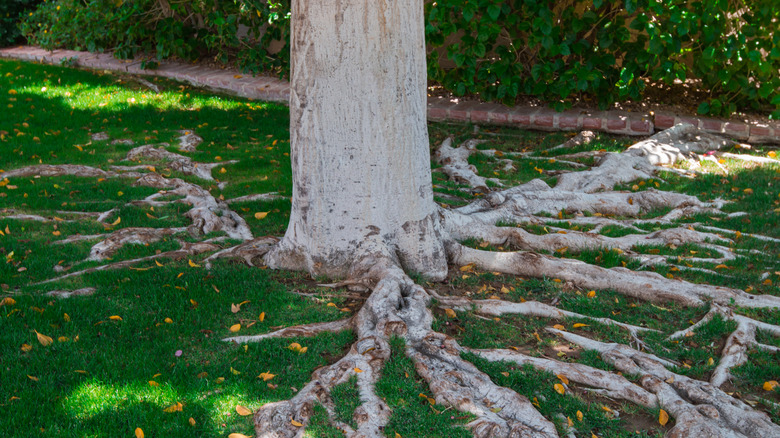
If you want to enjoy both the shade of a beautiful tree and a neat front yard, you've likely already realized how hard it can be to balance the two. When you aren't raking leaves and picking up branches, you're trying to deal with the tree roots. If the tree is already dead, you can uproot it entirely or turn the tree stump into a planter, but a living tree requires a more delicate touch. There is a way to cut tree roots without killing the tree, but if the surface roots are too close to your tree then you'll need to hide them instead.
There are plenty of ways you can hide the surface roots, but there are a few things you should avoid. Adding a thick layer of soil, concrete, or gravel over the roots could smother them, harming your tree. It's also a good idea to avoid planting grass over the roots, since running over the roots with your lawn mower won't be good for you or your tree. Instead, focus on ways to hide or disguise the roots that won't completely cut them off from the air.
You can also try a few tactics for reducing the risk of surface roots forming in the first place. Sometimes, surface roots are caused by erosion, as soil washes away from shallow roots. Preventing erosion with mulch or a retaining wall may be helpful. Surface roots can also be a sign of trouble in your soil. If the soil is compacted or waterlogged and low in oxygen, the tree may send roots upwards to get more air. While fixing this problem won't get rid of any roots already showing above the soil, it may prevent more roots from following.
Add organic mulch
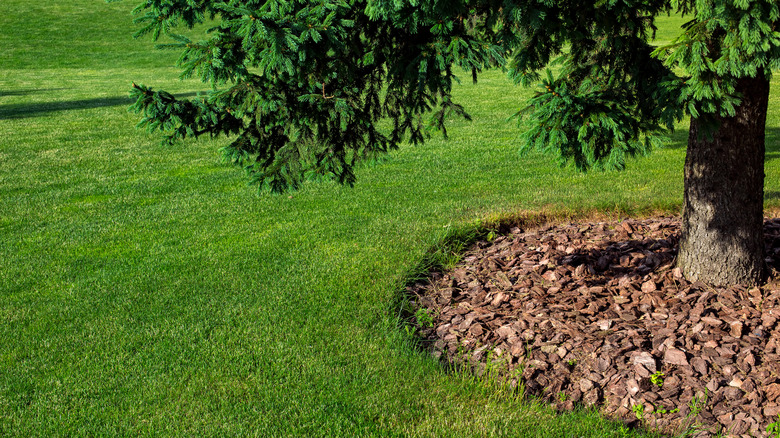
One of the best ways to cover surface roots is with a layer of organic mulch such as shredded bark. Organic mulch will still allow air and water to pass through to the roots while maintaining an orderly appearance. It also helps protect them, insulating them from the cold and discouraging people from walking on them. You don't need to worry if some of the mulch washes away, since it will break down. You do want most of it to stay in place, so knowing how to keep wood chips from blowing away is useful.
Use a thin layer of soil
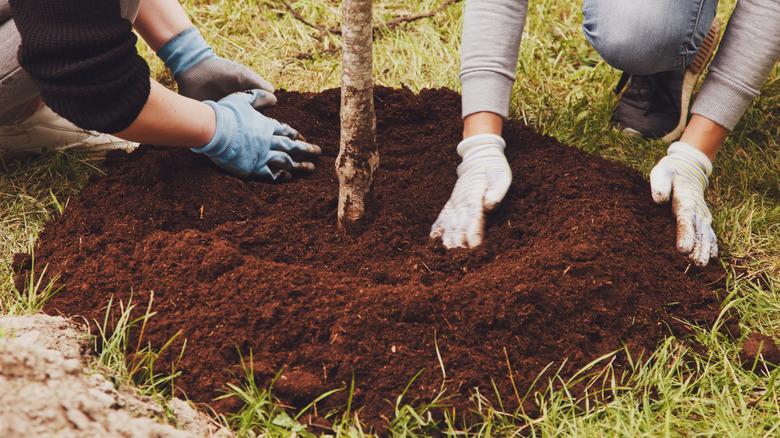
Too much soil can smother the roots, but a thin layer can hide the roots without harming your tree. The layer should be half an inch thick at most, so that the roots are barely covered. Depending on the size of the roots you're dealing with, this may not be enough to fully cover them. You may also need to apply new soil as they grow. Combining this method with another may be a good fit. You can cover the smallest roots with soil and use a different method to hide the larger ones.
Plant some frogfruit
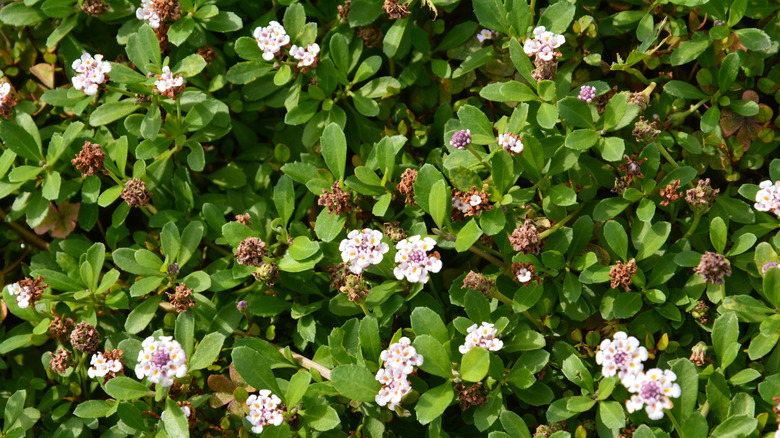
Frogfruit (Phyla nodiflora) may sound silly, but this native groundcover is actually beautiful and beneficial. It can grow in partial shade, making it a good candidate for covering surface roots that are a little farther from the base of the tree. It only grows a few inches tall, so you can hide smaller tree roots without worrying about mowing or trimming the frogfruit. Frogfruit is hardy in zones 7 through 11, and it's hardy against both droughts and floods. It spends most of the year flowering, and the flowers attract butterflies.
Use decorative stones
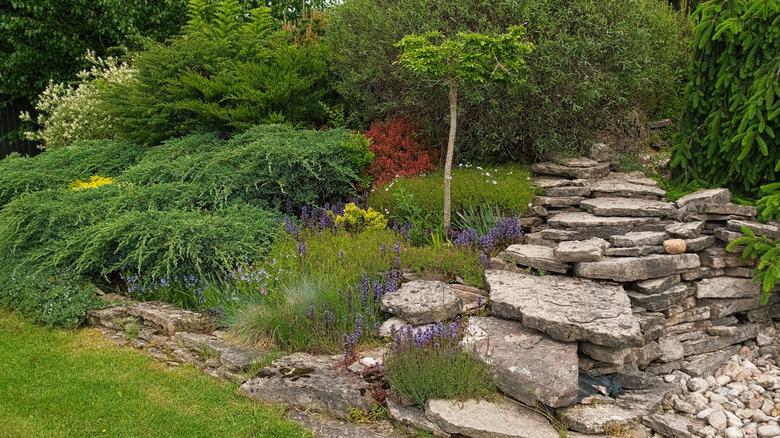
While you don't want to use a thick layer of gravel, strategically placed decorative stones can be used to block the roots from view without harming your tree. Rather than covering the entire area with rocks, place a few larger stones where they will hide the roots from view. You can make it look more natural by choosing rougher rocks and using them sporadically, or go for a more organized look by using smoother rocks to form a ring around the entire tree like a low wall.
Add a seating area
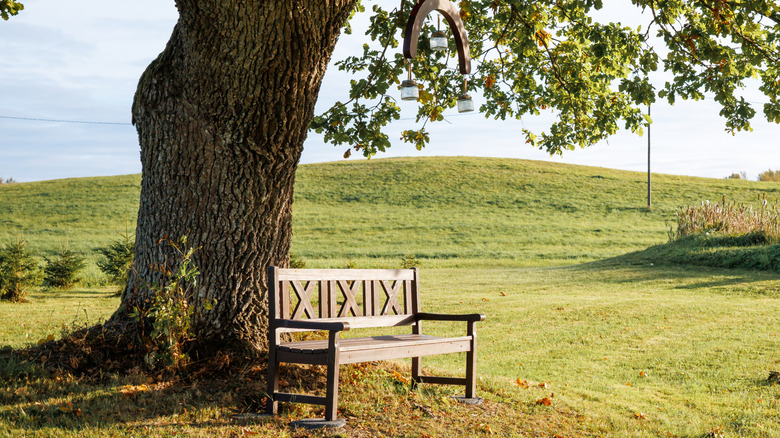
If the roots aren't too obvious, you may be able to hide them with a simple distraction. Place a bench over the roots, arranged so the roots are beneath it with the bench's legs to either side of them. Add a table and a couple extra chairs in front of the bench, and now you have a lovely spot to entertain guests underneath your tree. People aren't likely to look underneath the bench, so the roots are effectively hidden in plain sight. A fabric skirt for your bench or chairs can also help hide tree roots.
Grow partridge berry
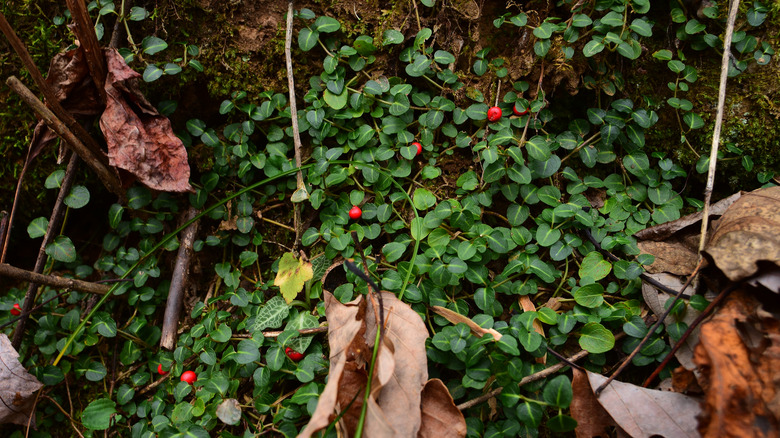
Partridge berry (Mitchella repens) is a native groundcover that can be grown in zones 3 through 8. It's a hardy and versatile vine that can even grow in deep shade, making it a good fit for covering the roots closer to your tree's trunk. It spreads slowly, and although it stays small, it grows fairly densely. Depending on the area you're trying to cover, you may need to plant more than one. The flowers are attractive to pollinators, and birds enjoy the bright red berries that follow. The berries are edible, but aren't known for their flavor.
Fence them in
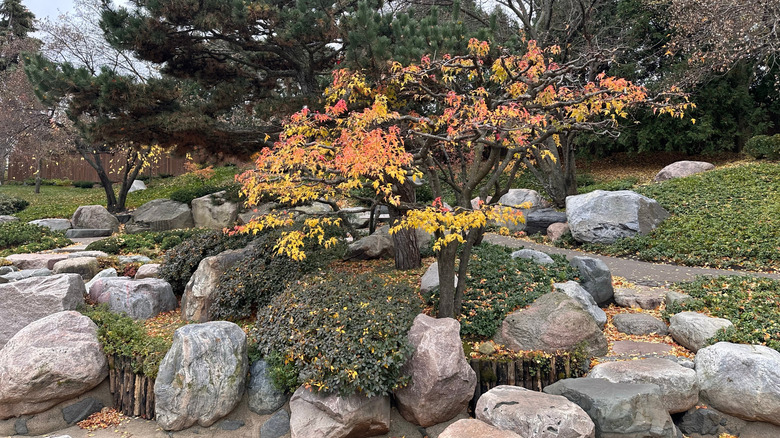
If the roots are too large or widespread to cover with soil or plants, consider putting up a small fence or wall to hide them. There are plenty of options to chose from, and it's easy to personalize a fence to fit your personal aesthetic. Go for a classic and simple picket fence, or choose an elegant stone wall. Use rounded wood posts for a natural feel or pick bricks for a modern look. Not only will a fence keep the surface roots out of sight, but it also prevents foot traffic and accidental lawn mower passes.
Plant a ring of taller flowering plants

If you don't like the idea of installing a regular fence or wall, consider making a living wall of taller flowering plants. Shade-loving flowers can be planted closer to the tree's trunk, but even full sun flowers can be useful for this. Create a flower bed in a ring around the tree at the farthest edge of the roots and canopy, then fill it with tall flowers to hide the roots from view. Consider growing perennials like agapanthus in zones 8 through 11 or lupines (Lupinus spp.) in zones 4 through 8.
Incorporate them into your decor
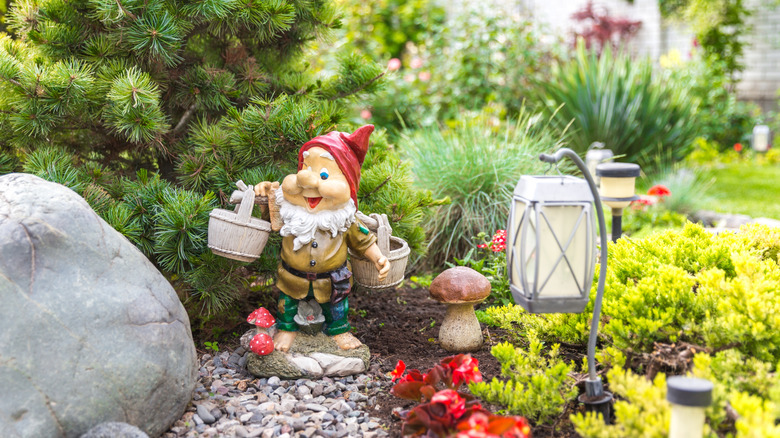
Hiding doesn't have to mean covering the tree roots entirely! Instead, you can disguise them with a few cleverly placed decorations. Arrange a few garden gnomes in front of them or use your potted plants to shield them from view. You can even make the roots part of the decor. Create a fairy village by tucking miniature houses and other structures in and among the roots for an utterly charming display. Add ceramic mushrooms and decorative rocks to make it feel like a secret fairy town hidden deep in the forest.
Create a mini moss garden
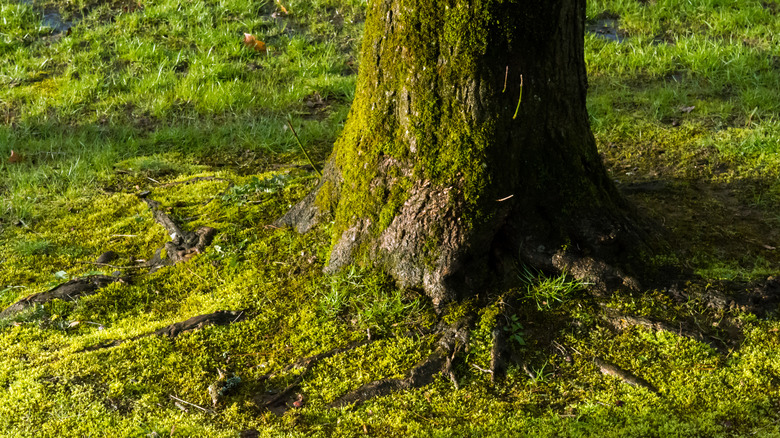
Moss grows well in the shade and will spread to cover the area, including the tree roots themselves. It also doesn't need to be mowed, so there's no risk of damaging your lawn mower. However, moss does tend to spread slowly. If you want to cover a large area, you'll need to start with a lot of moss. Once established, moss generally doesn't need a lot of care, although you may need to water the area more regularly during hot, dry weather to prevent it from drying out.