

Say Goodbye To Grimy Stovetop Grates With This Common Pantry Staple
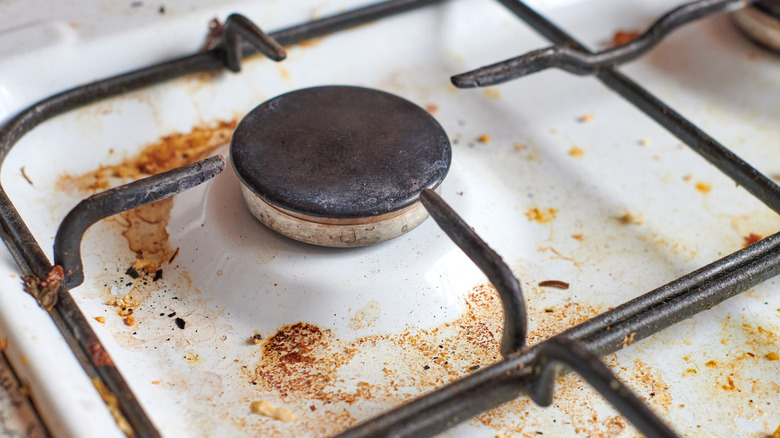
Cleaning the kitchen after cooking a meal isn't the worst task (it's not scrubbing or treating stained toilets, after all!), but after pots have boiled over, sauce has splattered, and your stovetop is covered in various different types of debris, it can be frustrating. Stovetop grates, with all of their nooks and crannies, can be challenging to get sparkling clean for two reasons. First, stovetop grates tend to collect grease, which builds up and becomes difficult to remove. Second, grates are usually made from cast iron and either left uncoated or coated in a layer of enamel, a difference that can complicate how they're meant to be cleaned. If you're tired of scrubbing, scouring, and battling stuck-on residue, the most effective cleaning solution for your stovetop grates might be hiding in your pantry. Baking soda, a household must-have and all-around workhorse for baking and cleaning, is surprisingly tough on the grime that winds up on stovetop grates.
Baking soda, or sodium bicarbonate, is used as a leavening ingredient for baked goods. But outside of your favorite cookie recipes, it's also a versatile cleaning solution, as this pantry staple can be transformed into a solution that's absorbent and slightly abrasive. To tap into its cleaning potential, you simply need to mix baking soda with an acid of some kind, which creates a chemical reaction that makes scrubbing away messes possible. But you might want to think twice before using baking soda elsewhere at home, such as in mold-prone bathrooms; it's not as potent when it comes to killing germs and bacteria.
How to get stovetop grates sparkling with baking soda
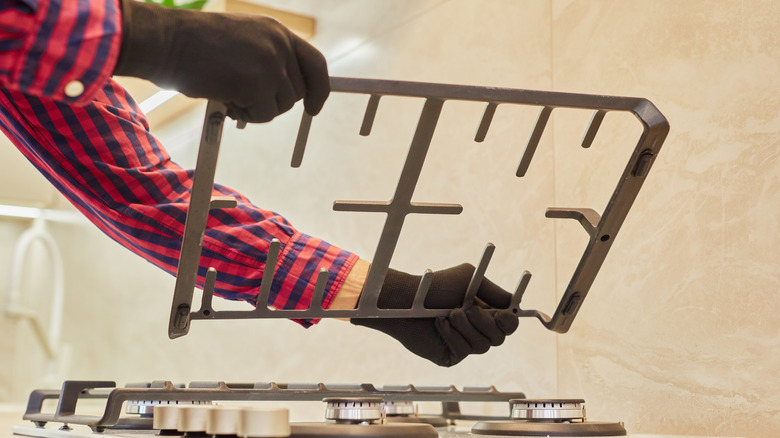
Before you start scrubbing your stovetop grates with baking soda, you'll need to determine whether your grates are uncoated cast iron or coated in a layer of porcelain enamel. The two different types of grates require slightly different approaches, as exposed cast iron can rust when introduced to (or, more specifically, left to soak in) water. Enamel-coated grates, on the other hand, can handle soaking if you're facing stubborn residue or stains. However, you can still leverage the cleaning power of baking soda no matter which kind you're working with.
Whether you're trying to clean enamel-coated or uncoated cast iron stovetop grates, a layer of baking soda paste will help combat greasy residue, stuck-on debris, and even stains. To use this cleaning method, you'll need to mix baking soda and water into a paste, slather it on your grates, and give them a gentle scrub. Just make sure to dry your stovetop grates afterward so lingering water doesn't cause rust spots.
If you do see rust popping up on your grates, you can also apply a different kind of baking soda paste as a spot treatment to eliminate it. Instead of mixing water and baking soda, create a paste out of baking soda and lemon juice, slather it on top of any rust present, and let it sit overnight before rinsing the grates clean. Hoping to prevent rust as best you can? In addition to thoroughly drying your uncoated grates, you may want to consider seasoning them like a cast iron skillet; it can help keep rust at bay.